Forum/Fisheries Management/Mojoe's Monster Bass Can Be Useful in Australia

Mojoe's Monster Bass Can Be Useful in Australia

1,102 views·1 replies·by Roccus7
Roccus7
Roccus7MOD2021#1
@MOJOE I bet the Australians would be grateful if you could ship them some of your "monster" bass!!

How to Scare an Invasive Fish? A Menacing Robot Predator.​

The mosquitofish is wreaking havoc on native Australian marine life. In a new study, scientists tried to frighten it with a look-alike of its natural foe.

The mosquitofish is not a fussy creature: It can live in filthy bodies of water and has an undiscerning appetite. Larvae? Other fishes’ eggs? Detritus? Delicious. Often, the voracious few-inch creature chomps off the tails of freshwater fish and tadpoles, leaving them to die.

But the invasive fish is threatening some native populations in Australia and other regions, and for decades scientists have been trying to figure out how to control it, without damaging the surrounding ecosystem.

Now, the mosquitofish may have finally met its match: A menacing fish-shaped robot.

It’s “their worst nightmare,” said Giovanni Polverino, a behavioral ecologist at the University of Western Australia and the lead author of a paper published Thursday in iScience, in which scientists designed a simulacrum of the fish’s natural predator, the largemouth bass, to strike at the mosquitofish, scaring it away from its prey.

The robot not only freaked the mosquitofish out, but scarred them with such lasting anxiety that their reproduction rates dropped; evidence that could have long term implications for the species’ viability, according to the paper.

“You don’t need to kill them,” Dr. Polverino said. Instead, he said, “we can basically inject fear into the system, and the fear kills them slowly.”

Mosquitofish, native to North America, are named for their penchant for eating mosquito larvae. In the 1920s, the fish began to be introduced across the world, with the intention of controlling the population of that insect, a vector for malaria.

In some places, including parts of Russia (where they erected a monument to the fish) the campaign may have had some success, though this is debated.

But in other parts of the world, the aggressive fish — free from its natural predator — flourished unchecked. In 2000, the International Union for Conservation of Nature classified the marine animal among the worst invasive species in the world.

In Australia, where the study was conducted, the mosquitofish preys on several native fish and frog species, including the red-finned blue eye and the Edgbaston goby, two of the most critically endangered fish species in Australia.

“They thrive, because they eat pretty much everything that moves, and there’s more than enough to be eaten,” said Francesco Santi, a biologist based in Vicenza, Italy, who was not involved in the study, and has studied the mosquitofish’s diet. He added, “I have no idea of any place where they have actually been able to eradicate them.”

For the study, Dr. Polverino and colleagues designed a mechanical predator in the shape of a largemouth bass. The robot fish used a camera to differentiate between its “prey,” the mosquitofish, and the tadpoles of the Australian motorbike frog, which the mosquitofish hunts.

The researchers put their Terminator-like creation in a tank together with six wild-caught mosquitofish and six wild-caught tadpoles. When a mosquitofish approached a tadpole, the robot would lurch forward, as if to strike.

After experimenting on 12 separate groups of fish and tadpoles over several weeks, the researchers found that the stressed mosquitofish were investing more energy on evading the robot than reproducing: The males’ sperm counts dropped, and the females began to produce lighter eggs. The fish also lost weight; the males’ bodies in particular became leaner and more adept for escaping.

“It was not only that they were scared,” Dr. Polverino said. “But they also got unhealthy.”

The experiment is not the first time scientists have created robotic impersonators to more closely study the behavior of animals.

In Britain, scientists used a robotic falcon to “attack” a flock of homing pigeons and observe the birds’ response. In Germany, researchers built a bee that directed other bees to a food source by doing a
In California, a biologist made a sage grouse “fembot” from a taxidermied bird, to understand the threatened species’ mating habits.

In the case of the mechanical largemouth bass, however, scientists say there is a long way to go before the robot could be released into the wild.

“It’s an important proof of concept,” said Peter Klimley, a marine biologist and a recently retired professor from the University of California, Davis, who was not involved in the study. But he questioned the feasibility of introducing the creature into a real-world environment.

“This study won’t be a solution to the problem,” Dr. Polverino said, adding that the next phase of their project would involve testing the robots in a larger, outdoor, freshwater pool.

He said the robot should be thought of as a tool that can reveal a pest’s weaknesses. “We’ve built a sort of vulnerability profile,” Dr. Polverino said, that could help biologists and others to reimagine how to control invasive species.

“This fear,” he added, “has a collateral effect.”
AdmiralOriginal Crew21,694 postsSince 2018
MOJOE
MOJOEMOD2021#2
@MOJOE I bet the Australians would be grateful if you could ship them some of your "monster" bass!!

How to Scare an Invasive Fish? A Menacing Robot Predator.​

The mosquitofish is wreaking havoc on native Australian marine life. In a new study, scientists tried to frighten it with a look-alike of its natural foe.

The mosquitofish is not a fussy creature: It can live in filthy bodies of water and has an undiscerning appetite. Larvae? Other fishes’ eggs? Detritus? Delicious. Often, the voracious few-inch creature chomps off the tails of freshwater fish and tadpoles, leaving them to die.

But the invasive fish is threatening some native populations in Australia and other regions, and for decades scientists have been trying to figure out how to control it, without damaging the surrounding ecosystem.

Now, the mosquitofish may have finally met its match: A menacing fish-shaped robot.

It’s “their worst nightmare,” said Giovanni Polverino, a behavioral ecologist at the University of Western Australia and the lead author of a paper published Thursday in iScience, in which scientists designed a simulacrum of the fish’s natural predator, the largemouth bass, to strike at the mosquitofish, scaring it away from its prey.

The robot not only freaked the mosquitofish out, but scarred them with such lasting anxiety that their reproduction rates dropped; evidence that could have long term implications for the species’ viability, according to the paper.

“You don’t need to kill them,” Dr. Polverino said. Instead, he said, “we can basically inject fear into the system, and the fear kills them slowly.”

Mosquitofish, native to North America, are named for their penchant for eating mosquito larvae. In the 1920s, the fish began to be introduced across the world, with the intention of controlling the population of that insect, a vector for malaria.

In some places, including parts of Russia (where they erected a monument to the fish) the campaign may have had some success, though this is debated.

But in other parts of the world, the aggressive fish — free from its natural predator — flourished unchecked. In 2000, the International Union for Conservation of Nature classified the marine animal among the worst invasive species in the world.

In Australia, where the study was conducted, the mosquitofish preys on several native fish and frog species, including the red-finned blue eye and the Edgbaston goby, two of the most critically endangered fish species in Australia.

“They thrive, because they eat pretty much everything that moves, and there’s more than enough to be eaten,” said Francesco Santi, a biologist based in Vicenza, Italy, who was not involved in the study, and has studied the mosquitofish’s diet. He added, “I have no idea of any place where they have actually been able to eradicate them.”

For the study, Dr. Polverino and colleagues designed a mechanical predator in the shape of a largemouth bass. The robot fish used a camera to differentiate between its “prey,” the mosquitofish, and the tadpoles of the Australian motorbike frog, which the mosquitofish hunts.

The researchers put their Terminator-like creation in a tank together with six wild-caught mosquitofish and six wild-caught tadpoles. When a mosquitofish approached a tadpole, the robot would lurch forward, as if to strike.

After experimenting on 12 separate groups of fish and tadpoles over several weeks, the researchers found that the stressed mosquitofish were investing more energy on evading the robot than reproducing: The males’ sperm counts dropped, and the females began to produce lighter eggs. The fish also lost weight; the males’ bodies in particular became leaner and more adept for escaping.

“It was not only that they were scared,” Dr. Polverino said. “But they also got unhealthy.”

The experiment is not the first time scientists have created robotic impersonators to more closely study the behavior of animals.

In Britain, scientists used a robotic falcon to “attack” a flock of homing pigeons and observe the birds’ response. In Germany, researchers built a bee that directed other bees to a food source by doing a
In California, a biologist made a sage grouse “fembot” from a taxidermied bird, to understand the threatened species’ mating habits.

In the case of the mechanical largemouth bass, however, scientists say there is a long way to go before the robot could be released into the wild.

“It’s an important proof of concept,” said Peter Klimley, a marine biologist and a recently retired professor from the University of California, Davis, who was not involved in the study. But he questioned the feasibility of introducing the creature into a real-world environment.

“This study won’t be a solution to the problem,” Dr. Polverino said, adding that the next phase of their project would involve testing the robots in a larger, outdoor, freshwater pool.

He said the robot should be thought of as a tool that can reveal a pest’s weaknesses. “We’ve built a sort of vulnerability profile,” Dr. Polverino said, that could help biologists and others to reimagine how to control invasive species.

“This fear,” he added, “has a collateral effect.”
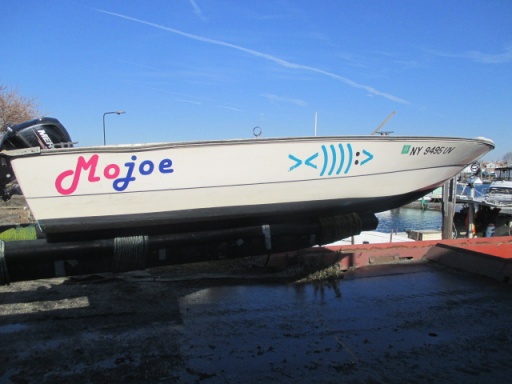
roccus mojoes? monster bass 😛,, there you go,,,,,,,,, good morning,,,, 👍,, where do i sign up ?,,,,,,,,,,,,,,, ><)))):>
><)))):>IMG_4207[1].JPG
AdmiralOriginal Crew25,765 postsSince 2018
Roccus7
Roccus7MOD2022#3
Not good news...

[HEADING=2]Gulf of Maine waters spiked to record warm levels in fall 2021[/HEADING]
[HEADING=2]The gulf has seen an onslaught of marine heat waves and is warming faster than 96 percent of the world’s oceans[/HEADING]

[ATTACH type="full"]43025[/ATTACH]

Kittery Point Yacht Yard in Kittery, Maine, on Sept. 15, 2020 (Salwan Georges/The Washington Post)

Water temperatures in the Gulf of Maine this fall felt more like summer. A little too much.
The Gulf of Maine Research Institute [announced]('https://www.gmri.org/stories/fall-2021-warming-update/') the warmth of inlet waters adjacent to Maine and northern Massachusetts was the highest on record between September and November — by a lot. Last year was nearly 0.5 degrees warmer than 2012, which previously held the title for warmest fall. Sea surface temperatures during the season hovered above 60 degrees through almost the end of October, about 6 degrees above normal.

“This year [in the Gulf] was exceptionally warm given how many days we were seeing at heat wave status,” said Kathy Mills, who runs the Integrated Systems Ecology lab at the Gulf of Maine Research Institute. “But I had not thought about the aggregation of this effect into having this year come in with the warmest fall on record … I was very surprised.”

[ATTACH type="full"]43026[/ATTACH]

The Gulf of Maine is warming faster than 96 percent of the world’s oceans — increasing at a rate of 0.09 degrees per year over the past four decades. In the past 10 years or so, many of the increases can be tied to marine heat waves.

A marine heat wave is a period of five or more days where sea surface temperatures are in the 90th percentile compared to average. The gulf experienced marine heat wave conditions for most of 2021, with only brief breaks in March, April and the end of July. Heat wave conditions returned in August and remained through the rest of the year. The largest fall temperature anomaly occurred on Oct. 16 when the daily temperature peaked at 6.3 degrees above the long-term average (1982-2011).

[ATTACH type="full"]43027[/ATTACH]

Heat waves in the region initially caught researchers’ attention [in 2012]('https://www.washingtonpost.com/national/health-science/an-ocean-heat-wave-just-drove-temperatures-off-maine-to-near-record-highs/2018/08/31/3db85126-ad2d-11e8-a8d7-0f63ab8b1370_story.html?itid=lk_inline_manual_14'), when warmer-than-normal temperatures swept over the region for nearly the entire year. Since 2012, the warm spells have only increased, especially in the later part of the year. Mills said summer and fall in the gulf are warming nearly twice as fast as winter and spring.

Since 2008, fall sea surface temperatures have warmed around 1.1 degree each decade. The average fall temperature hasn’t dipped below 57 degrees since 2010. Four of the warmest fall seasons have occurred in the past seven years.

Even so, fall sea surface temperatures in 2021 stood out.
Mills said last fall’s exceptional warmth can be explained starting with a change in a broader ocean circulation pattern, which has been present in the region over the past decade.
She explained the region is currently in a phase where the [Gulf Stream]('https://scijinks.gov/gulf-stream/'), a strong ocean current from the Gulf of Mexico that brings warm water to the Gulf of Maine, has been pushing farther north. Mills said Maine is “getting more spinoff of that warm water.” As the Gulf Stream pushes further north, it also constrains the flow of the Labrador current, which brings cold water from the Labrador Sea to the Gulf of Maine.
“You’re turning up the dial on the hot water, you’re turning down the dial on the cold water, and that’s really contributing to the large-scale pattern of warming that we’re seeing in the Gulf of Maine,” she said.

[ATTACH type="full"]43028[/ATTACH]

“Our fall temperatures are staying high longer, and that’s being affected by how warm we get during the summer,” said Mills. “If you’re starting from a higher point in the summer and your temperatures are cooling down more slowly, it makes these fall temperatures look even that much more different from prior fall temperatures.”

The temperature changes have not gone unnoticed in the gulf’s waters. In the past year, the Gulf of Maine Research Institute received reports of unusual animals in the area — including blue crabs, black sea bass and a smooth hammerhead shark. Other offshore marine species, such as river herring and striped bass, are also sticking around longer instead of migrating.

[ATTACH type="full"]43031[/ATTACH]
Lobster industries have also adjusted to the temperature shifts and marine heat waves. Mills said the 2012 heat wave brought a high volume of lobsters closer to shore earlier than normal, causing a lot of disruption to typical practices.

“The industry has really adjusted to that, and we don’t see those types of situations really causing the same alarm and problems that they caused in 2012,” Mills said. She said some fishery boats are also stocked with equipment to chill or oxygenate waters during stressful, high temperature days, especially during the summer.

As species change in the region, Mills said, fisheries will need to adapt and plan. New species coming from the south could provide new opportunities.

“We can draw from the Gulf of Maine experiences to provide insights that hopefully will enable other ocean regions to prepare for change and to be ready to adapt to that change,” she said. “We’re sort of at the front edge of that with a lot of things happening very quickly here.”
AdmiralOriginal Crew21,694 postsSince 2018

Sign in to reply to this thread.