I agree that this is concerning and could get traction with the PETA team behind it. But at the same time studies have already been done on this. My favorite line in that release
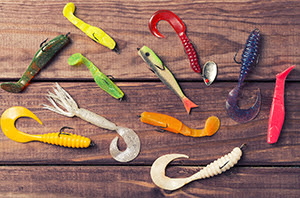
"The occurrence of soft plastic lures in fish stomachs, due to feeding on lost and discarded lures in Maine waters, has recently raised public concerns"
They will obviously be in a fish's stomach if it ate it. The question is does it kill the fish. I'm guessing these baits are being found in fish that have been killed and filleted. Obviously, if the fish was still on the feed then it was probably in good shape. Also, I've caught numerous fluke that had gulp in their stomach. It was usually one of mine.
Here are a few stats from Berkly on a study they did on Gulp. I think it would be a reach for any group to
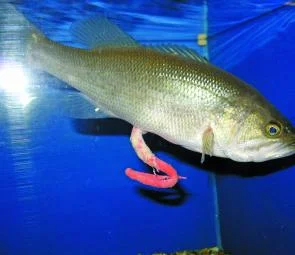
About how long will a Gulp bait stay in the body of a fish when swallowed?
Through the years we have regularly fed our laboratory bass, bluegills, carp, and trout either PowerBait or Gulp softbaits. Our reasons for feeding the fish softbaits have varied but included the need to test the palatability of new formulas, to verify the safety of our softbait products on fish, to test softbait actions or other attributes, and to demonstrate product effectiveness during customer or consumer shows. The fish were fed whole baits and/or baits cut into small pieces, either as a single feeding, or repeated feedings over some period of time. In most instances, the fish were fed more Gulp or PowerBait than they ever would normally encounter in the wild. Since these fish were kept in glass aquaria or other holding tanks where they could be readily observed, monitoring the health of the fish used in these instances was relatively easy. At no time have we ever witnessed any fish exhibit any difficulty in ridding itself of its ingested softbait(s). Small pieces of bait are almost invariably sent through the digestive tract to be expelled within a few days. Larger pieces may be either regurgitated (i.e. vomited), normally within a few hours to a couple of days, or sent through the digestive tract. In the latter cases, the bait is normally defecated anywhere from a few days to 1-2 weeks. The larger and more complicated the bait, the longer it takes for passage through the digestive tract. In one instance, a bass inadvertently took a softbait attached to a whole bass jig (thankfully with the hook bent over). The bass safely regurgitated the bait – complete with the jig – about 3 weeks later. Recently, we measured just how long it takes for bass and other fish to expel softbaits. In all, we ran four experiments, two on largemouth bass and two on bluegills. In each case we fed the fish whole baits and then observed how long it took the fish to expel the baits, either through regurgitation or defecation. The fish and bait combinations were as follows: Experiment 1: 20 largemouth bass, each fed one 4” Gulp Earthworm Experiment 2: 13 largemouth bass, each fed one 6” Gulp Nightcrawler Experiment 3: 13 bluegills, each fed 1-5 Gulp Maggots (about 1 cm each) Experiment 4: 13 bluegills, each fed one 4” Gulp Earthworm For full results of the experiments and details of how each fish ultimately released its bait and the time frame needed for expulsion see the Fact Boxes. There were only two cases where it took longer than 11 days to recover the baits.
It took these fish 25 and 24 days, respectively, to expel their baits for the last time. In both cases, bait retention was unexpectedly prolonged due to the tendency of each fish to re-consume its Gulp bait once defecated. Both fish probably first defecated their baits in less than 10 days.