Post-blow thermal edge widens to 10 degrees, yellowfin stack the Hudson's 100-fathom line
A blown-out Tuesday gave way to the sharpest shelf break of the season — and the tuna found it fast.
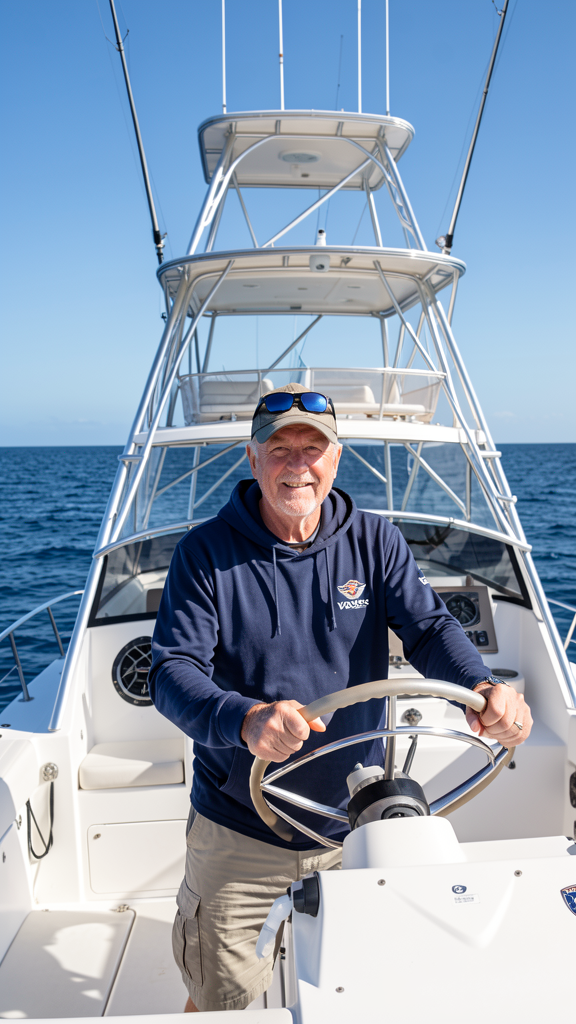
Last week's blow did us a favor, even if it didn't feel like it Tuesday night getting tossed around at the dock. That system pushed through and left behind a shelf-slope thermal break running 10.3°F wide off the edge — widest gradient I've seen all season on the satellite. That kind of seam doesn't happen by accident. Cold shelf water stacked up against warm slope water along the Hudson's east wall, and everything with a fin knows what that means: bait gets trapped on the edge, and predators stack on top of it. Wednesday and Thursday, 7/8 and 7/9, were the first real post-blow canyon window of the summer, and boats working the warm seam from Wilmington down through Poor Man's, then east onto our wall, connected on yellowfin in that soup where the color changes from green to blue inside of a mile.
This week the moon's sliding toward new, darkening every night through the weekend, and that matters more than people think out here. A dark sky means the squid lights actually pull bait up off the bottom instead of getting washed out by moonlight — that's your bigeye program right there. Meanwhile a fresh round of NE upwelling is sharpening up the 20 to 30 fathom breaks inshore of the canyon proper, and the Coimbra corridor at 20 fathoms is holding a real concentration of bluefin for the guys who don't want to burn the fuel to run all the way to the edge. Out past the canyon, the warm plume everybody's watching for white marlin is still 7 to 10 days from pushing onto the bank here — it's showing signs further south already, so I'd have the marlin spread rigged and ready, but I wouldn't build a whole trip around it just yet.
The yellowfin bite itself has been honest work, not a gimme. Wednesday we had a stretch around 39°38'N/72°32'W — right on the edge of the Dip — where the meter and we boated four in about ninety minutes trolling a mixed spread: horse ballyhoo behind small green machines, a couple of naked ballyhoo way back, and a cedar plug in the shotgun that's taken more than its share this year. Fish ran 35 to 55 pounds, nothing giant, but a solid box for two lines' worth of work. Thursday the same water had gone quiet by mid-morning — the tuna had slid, probably chasing the seam as it shifted with the tide — and we had to run north almost to the Claw before we found signs again, birds working bait balls at 39°42'N/72°26'W. That's the pattern right now: find the temp break, but don't marry it. It moves, sometimes a few miles a day.
Night fishing has been the more consistent play if you've got the stomach for an overnighter. Anchoring or drifting over structure along the 100-fathom curve with squid lights down and a mix of live and dead squid on the deep drop has been putting bigeye in the 60 to 90 class in the boat between midnight and 3 a.m., with the bite window tightening up nicely on this darkening moon. If you're rigging for it, keep at least one bait right on bottom around 350 to 500 feet with a light glow stick clipped above the hook — that's where the bigger fish have been sitting during the day and pushing up to feed after dark.
Wahoo have been mixed in as bycatch on the high-speed gear — Ilanders and Joe Shutes pulled at 12 to 15 knots along the wall have picked off a couple in the 40-pound range for boats running a dedicated wahoo line off the outrigger. Mahi have been scattered and light, mostly small stuff — schoolies in the 5 to 10 pound range around any floating debris or weed line you can find, with a few better fish, 15 to 20 pounds, showing around lobster gear buoys on the edge of the warm water. Not a mahi bite worth planning a trip around by itself, but a nice bonus if you're already out there working tuna and you spot a line.
For the guys who don't want to run the full distance to the canyon, that Coimbra corridor bluefin bite at 20 fathoms is worth a look this week. The NE upwelling has that break sharpened up nicely, and midshore bluefin have been sitting right on it — smaller class fish, 40 to 70 pounds mostly, but a shorter run and a real shot at fish if the offshore window doesn't line up with your schedule.
Looking ahead, if the current thermal edge holds its position through the weekend — and post-blow breaks like this one usually hang around for five to seven days before they smear out — I'd be back on that Wilmington-to-Hudson seam Saturday and Sunday, working the troll early and switching to the deep drop with lights once the sun's down and this moon keeps getting darker. If the edge slides or breaks up, my backup is running north to check the Claw again, since that's where the bait showed last when the fish moved off the Dip. And keep an eye south for the first white marlin flags — when that warm plume finally pushes onto the bank here, I want the pitch rods rigged and ready, not scrambling.