
As we gather to celebrate the monumental 250th anniversary of the United States, we honor the blood-soaked battlefields, the thunderous declarations, and the grand speeches of our founders. But history is often quietly made not in a legislative hall, but where the land ends, the brine begins, and the fish are biting.
Long before the United States became a global superpower, it was a fragile, volatile experiment on the absolute verge of splintering. In June of 1790, the ink on the Constitution was barely dry, and the young nation faced its very first existential political crisis. The founding fathers were at each other's throats, and a premature civil war seemed entirely inevitable.
When the fate of America hung in the balance, the first President of the United States didn't call an emergency session of Congress, and he didn't lock his cabinet in a smoke-filled boardroom. Instead, George Washington did what any true master angler would do: he took them out past the breakers, handed them a line, and let the ocean do the negotiating.
This is the untold story of the three-day deep-sea fishing trip off Sandy Hook, New Jersey, that quite literally saved the Union.
A Nation on the Verge of Tearing Apart
In the sweltering early summer of 1790, lower Manhattan—then serving as the temporary capital—was paralyzed by brutal gridlock. Treasury Secretary Alexander Hamilton and Secretary of State Thomas Jefferson were locked in a bitter, venomous feud over the financial soul of the young country. Hamilton wanted the federal government to assume the massive Revolutionary War debts incurred by individual states to build a strong national credit system. Jefferson and the Southern states fiercely opposed it, viewing it as a consolidation of federal power that unfairly favored northern financial speculators at the expense of agrarian taxpayers.
The battle lines were drawn. The rhetoric was toxic. Southern politicians openly threatened secession, and the government ground to a complete standstill.
Compounding the national crisis, President George Washington had just barely survived a brutal bout of pneumonia in May. The stress of a fracturing union was physically killing him. Desperate to save both the President's life and the country, Washington's physician, Dr. Samuel Bard, prescribed a strict regimen of fresh sea air, wholesome exercise, and immediate recreation.
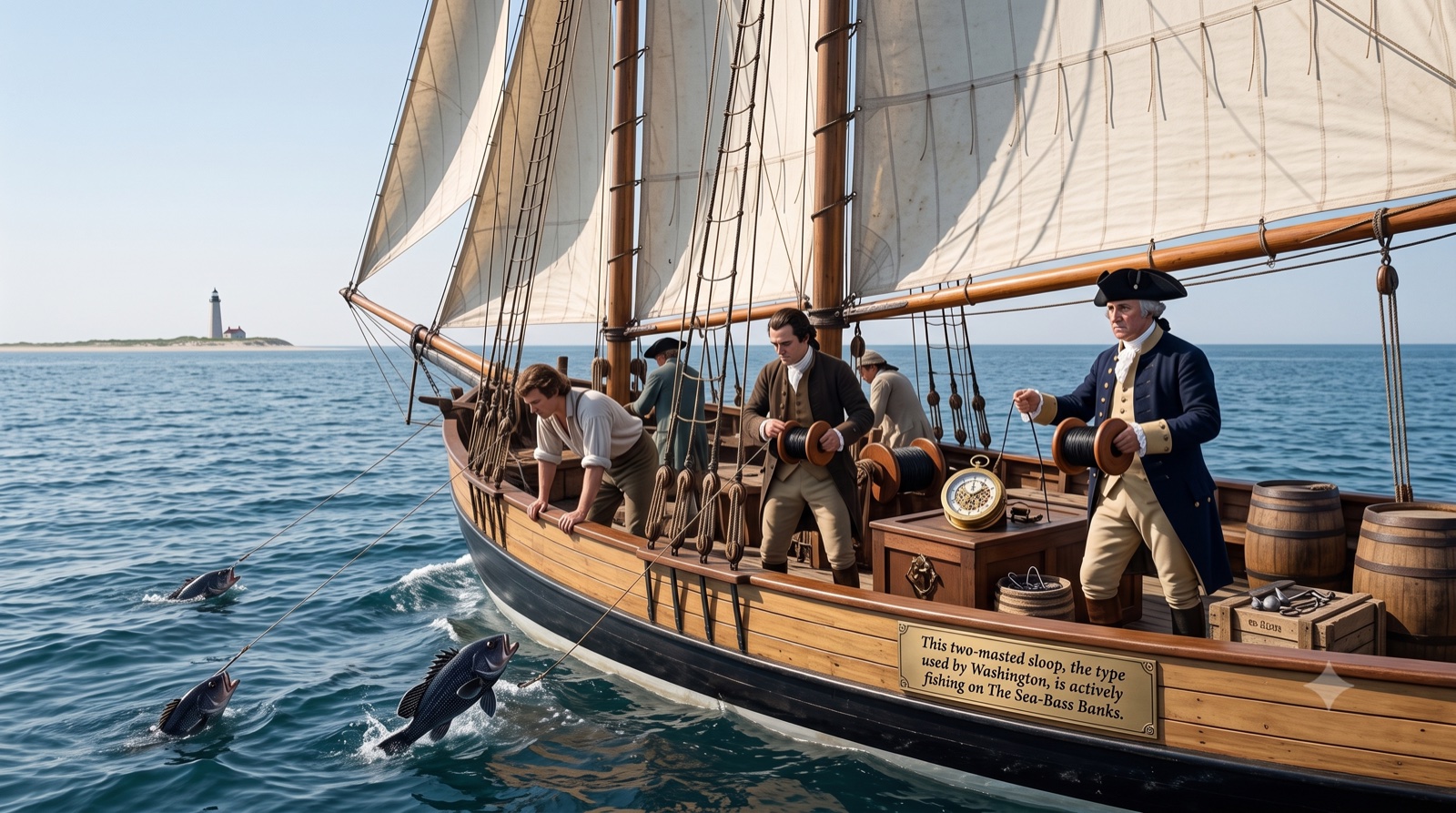
Washington, always the master strategist, saw his opening. He ordered a sailing vessel readied for a voyage to the famous "Sea-Bass Banks" located just a few leagues beyond the Sandy Hook lighthouse. But he wasn't going alone. In a stroke of pure executive genius, Washington drafted his two bitterest cabinet rivals, Hamilton and Jefferson, to join him on deck. Neither Hamilton nor Jefferson were known outdoorsmen; they were men of ink, law, and elegant drawing rooms. The image of these two hyper-intellectual rivals trapped together on a tossing wooden deck for three days—getting their fine wool coats splattered with salt spray and fish blood—is an incredible piece of American angling history.
Out Past the Breakers: The Angling Details
George Washington was a deeply passionate, lifelong angler. He famously managed one of the most lucrative commercial shad and herring fisheries on the Potomac River at Mount Vernon, once writing that his shoreline was "one entire fishery." He knew the water, he knew the gear, and he knew how a heavy bite could melt away human tension.
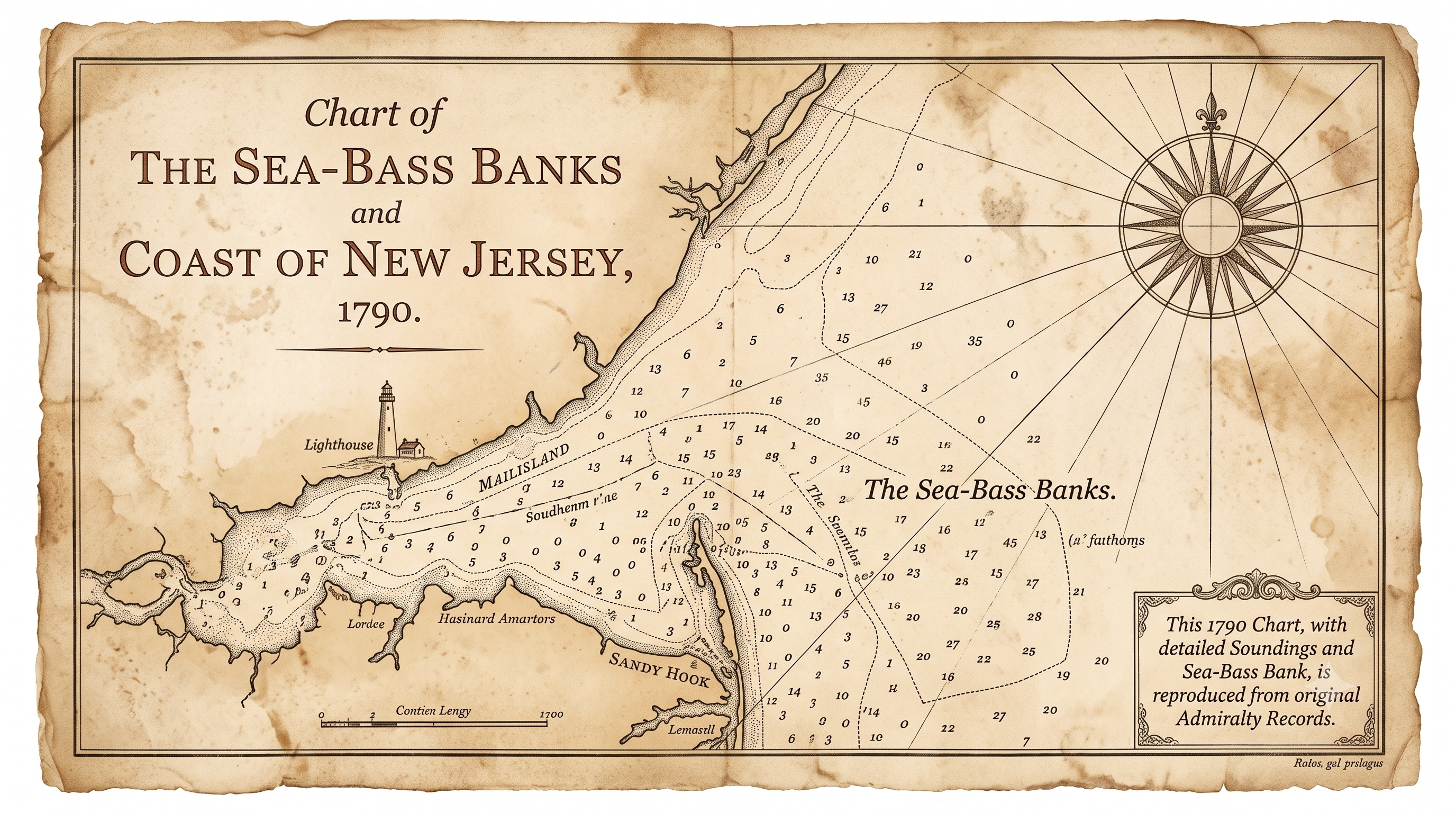
According to historical records and contemporary guidebooks from the period, the waters off the Atlantic Highlands and Sandy Hook were legendary: "A pleasant excursion for those who delight in sailing, is frequently made to the Sea-bass Banks, a few leagues beyond the lighthouse."
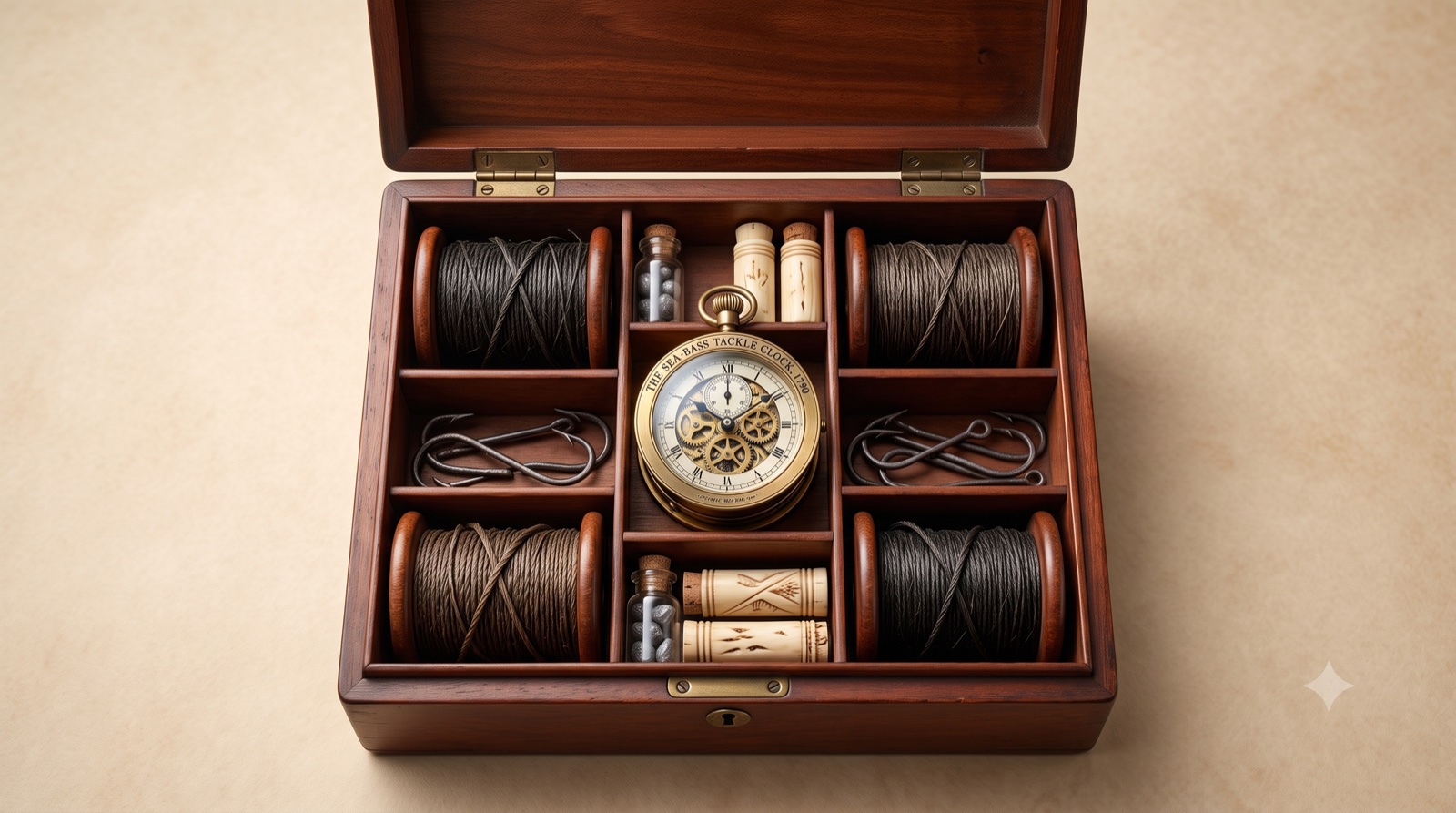
For three days, the party dropped lines into the Atlantic. They weren't sport-fishing with modern graphite rods; they were using the traditional tackle of the late 18th century.
- The Black Horsehair Line: Anglers of the era relied on thick, multi-ply lines tightly twisted from horsehair and silk. For the deep, murky waters where they targeted bottom fish, a dark, heavy horsehair hand-line provided the strength needed to pull big fish up from the structure.
- The Wooden Hand-Spool: Mechanical reels were non-existent for this style of fishing. Line was wrapped around hand-carved wooden spools. Hooking a fish meant feeling the raw strike directly against your fingers and hauling the line up wrap-by-wrap.
- Hand-Forged Hooks & Clam Bait: They used heavy, hand-forged iron "Kirby" style hooks, weighted with lead sinkers, and baited with fresh clams and cut crabs harvested from the local New York bays.
The Historical Citations
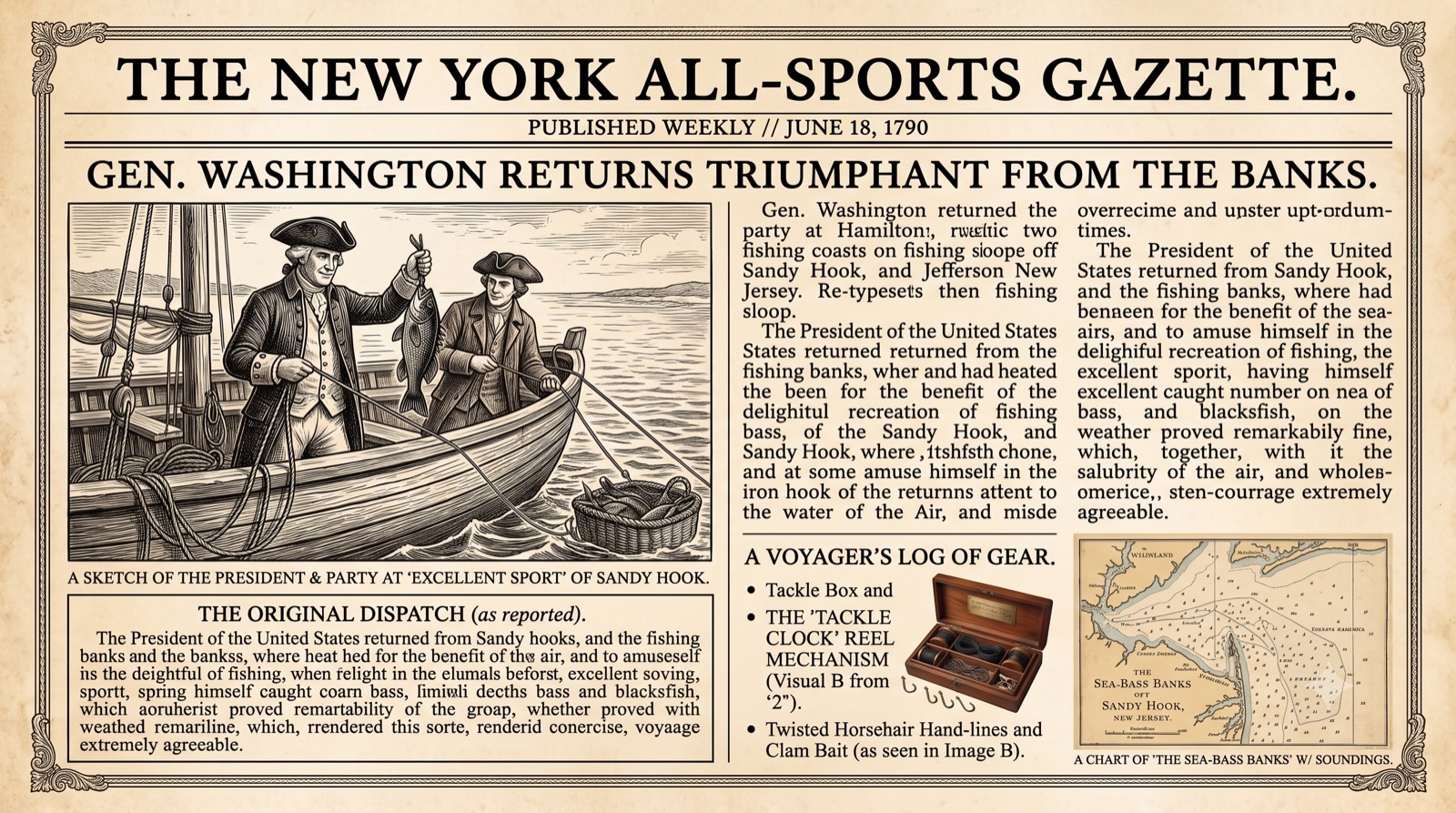
The trip was a resounding success, providing both physical healing for the President and a much-needed break from the pressure-cooker environment of Manhattan. Upon their return to port, local newspapers immediately took notice of the President's successful expedition.
A primary source from the era, a New York City newspaper dispatch from June 1790, captured the triumphant return verbatim:
"The President of the United States returned from Sandy Hook and the fishing banks, where he had been for the benefit of the sea air, and to amuse himself in the delightful recreation of fishing. We are told that he had excellent sport, having himself caught a great number of sea bass and blackfish, the weather proved remarkably fine, which, together with the salubrity of the air and wholesome exercise, rendered this little voyage extremely agreeable..."
The haul was so substantial that the ship's crew immediately salted down what the party couldn't eat fresh on board so it could be transported back to the temporary executive mansion in lower Manhattan. Salted fish was one of Washington's absolute favorite meals—historians note that salt cod or sea bass was his traditional, mandatory Sunday dinner.
"The Boat Where It Happened"
While modern history buffs and Broadway musicals celebrate the famous "Dinner Table Bargain"—the private dinner where Hamilton and Jefferson supposedly hammered out the historic Compromise of 1790—historians point out that the critical groundwork was laid right there on the rolling swells off New Jersey.
Trapped on a boat for 72 hours, Hamilton and Jefferson had nowhere to hide. They couldn't retreat to their respective political factions or hide behind their staff. Between bites of fresh black sea bass, they were forced to look at each other as men, partners, and patriots. Washington, acting as the ultimate captain, steered the conversation away from partisan vitriol and toward common ground.
The proof is in the immediate aftermath. Upon stepping back onto the docks of New York, Washington wrote warm, glowing praise for his cabinet, noting his "able coadjutors, who harmonize extremely well together."
Just weeks after returning from Sandy Hook with slimy hands and sunburnt faces, the bitter deadlock vanished. The historic Compromise of 1790 was officially signed into law. Hamilton got his federal debt assumption; Jefferson and the South got the national capital moved permanently south to the Potomac. The United States was preserved.
The Ultimate 250th 4th of July Lesson
As we celebrate the 250th anniversary of our independence, the lessons of June 1790 ring truer than ever. Our country wasn't just forged in heated legislative chambers or written on pieces of parchment. It was held together on a wooden boat, out on the ocean, by a group of men who put down their political weapons to pull up sea bass.
Anglers have always known that the water possesses a unique, undeniable power to heal divides, clear minds, and bring the fiercest rivals together. 236 years ago, George Washington proved it. The next time you drop a line over a rocky piece of bottom for sea bass off the coast of New York or New Jersey, remember: you aren't just participating in an iconic American pastime—you are practicing the exact tradition that kept the United States on the map.