Long Island Towns have to band together and get the DEC to Stock Winter Flounder
There was a NY State Ocean Science Lab in Montauk that raised baby flounder years ago. The DEC would not let them
release the baby flounder in Montauk.
I agree strongly with the above that something has to be done regarding the lack of a flounder population. Maybe the local fishing clubs, tackle shops and the partyboat fleet can start petitions to put some pressure on the local politicians
The only way anything will get done is to make the local politicians realize that many voters want something done.
Just a thought: If Lee Zelden (Shirley) is a candidate for governor. He might be a good place to start.
The DEC is only concerned with violations/ fines and licenses ($$$$$). They are NOT proactive and have never been,
There was a NY State Ocean Science Lab in Montauk that raised baby flounder years ago. The DEC would not let them
release the baby flounder in Montauk.
I agree strongly with the above that something has to be done regarding the lack of a flounder population. Maybe the local fishing clubs, tackle shops and the partyboat fleet can start petitions to put some pressure on the local politicians
The only way anything will get done is to make the local politicians realize that many voters want something done.
Just a thought: If Lee Zelden (Shirley) is a candidate for governor. He might be a good place to start.
I hope Lee Zeldin is elected Governor. Heard he really stood up for Fishermen out East.
Look how the Party boats got all together to fight the Fluke Regs., they got Sen. Schumer to help. and why can't they do the same with winter flounder ? It's odd none of them, the Fishing Magazines all do nothing. They got the clout, the Bully Pulpit to speak out and demand change. Nothing ?
I wish I had the Legal skills to file lawsuits, because I'd haul the DEC into court and have them explain why they've done nothing to protect a species that could vanish from our waters because of disease. So tempting to file a lawsuit against the State DEC and expose them as a bunch of do nothing frauds. What Court has jurisdiction over a matter like that ?
The DEC is only concerned with violations/ fines and licenses ($$$$$). They are NOT proactive and have never been,
There was a NY State Ocean Science Lab in Montauk that raised baby flounder years ago. The DEC would not let them
release the baby flounder in Montauk.
I agree strongly with the above that something has to be done regarding the lack of a flounder population. Maybe the local fishing clubs, tackle shops and the partyboat fleet can start petitions to put some pressure on the local politicians
The only way anything will get done is to make the local politicians realize that many voters want something done.
Just a thought: If Lee Zelden (Shirley) is a candidate for governor. He might be a good place to start.
Look how the Party boats got all together to fight the Fluke Regs., they got Sen. Schumer to help. and why can't they do the same with winter flounder ? It's odd none of them, the Fishing Magazines all do nothing. They got the clout, the Bully Pulpit to speak out and demand change. Nothing ?
I wish I had the Legal skills to file lawsuits, because I'd haul the DEC into court and have them explain why they've done nothing to protect a species that could vanish from our waters because of disease. So tempting to file a lawsuit against the State DEC and expose them as a bunch of do nothing frauds. What Court has jurisdiction over a matter like that ?

...they've done nothing to protect a species that could vanish from our waters because of disease...
Veni. Vidi. Cepi. - with apologies to Gaius Julius Caesar

Comorantitis Sealitis To name a few
Veni. Vidi. Cepi. - with apologies to Gaius Julius Caesar
Have to add Striperitis to that list, but that's not the list of "pathogens" I was looking for...
If it was because of predators you would still see people catch them occasionally. The only place I have seen or heard of flounder being caught are out in the ocean. Nothing from the bay.
From time to time they have diseased trout and salmon upstate and they always find a way to stock them.
How can it hurt stocking millions of 6 inch flounder in the bay and see what happens? Do Something ! It's the perfect fish to stock and won't swim to another region. I agree most of flounder are being caught in the ocean and around wrecks where they congregate .Doesn't mean they moved out of the bay because the bays aren't clean. Flounder are still in the bay but the population is tiny.
The Early 1980's was probably the best fishing I ever had in the NY Bight. You could hop on a Freeport Party Boat and easily catch 5-10 cod a trip, catch all the whiting you wanted near Ambrose, Catch a gazillion flounder. Even Fluke made a huge comeback when the Foreign Fleet was kicked out. The only species in trouble were the Striped Bass. The PCB scare and they came back in huge #'s.
It was great fishing in Reynolds Channel in the early 1980's in May when Flounder were migrating. You anchored a short distance from The Point Lookout Boat Ramp next to the Marsh and one Flounder after another. And you'd catch Fluke if you let a piece of squid drift back .
I wish the DEC would do something about Winter Flounder. The last time I caught a Flounder I was 27 and now I'm 58. I still remember the old Flounder spots in the bay.
It's overfishing, species that wintered in the deep got wiped out by the Foreign Fleet- Cod, Fluke, Porgies, Seabass. Species like Whiting wintered inside of 12 miles for the most part and remained abundant throughout the 60's and 70's, same with Winter Flounder.. Striped Bass were netted on the beach. The US Fleet grew and the heart attack scare caused people to eat
more fish. Flounder and Fluke were targeted and Fluke Collapsed in the late 1980's. Commercials targeted the other native fish in the are to make up for the loss of Fluke.
St. Patrick's Day was the "official" start of the spring flounder fishing.
Did the fleet fish it out to a certain extent? Yes. That is how good the fishing was at the time.
However, when the fishery started to fail. The DEC did nothing. They are still doing nothing 40 years later.
Pressure on the local politicians is the only way to get things changed.
Remember as I said before. The DEC is only worried about one thing, $$$$$$.
Maybe a Class Action lawsuit against a Politician because they appoint the wrong people to run the DEC ? Especially with all the focus on the environment they'd respond and order the DEC to do something. The DEC studied Winter Flounder a Couple of years ago. Never saw any reports. The other magazine ( don't know if I'm allowed to mention them by name) with all their subscribers could easily assemble a staff of volunteer lawyers/fishermen and file a class action lawsuit against the DEC and fight them in court. Nothing for 30 years ! They'd be more popular if they were Fishing Activists .
Who's stopping you from trying to find a shyster who would take this one on?
Veni. Vidi. Cepi. - with apologies to Gaius Julius Caesar
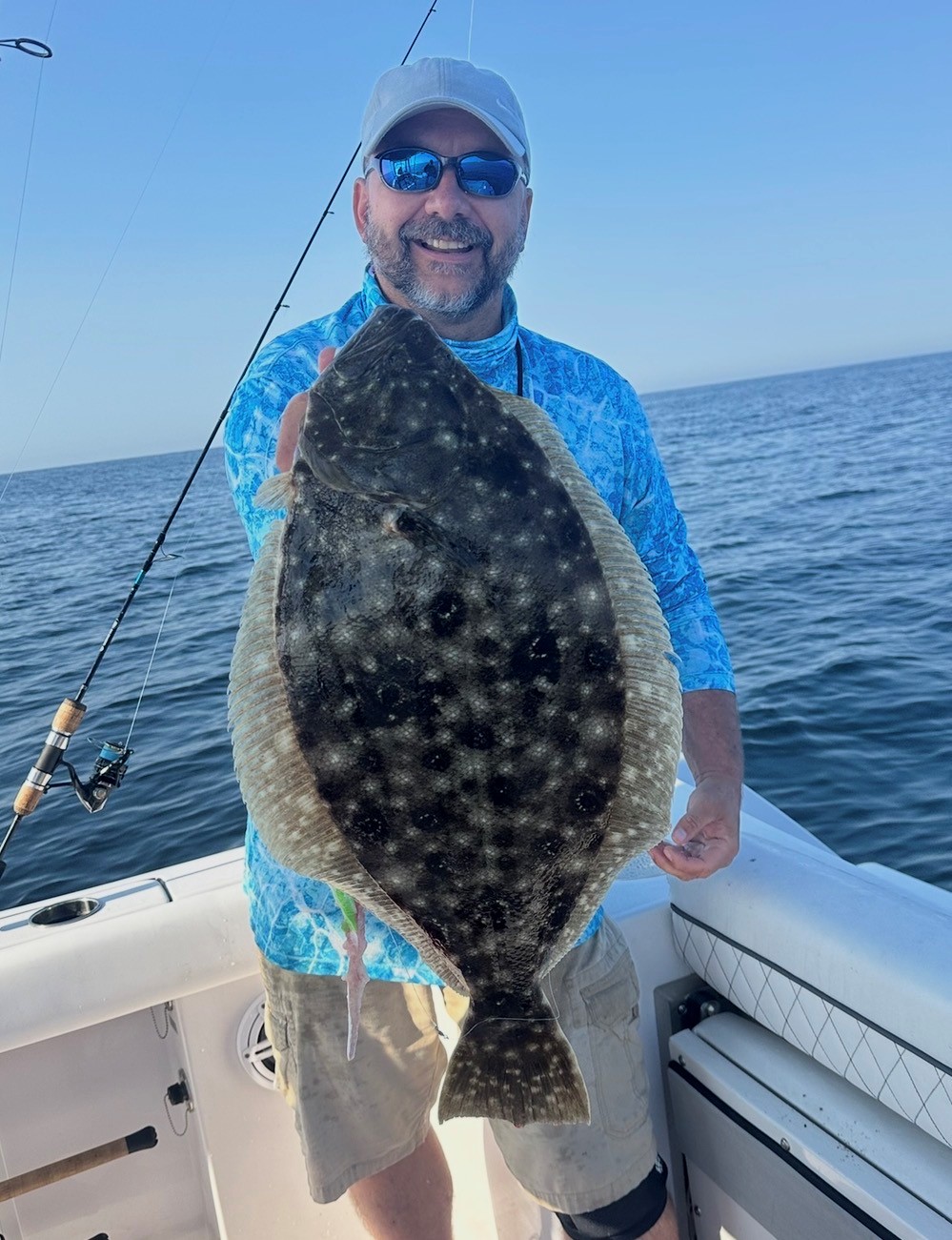
Just my undocumented opinion but the demise of the blackback flounder has got to be something else. Stripers, seals and birds can't be the reason. I have not seen a flounder caught from the Freeport, Merrick, Belmore or Wantagh bays in 20 years. You don't hear about anyone catching them incidentally. They are just not here for the us, stripers, birds or anything else to eat. In the 70s and 80s it was a no brainer to go out and catch at least a few. If you knew what you were doing, you could fill a 5 gallon bucket in a few hours.
If it was because of predators you would still see people catch them occasionally. The only place I have seen or heard of flounder being caught are out in the ocean. Nothing from the bay.
With that said, many anglers, maybe even @Roccus7, are unaware, that around that same time in the 80's when we were trying to restore the strip[ed bass population, over 5% of the biomass was stocked striped bass. Now that seems to have worked out fine.
The fact is though the blackback flounder are thriving. The problem is they've moved offshore. I think it's more of an environmental issue than anything. We're finding the same with many fish ie: striped bass, bluefish and weakfish just to name a few.
george@nyangler.com
www.nyangler.com - Your Secret Spot Online !
With that said, many anglers, maybe even @Roccus7, are unaware, that around that same time in the 80's when we were trying to restore the strip[ed bass population, over 5% of the biomass was stocked striped bass. Now that seems to have worked out fine.
This table shows the total stocking reported to ASMFC:
10.5 million fish over 8 years isn't much across the entire east coast and the article only cites significant success in the Pawtuxet River system, a single river system that got over 25% of the total stocking. It seems that the severe regulatory actions of restrictions and moratoria had more impact than the stocking, without any of the potential genetic issues due to stocking, or as they put it, "Stock Enhancement".
I quote from the article:
The stocking of large numbers of juveniles in order to increase the numbers of sub-adult and spawning fish appears to have been successful, at least in some tributaries Patuxent River... the Patuxent River is an exception, since there appears to be a significant hatchery contribution to the spawning population and viable fry.
A summary of stocking:
Cost of individual fish production for the Chesapeake Bay striped bass stocking program ranged from 0.42 cents to $4.28, depending on the facility and the phase of fish produced (Upton and Mangold 1996). Total costs for rearing 7.8 million striped bass at U.S. federal hatcheries and power company hatcheries during the period 1985-1995 were estimated at $7,135,839. Total costs of any stocking program, including start-up costs if infrastructure such as new hatchery facilities are required, should be weighed against the benefits in terms of the economic value of recreational or commercial fisheries to be restored and/or enhanced, as well as the ecological value derived from reestablishing biodiversity or community structure. No such study has been conducted for stocking programs involving migratory striped bass. A last, somewhat philosophical issue is: Why stock if a wild, self-sustaining population can be maintained through controlled harvest? Stocking is expensive as noted above, requiring extensive use of limited funding available for fisheries management, and has other associated problems (maintaining appropriate genetic diversity, etc., see below). In theory, wild populations should sustain themselves at no cost to society as long as spawning stock biomass is sufficiently high. However, good management requires constant monitoring to collect and analyze data to ensure that sufficient spawning stock biomass is maintained, and such monitoring also is expensive. We are not aware of any studies that compared the costs of these two management approaches and reached a conclusion as to which is most cost-effective for sustaining public trust resources. Grimes (1998) recently reviewed the historical development of marine stock enhancement and discussed the rationale for attempting to enhance marine populations using hatchery-reared progeny; the same issues apply to discussion of anadromous stock enhancement.
Grimes noted that artificial enhancement of natural populations, if it can be accomplished, would be an attractive solution to fishery managers who are desperate to recover depleted populations. But,
he also raises the issue of whether marine stock enhancement is simply “techno-arrogance”, our belief that we can avoid making the difficult decisions necessary to conserve natural populations and the ecosystems that produce them through the techno-fix of enhancement (Grimes 1998). He concludes that, although the scientific basis for marine stock enhancement has significantly advanced, “...it is not yet possible to conclude that marine stock enhancement is or is not biologically and economically
feasible”, and noted that the desirability of stock enhancement for recovering populations must be weighed against the far less expensive, but more politically difficult, traditional management approaches such as size limits, catch quotas, gear restrictions, and harvest refugia. Our sentiments lie with maintaining the wild populations because so many genetics pitfalls are avoided under that alternative as well.
Veni. Vidi. Cepi. - with apologies to Gaius Julius Caesar

Exactly what disease are you talking about? I've never seen one cited as a cause of flounders' demise.

Sign in to reply to this thread.