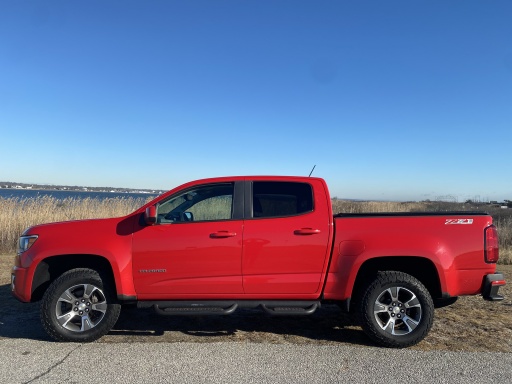
Going to bed thinking if I should pull the trigger and buy this
the "What are you doing NOW" thread (part deux)
Keep doing the previous post and maybe you will.:)
The bidding closed, didn’t meet reserve. Then put up at a price, the seller and I agreed on a price, but I decided not to buy it. I have to have a clutch pedal in any toy I decide to buy.
M.H.
AdmiralOriginal Crew25,799 postsSince 2018


California Governor banned the use / or sale gas powered lawn mowers… wish they would include leaf blowers too… cellfish…
He did, all small motors so weed whackers, chain saws, etc...
California Governor Gavin Newsom has signed [legislation]('https://leginfo.legislature.ca.gov/faces/billNavClient.xhtml?bill_id=202120220AB1346') that aims to ban the sale of gas-powered lawn equipment, generators, and other small engines designed for off-road use.
This new law builds from the executive order signed by Newsom in 2020 that [bans the sale of new passenger cars powered by internal combustion engines]('https://www.thedrive.com/news/36687/california-bans-the-sale-of-new-gas-and-diesel-cars-by-2035') in 2035. In the same order, Newsom calls for "100 percent zero-emission off-road vehicles and equipment," the phaseout of which must now be road mapped by the California Air Resources Board (CARB) in 2022 and officially put in place by 2024.
The text of the signed bill specifically calls for the banning of small off-road engines (SORE), calling out emergency response equipment and generators as well as both residential and commercial lawn equipment.
However, the SORE category expands past the named items. CARB officially [defines]('https://ww2.arb.ca.gov/our-work/programs/small-off-road-engines-sore/about') SOREs as off-road spark-ignition engines that produce 25 horsepower or less. Other equipment examples given by the board include industrial, logging, golf carts, and specialty vehicles. It's not yet clear how this will affect small off-road recreational and sport vehicles like ATVs and dirt bikes, though most exceed that 25-hp threshold.
“Small gas engines are not only bad for our environment and contributing to our climate crisis, they can cause asthma and other health issues for workers who use them,” said Assemblywoman Lorena Gonzalez, a co-sponsor of the bill. “It’s time we phased out these super polluters, and help small landscaping businesses transition to cleaner alternatives.”
There are currently 16.7 million small engines in California, according to a [fact sheet]('https://www.arb.ca.gov/msprog/offroad/sore/sm_en_fs.pdf') supplied by CARB. That's significantly more than the state's fleet of 13.7 million passenger vehicles. Approximately 77 percent is made up of residential lawn and garden equipment, while federally regulated construction and farming machinery make up 11 percent. The remaining 9 percent is attributed to commercial lawn and garden, which may be hit hardest by this legislation.
These fleets of small engines are responsible for a substantial amount of the state's emissions. In fact, CARB says that running a leaf blower for an hour is equivalent to driving a 2017 Toyota Camry for 1,100 miles.
Marc Berman, author of the legislation, recognizes that the transition to battery-powered equipment will be a hardship for some small businesses. He says that California will pledge approximately $30 million to aid commercial businesses, but given that there are around 50,000 outfits in the state that'll be affected by the change, that works out to around $600 each.
According to financial figures supplied to the [Los Angeles Times]('https://www.latimes.com/california/story/2021-10-09/california-moves-toward-ban-on-gas-lawnmowers-and-leaf-blowers') by Andrew Bray, vice president of government relations for the National Association of Landscape Professionals, that simply isn't enough. A gasoline-powered commercial riding mower could cost a business anywhere from $7,000 to $11,000, while the zero-emissions equivalents often cost more than twice that.
Equipment cost aside, there are also logistical concerns. For example, Bray believes that a three-person crew would need to carry as many as 40 fully-charged batteries to complete a full day's work. Additionally, these small companies may even need to upgrade their workshops to handle the daily charging of this equipment.
Legislators have their concerns as well. Given California's history of [brownouts and power grid problems]('https://www.thedrive.com/tech/7744/california-brownouts-could-be-prevented-by-tesla-batteries'), some lawmakers like Senator Brian Dahle say that banning critical fuel-based power backup mechanisms like generators makes no sense.
"[Fuel] is very sustainable. It’s easy to access. And when the power is off, you can still use it," said Dahle. "You can still run a generator to keep your freezer going, to keep your medical devices going. But when your battery’s dead and there’s no power on, you have nothing.”
California will require that the ARB determine the regulations which will govern small engines no later than July 1, 2022. The adopted regulations will be put in place 18 months later on Jan. 1, 2024.
California Is Banning Small Engines. Here's What It Means
Shall I go to heaven or a-fishing? - H. D. Thoreau
Veni. Vidi. Cepi. - with apologies to Gaius Julius Caesar
Veni. Vidi. Cepi. - with apologies to Gaius Julius Caesar
AdmiralOriginal Crew21,717 postsSince 2018
He did, all small motors so weed whackers, chain saws, etc...
California Governor Gavin Newsom has signed [legislation]('https://leginfo.legislature.ca.gov/faces/billNavClient.xhtml?bill_id=202120220AB1346') that aims to ban the sale of gas-powered lawn equipment, generators, and other small engines designed for off-road use.
This new law builds from the executive order signed by Newsom in 2020 that [bans the sale of new passenger cars powered by internal combustion engines]('https://www.thedrive.com/news/36687/california-bans-the-sale-of-new-gas-and-diesel-cars-by-2035') in 2035. In the same order, Newsom calls for "100 percent zero-emission off-road vehicles and equipment," the phaseout of which must now be road mapped by the California Air Resources Board (CARB) in 2022 and officially put in place by 2024.
The text of the signed bill specifically calls for the banning of small off-road engines (SORE), calling out emergency response equipment and generators as well as both residential and commercial lawn equipment.
However, the SORE category expands past the named items. CARB officially [defines]('https://ww2.arb.ca.gov/our-work/programs/small-off-road-engines-sore/about') SOREs as off-road spark-ignition engines that produce 25 horsepower or less. Other equipment examples given by the board include industrial, logging, golf carts, and specialty vehicles. It's not yet clear how this will affect small off-road recreational and sport vehicles like ATVs and dirt bikes, though most exceed that 25-hp threshold.
“Small gas engines are not only bad for our environment and contributing to our climate crisis, they can cause asthma and other health issues for workers who use them,” said Assemblywoman Lorena Gonzalez, a co-sponsor of the bill. “It’s time we phased out these super polluters, and help small landscaping businesses transition to cleaner alternatives.”
There are currently 16.7 million small engines in California, according to a [fact sheet]('https://www.arb.ca.gov/msprog/offroad/sore/sm_en_fs.pdf') supplied by CARB. That's significantly more than the state's fleet of 13.7 million passenger vehicles. Approximately 77 percent is made up of residential lawn and garden equipment, while federally regulated construction and farming machinery make up 11 percent. The remaining 9 percent is attributed to commercial lawn and garden, which may be hit hardest by this legislation.
These fleets of small engines are responsible for a substantial amount of the state's emissions. In fact, CARB says that running a leaf blower for an hour is equivalent to driving a 2017 Toyota Camry for 1,100 miles.
Marc Berman, author of the legislation, recognizes that the transition to battery-powered equipment will be a hardship for some small businesses. He says that California will pledge approximately $30 million to aid commercial businesses, but given that there are around 50,000 outfits in the state that'll be affected by the change, that works out to around $600 each.
According to financial figures supplied to the [Los Angeles Times]('https://www.latimes.com/california/story/2021-10-09/california-moves-toward-ban-on-gas-lawnmowers-and-leaf-blowers') by Andrew Bray, vice president of government relations for the National Association of Landscape Professionals, that simply isn't enough. A gasoline-powered commercial riding mower could cost a business anywhere from $7,000 to $11,000, while the zero-emissions equivalents often cost more than twice that.
Equipment cost aside, there are also logistical concerns. For example, Bray believes that a three-person crew would need to carry as many as 40 fully-charged batteries to complete a full day's work. Additionally, these small companies may even need to upgrade their workshops to handle the daily charging of this equipment.
Legislators have their concerns as well. Given California's history of [brownouts and power grid problems]('https://www.thedrive.com/tech/7744/california-brownouts-could-be-prevented-by-tesla-batteries'), some lawmakers like Senator Brian Dahle say that banning critical fuel-based power backup mechanisms like generators makes no sense.
"[Fuel] is very sustainable. It’s easy to access. And when the power is off, you can still use it," said Dahle. "You can still run a generator to keep your freezer going, to keep your medical devices going. But when your battery’s dead and there’s no power on, you have nothing.”
California will require that the ARB determine the regulations which will govern small engines no later than July 1, 2022. The adopted regulations will be put in place 18 months later on Jan. 1, 2024.
[California Is Banning Small Engines. Here's What It Means]('https://www.thedrive.com/news/42744/california-is-banning-small-engines-heres-what-it-means')
Not sure why they're targeting lawn equipment, since their water supply is coming close to non-existent and few places can actually water their lawns, so much of that equipment is probably sitting in the sheds/garages...
Shall I go to heaven or a-fishing? - H. D. Thoreau
Veni. Vidi. Cepi. - with apologies to Gaius Julius Caesar
Veni. Vidi. Cepi. - with apologies to Gaius Julius Caesar
AdmiralOriginal Crew21,717 postsSince 2018
Not sure why they're targeting lawn equipment, since their water supply is coming close to non-existent and few places can actually water their lawns, so much of that equipment is probably sitting in the sheds/garages...
because they can........
"Well, it's alright.
.............even if you're old and gray."
"Well, it's alright.
............you still got something to say."
.............even if you're old and gray."
"Well, it's alright.
............you still got something to say."
AdmiralOriginal Crew20,900 postsSince 2018
just finished reassessing the damage to the VW...
Was driving a backroad yesterday with my brother & brother-in-law when a deer came out onto the road. In attempting to avoid it I hit a small ditch that was hidden by weeds & the front spoiler made impact with the ground.
:mad:
"Well, it's alright.
.............even if you're old and gray."
"Well, it's alright.
............you still got something to say."
.............even if you're old and gray."
"Well, it's alright.
............you still got something to say."
AdmiralOriginal Crew20,900 postsSince 2018
just finished reassessing the damage to the VW...
Was driving a backroad yesterday with my brother & brother-in-law when a deer came out onto the road. In attempting to avoid it I hit a small ditch that was hidden by weeds & the front spoiler made impact with the ground.
:mad:
That sucks. Keep an eye on the temp gauge when you're driving, sometimes those underbody spoilers direct airflow to help keep the engine cool.
A lawyer with his briefcase can steal more than a hundred men with guns- Mario Puzo
CommodoreOriginal Crew9,876 postsSince 2018
That sucks. Keep an eye on the temp gauge when you're driving, sometimes those underbody spoilers direct airflow to help keep the engine cool.
It's going to sit in driveway until Monday. I'll take it up to the autobody shop about a mile away.
"Well, it's alright.
.............even if you're old and gray."
"Well, it's alright.
............you still got something to say."
.............even if you're old and gray."
"Well, it's alright.
............you still got something to say."
AdmiralOriginal Crew20,900 postsSince 2018
on hold with Geico to report my mishap...................
It's been 18 minutes & 43 seconds.
:rolleyes:
2 hours last night with Delta
Commodore5,031 postsSince 2020
2 hours last night with Delta
went to an hour & 1/2 before someone picked up - thank God I'm retired - how I would have done that had I been working I'll never know
"Well, it's alright.
.............even if you're old and gray."
"Well, it's alright.
............you still got something to say."
.............even if you're old and gray."
"Well, it's alright.
............you still got something to say."
AdmiralOriginal Crew20,900 postsSince 2018
Sign in to reply to this thread.
Thread
the "What are you doing NOW" thread (part deux)