[HEADING=3][=AZUQ6zmi6tcEraM9Fi2ixjZUsBbj76cP5EsxKhnS2oUVua8BY6ccqc_YwyVarn1qhX12QF_dMs_MCY9d2X-mtz-x7tGKOkvFSVN_6MIaGQz1Lg8f59wbqdsRsPWava3b0ckxmKnG2hycQhF4Zm_qKjKiOyxmicAd3htv6wtlkrO3KuLnxN5OxEojN-hbz1d2hYraPKY_AY0lhzragbFoAQff&__tn__=-UC%2CP-R']Shore History]('https://www.facebook.com/ShoreHistoryESVA?__cft__[0)[/HEADING]
·
[Log into Facebook]('https://www.facebook.com/#')
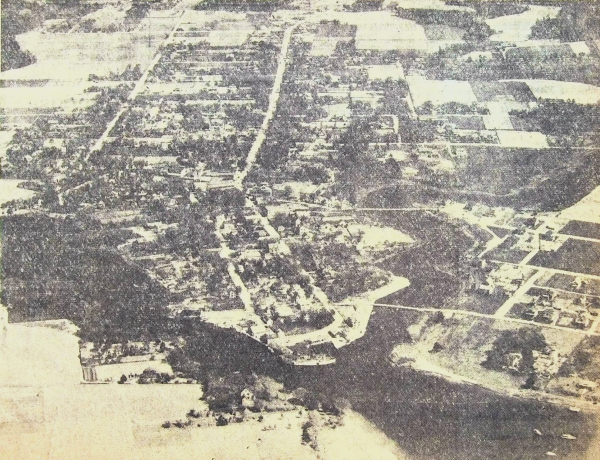
In June 1680 the Virginia General Assembly passed “An Act of Cohabitation and Encouragement of Trade and Manufacture.” The act required each county in the Colony of Virginia to set aside land for the development of a port town with storehouses. Fifty acres was to be set aside for the creation of the ports and the act designated which specific bodies of water the ports would be located on. The port for Accomack County was located at the northwest side of the head of Onancock Creek. Land was bought from Charles Scarburgh to create the town of Onancock then also known as Port Scarburgh. The town was up the creek to the east of the Onancock Tribe’s village led by chieftain Ekeeks. John West and William Custis served as trustees of the land. Surveyor Daniel Jenifer planned out the town with a few streets that went from the wharf and stopped where North Street is today. It is likely that many of the roads in downtown Onancock have changed very little from Jenifer’s survey.
Onancock was the official port of the county so a warehouse, church, and courthouse were built. The act required ships to load or unload their goods only at the designated ports but many colonists continued shipping goods from whatever creek was most convenient for them. Court met occasionally in the town before the county’s courthouse was permanently relocated in 1693 to what would eventually become Accomac.
The town survived despite losing the traffic and business that court days brought. Two major developments in the mid-1800s spurred the growth of the town. The first was increased use of the port as steamboat routes developed on the Chesapeake Bay. The Eastern Shore Steamboat Company and Maryland Steamboat Company transported goods and people between Onancock and Baltimore. Steamboat traffic coincided with the opening of Hopkins & Bro. Store at Onancock Wharf and by 1878 the store was a shipping agent for the Eastern Shore Steamboat Co. Business from the wharf was a boom to the economy and lots became available for purchase in the town beyond the present North Street. For many years Ker Place was on the boundary of the town but lots for new homes became available as the property was broken up. The town continued to grow and today it is one of five towns established by the 1680 act that has survived.
Image circa 1930.
===================
*"John West and William Custis served as trustees of the land."
A decendent of William Custis is the Brit's lawyer for the LLC*