noreaster.com

R.I.P.

129,195 views·1908 replies·by JackPrintMD·First Post·Latest
jpd
jpdMODnoreaster.com2023#1001

Willis Reed!!

[HEADING=2][Willis Reed, Hall of Fame Center for Champion Knicks, Dies at 80]('https://www.nytimes.com/2023/03/21/sports/basketball/willis-reed-dead.html')[/HEADING]
[Willis Reed, Hall of Fame Center for Champion Knicks, Dies at 80]('https://www.nytimes.com/2023/03/21/sports/basketball/willis-reed-dead.html')
[He was beloved by New York fans for his willingness to play hurt, as exemplified in the decisive game of the 1970 N.B.A. finals.]('https://www.nytimes.com/2023/03/21/sports/basketball/willis-reed-dead.html')

He missed the 50th anniversary celebration of their championship last month, figured he was in poor health.

A lawyer with his briefcase can steal more than a hundred men with guns- Mario Puzo
CommodoreOriginal Crew9,876 postsSince 2018
jpd
jpdMODnoreaster.com2023#1002

RIP Woodstock girl

Gal in the iconic photo passes away at 74 - was still married to the guy in the pic. The inexorable march of time....

[URL unfurl="true"]https://nypost.com/2023/03/22/bobbi-kelly-featured-in-iconic-woodstock-album-photo-dies/[/URL]

attachment 60730

attachment-60730

A lawyer with his briefcase can steal more than a hundred men with guns- Mario Puzo
CommodoreOriginal Crew9,876 postsSince 2018
wader
waderFREE2023#1003

“I just hope that when folks look at that picture and they think of what a chaotic, troubled world we have right now, [they will feel] that there’s always hope,” she said. “Always. No matter how bad it seems to be, you gotta have hope.”

Bobbi had been in hospice and made her husband promise her three things before she died, Nick said: “1. No more hospitals 2. Home is where she will stay 3. When her time comes for her passing, that I would hold her close.”

“I was able to accomplish these 3 promises as my sweet Bobbi passed from this world while I held her close with our sons next to us,” Nick wrote in a heartbreaking follow-up post.

"Well, it's alright.
.............even if you're old and gray."
"Well, it's alright.
............you still got something to say."
AdmiralOriginal Crew20,900 postsSince 2018
Old Mud
Old MudFREE2023#1004
RIP, C.W. McCall
Tell your Children every day that you love them
I was so poor growing up, if i were not a boy i would have had Nothing to play with !! :)
All that matters in the end is that we Loved
"Life isn't about waiting for the storm to pass; it's about learning to dance in the rain."
CommodoreOriginal Crew5,182 postsSince 2018
Aquarius
> RIP, C.W. McCall [MEDIA=youtube]j3VN54M1OXA[/MEDIA]
First MateOriginal Crew568 postsSince 2018
Aquarius
> RIP, C.W. McCall Hold your horses! He died over a year ago! **[C W McCall (William Dale Fries Jr)]('https://en.wikipedia.org/wiki/C._W._McCall#External_links')**
First MateOriginal Crew568 postsSince 2018
Old Mud
Old MudFREE2023#1007

Hold your horses! He died over a year ago!

[C W McCall (William Dale Fries Jr)]('https://en.wikipedia.org/wiki/C._W._McCall#External_links')

Well thanks for letting me know.

Tell your Children every day that you love them
I was so poor growing up, if i were not a boy i would have had Nothing to play with !! :)
All that matters in the end is that we Loved
"Life isn't about waiting for the storm to pass; it's about learning to dance in the rain."
CommodoreOriginal Crew5,182 postsSince 2018
Roccus7
Roccus7MODnoreaster.com2023#1008

[HEADING=2][SIZE=7]Gordon E. Moore, Intel Co-Founder Behind Moore’s Law, Dies at 94[/SIZE][/HEADING]
His prediction in the 1960s about rapid advances in computer chip technology charted a course for the age of high tech.

Gordon E. Moore, a co-founder and former chairman of [Intel Corporation]('https://www.nytimes.com/topic/company/intel-corporation'), the California semiconductor chip maker that helped give Silicon Valley its name, achieving the kind of industrial dominance once held by the giant American railroad or steel companies of another age, died on Friday at his home in Hawaii. He was 94.
His death was [confirmed by Intel]('https://www.intc.com/news-events/press-releases/detail/1611/gordon-moore-intel-co-founder-dies-at-94') and the Gordon and Betty Moore Foundation. They did not provide a cause.

Along with a handful of colleagues, Mr. Moore could claim credit for bringing laptop computers to hundreds of millions of people and embedding microprocessors into everything from bathroom scales, toasters and toy fire engines to cellphones, cars and jets.

Mr. Moore, who had wanted to be a teacher but could not get a job in education and later called himself the Accidental Entrepreneur, became a billionaire as a result of an initial $500 investment in the fledgling microchip business, which turned electronics into one of the world’s largest industries.

And it was he, his colleagues said, who saw the future. In 1965, in what became known as [Moore’s Law]('https://www.nytimes.com/2016/05/05/technology/moores-law-running-out-of-room-tech-looks-for-a-successor.html'), he predicted that the number of transistors that could be placed on a silicon chip would double at regular intervals for the foreseeable future, thus increasing the data-processing power of computers exponentially.

He added two corollaries later: The evolving technology would make computers more and more expensive to build, yet consumers would be charged less and less for them because so many would be sold. Moore’s Law held up for decades.

Through a combination of Mr. Moore’s brilliance, leadership, charisma and contacts, as well as that of his partner and Intel co-founder, [Robert Noyce]('https://www.nytimes.com/1990/06/04/obituaries/an-inventor-of-the-microchip-robert-n-noyce-dies-at-62.html'), the two assembled a group widely regarded by many as among the boldest and most creative technicians of the high-tech age.

This was the group that advocated the use of the thumbnail-thin chips of silicon, a highly polished, chemically treated sandy substance — one of the most common natural resources on earth — because of what turned out to be silicon’s amazing hospitality in housing smaller and smaller electronic circuitry that could work at higher and higher speeds.

With its silicon microprocessors, the brains of a computer, Intel enabled American manufacturers in the mid-1980s to regain the lead in the vast computer data-processing field from their formidable Japanese competitors. By the ’90s, Intel had placed its microprocessors in 80 percent of the computers that were being made worldwide, becoming the most successful semiconductor company in history.

Much of his happened under Mr. Moore’s watch. He was chief executive from 1975 to 1987, when Andrew Grove succeeded him, and remained as chairman until 1997.

As his wealth grew, Mr. Moore also became a major figure in philanthropy. In 2001, he and his wife created the Gordon and Betty Moore Foundation with a donation of 175 million Intel shares. In 2001, they donated $600 million to California Institute of Technology, the largest single gift to an institution of higher learning at the time. The foundation’s assets currently exceed $8 billion and it has given away more than $5 billion since its founding.

In interviews, Mr. Moore was characteristically humble about his achievements, particularly the technical advances that Moore’s Law made possible.

“What I could see was that semiconductor devices were the way electronics were going to become cheap. That was the message I was trying to get across,” he told the journalist Michael Malone in 2000. “It turned out to be an amazingly precise prediction — a lot more precise than I ever imagined it would be.”

Not only was Mr. Moore predicting that electronics would become much cheaper over time, as the industry shifted from away from discrete transistors and tubes to silicon microchips, but over the years his prediction proved so reliable that technology firms based their product strategy on the assumption that Moore’s Law would hold.

“Any business doing rational multiyear planning had to assume this rate of change or else get steamrolled,” said Harry Saal, a longtime Silicon Valley entrepreneur.

“That’s his legacy,” said Arthur Rock, an early investor in Intel and friend of Mr. Moore’s. “It’s not Intel. It’s not the Moore Foundation. It’s that phrase: Moore’s Law.”

Gordon Earl Moore was born on Jan. 3, 1929, in San Francisco. He grew up in Pescadero, a small coastal town south of San Francisco, where his father, Walter H. Moore, was deputy sheriff and the family of his mother, the former Florence Almira Williamson, ran the general store.

Mr. Moore enrolled at San Jose State College (now San José State University), where he met Betty Whitaker, a journalism student. They married in 1950. That year, he completed his undergraduate studies at the University of California, Berkeley, with a degree in chemistry. In 1954, he received his doctorate, also in chemistry, from the Caltech.

One of the first jobs he applied for was as a manager with Dow Chemical. “They sent me to a psychologist to see how this would fit,” Mr. Moore wrote in 1994. “The psychologist said I was OK technically but I’d never manage anything.”

So Mr. Moore took a position with the Applied Physics Laboratory at Johns Hopkins University in Maryland. Then, looking for a way back to California, he interviewed at Lawrence Livermore Laboratory in Livermore, Calif. He was offered a job, “but I decided I didn’t want to take spectra of exploding nuclear bombs, so I turned it down,” he wrote.

Instead, in 1956, Mr. Moore joined William Shockley, the inventor of the transistor, to work at a West Coast division of Bell Laboratories, a start-up unit whose aim was to make a cheap silicon transistor.
But the company, Shockley Semiconductor, foundered under Mr. Shockley, who had no experience running a company. In 1957, Mr. Moore and Mr. Noyce joined a group of defectors who came to be known as “[the traitorous eight]('https://www.nytimes.com/2021/11/20/technology/jay-last-dead.html').” With each putting in $500, along with $1.3 million in backing from the aircraft pioneer Sherman Fairchild, the eight men left to form the Fairchild Semiconductor Corporation, which became a pioneer in manufacturing integrated circuits.

Bitten by the entrepreneurial bug, Mr. Moore and Mr. Noyce decided in 1968 to form their own company, focusing on semiconductor memory. They wrote what Mr. Moore described as a “very general” business plan.

“It said we were going to work with silicon … and make interesting products,” he said in an interview in 1994.

Their vague proposal notwithstanding, they had no trouble finding financial backing.

With $2.5 million in capital, Mr. Moore and Mr. Noyce called their start-up Integrated Electronics Corporation, and later shortened it to Intel. The third employee was Mr. Grove, a young Hungarian immigrant who had worked under Mr. Moore at Fairchild.

After some indecision around what technology to focus on, the three men settled on a new version of MOS — metal oxide semiconductor — technology called silicon-gate MOS. To improve a transistor’s speed and density, they used silicon instead of aluminum.

“Fortunately, very much by luck, we had hit on a technology that had just the right degree of difficulty for a successful start-up,” Mr. Moore wrote in 1994. “This was how Intel began.”

In the early 1970s, Intel’s 4000 series “computer on a chip” began the revolution in personal computers, although Intel itself missed the opportunity to manufacture a PC, which Mr. Moore blamed partly on his own shortsightedness.

“Long before Apple, one of our engineers came to me with the suggestion that Intel ought to build a computer for the home,” he wrote. “And I asked him, ‘What the heck would anyone want a computer for in his home?”

Still, he saw the future. In 1963, while still at Fairchild as director of research and development, Mr. Moore contributed a book chapter describing what was to become the precursor to his eponymous law, without the explicit numerical prediction. Two years later, he published an article in Electronics, a widely circulated trade magazine, titled, “Cramming More Components Onto Integrated Circuits.”

“The article presented the same argument as the book chapter, with the addition of this explicitly numerical prediction,” said David Brock, a co-author of “Moore’s Law: The Life of Gordon Moore, Silicon Valley’s Quiet Revolutionary.”

There is little evidence that many people read the article when it was published, Mr. Brock said.

“He kept giving talks with these charts and plots, and people started using his slides and reproducing his graphs,” Mr. Brock said. “Then people saw the phenomenon happen. Silicon microchips got more complex, and their cost went down.”

In the 1960s, when Mr. Moore began in electronics, a single silicon transistor sold for $150. Later, $10 would buy more than 100 million transistors. Mr. Moore once wrote that if cars advanced as quickly as computers, “they would get 100,000 miles to the gallon and it would be cheaper to buy a Rolls-Royce than park it. (Cars would also be a half an inch long.)”

Mr. Moore’s survivors include his wife, and his sons Kenneth and Steven, as well as four grandchildren.

In 2014, Forbes estimated Mr. Moore’s net worth at $7 billion. Yet he remained unprepossessing throughout his life, preferring tattered shirts and khakis to tailored suits. He shopped at Costco and kept a collection of fly lures and fishing reels on his office desk.

Moore’s Law is bound to reach its end, as engineers encounter some basic physical limits, as well as the extreme cost of building factories to achieve the next level of miniaturization. And in recent years, the pace of miniaturization has slowed.

Mr. Moore himself commented from time to time on the inevitable end to Moore’s Law. “It can’t continue forever,” he said in a 2005 interview with Techworld magazine. “The nature of exponentials is that you push them out and eventually disaster happens.”

Shall I go to heaven or a-fishing? - H. D. Thoreau
Veni. Vidi. Cepi. - with apologies to Gaius Julius Caesar
AdmiralOriginal Crew21,717 postsSince 2018
Avenger
Avengernoreaster.com2023#1009

[HEADING=2][SIZE=7]Gordon E. Moore, Intel Co-Founder Behind Moore’s Law, Dies at 94[/SIZE][/HEADING]
His prediction in the 1960s about rapid advances in computer chip technology charted a course for the age of high tech.

Gordon E. Moore, a co-founder and former chairman of [Intel Corporation]('https://www.nytimes.com/topic/company/intel-corporation'), the California semiconductor chip maker that helped give Silicon Valley its name, achieving the kind of industrial dominance once held by the giant American railroad or steel companies of another age, died on Friday at his home in Hawaii. He was 94.
His death was [confirmed by Intel]('https://www.intc.com/news-events/press-releases/detail/1611/gordon-moore-intel-co-founder-dies-at-94') and the Gordon and Betty Moore Foundation. They did not provide a cause.

Along with a handful of colleagues, Mr. Moore could claim credit for bringing laptop computers to hundreds of millions of people and embedding microprocessors into everything from bathroom scales, toasters and toy fire engines to cellphones, cars and jets.

Mr. Moore, who had wanted to be a teacher but could not get a job in education and later called himself the Accidental Entrepreneur, became a billionaire as a result of an initial $500 investment in the fledgling microchip business, which turned electronics into one of the world’s largest industries.

And it was he, his colleagues said, who saw the future. In 1965, in what became known as [Moore’s Law]('https://www.nytimes.com/2016/05/05/technology/moores-law-running-out-of-room-tech-looks-for-a-successor.html'), he predicted that the number of transistors that could be placed on a silicon chip would double at regular intervals for the foreseeable future, thus increasing the data-processing power of computers exponentially.

He added two corollaries later: The evolving technology would make computers more and more expensive to build, yet consumers would be charged less and less for them because so many would be sold. Moore’s Law held up for decades.

Through a combination of Mr. Moore’s brilliance, leadership, charisma and contacts, as well as that of his partner and Intel co-founder, [Robert Noyce]('https://www.nytimes.com/1990/06/04/obituaries/an-inventor-of-the-microchip-robert-n-noyce-dies-at-62.html'), the two assembled a group widely regarded by many as among the boldest and most creative technicians of the high-tech age.

This was the group that advocated the use of the thumbnail-thin chips of silicon, a highly polished, chemically treated sandy substance — one of the most common natural resources on earth — because of what turned out to be silicon’s amazing hospitality in housing smaller and smaller electronic circuitry that could work at higher and higher speeds.

With its silicon microprocessors, the brains of a computer, Intel enabled American manufacturers in the mid-1980s to regain the lead in the vast computer data-processing field from their formidable Japanese competitors. By the ’90s, Intel had placed its microprocessors in 80 percent of the computers that were being made worldwide, becoming the most successful semiconductor company in history.

Much of his happened under Mr. Moore’s watch. He was chief executive from 1975 to 1987, when Andrew Grove succeeded him, and remained as chairman until 1997.

As his wealth grew, Mr. Moore also became a major figure in philanthropy. In 2001, he and his wife created the Gordon and Betty Moore Foundation with a donation of 175 million Intel shares. In 2001, they donated $600 million to California Institute of Technology, the largest single gift to an institution of higher learning at the time. The foundation’s assets currently exceed $8 billion and it has given away more than $5 billion since its founding.

In interviews, Mr. Moore was characteristically humble about his achievements, particularly the technical advances that Moore’s Law made possible.

“What I could see was that semiconductor devices were the way electronics were going to become cheap. That was the message I was trying to get across,” he told the journalist Michael Malone in 2000. “It turned out to be an amazingly precise prediction — a lot more precise than I ever imagined it would be.”

Not only was Mr. Moore predicting that electronics would become much cheaper over time, as the industry shifted from away from discrete transistors and tubes to silicon microchips, but over the years his prediction proved so reliable that technology firms based their product strategy on the assumption that Moore’s Law would hold.

“Any business doing rational multiyear planning had to assume this rate of change or else get steamrolled,” said Harry Saal, a longtime Silicon Valley entrepreneur.

“That’s his legacy,” said Arthur Rock, an early investor in Intel and friend of Mr. Moore’s. “It’s not Intel. It’s not the Moore Foundation. It’s that phrase: Moore’s Law.”

Gordon Earl Moore was born on Jan. 3, 1929, in San Francisco. He grew up in Pescadero, a small coastal town south of San Francisco, where his father, Walter H. Moore, was deputy sheriff and the family of his mother, the former Florence Almira Williamson, ran the general store.

Mr. Moore enrolled at San Jose State College (now San José State University), where he met Betty Whitaker, a journalism student. They married in 1950. That year, he completed his undergraduate studies at the University of California, Berkeley, with a degree in chemistry. In 1954, he received his doctorate, also in chemistry, from the Caltech.

One of the first jobs he applied for was as a manager with Dow Chemical. “They sent me to a psychologist to see how this would fit,” Mr. Moore wrote in 1994. “The psychologist said I was OK technically but I’d never manage anything.”

So Mr. Moore took a position with the Applied Physics Laboratory at Johns Hopkins University in Maryland. Then, looking for a way back to California, he interviewed at Lawrence Livermore Laboratory in Livermore, Calif. He was offered a job, “but I decided I didn’t want to take spectra of exploding nuclear bombs, so I turned it down,” he wrote.

Instead, in 1956, Mr. Moore joined William Shockley, the inventor of the transistor, to work at a West Coast division of Bell Laboratories, a start-up unit whose aim was to make a cheap silicon transistor.
But the company, Shockley Semiconductor, foundered under Mr. Shockley, who had no experience running a company. In 1957, Mr. Moore and Mr. Noyce joined a group of defectors who came to be known as “[the traitorous eight]('https://www.nytimes.com/2021/11/20/technology/jay-last-dead.html').” With each putting in $500, along with $1.3 million in backing from the aircraft pioneer Sherman Fairchild, the eight men left to form the Fairchild Semiconductor Corporation, which became a pioneer in manufacturing integrated circuits.

Bitten by the entrepreneurial bug, Mr. Moore and Mr. Noyce decided in 1968 to form their own company, focusing on semiconductor memory. They wrote what Mr. Moore described as a “very general” business plan.

“It said we were going to work with silicon … and make interesting products,” he said in an interview in 1994.

Their vague proposal notwithstanding, they had no trouble finding financial backing.

With $2.5 million in capital, Mr. Moore and Mr. Noyce called their start-up Integrated Electronics Corporation, and later shortened it to Intel. The third employee was Mr. Grove, a young Hungarian immigrant who had worked under Mr. Moore at Fairchild.

After some indecision around what technology to focus on, the three men settled on a new version of MOS — metal oxide semiconductor — technology called silicon-gate MOS. To improve a transistor’s speed and density, they used silicon instead of aluminum.

“Fortunately, very much by luck, we had hit on a technology that had just the right degree of difficulty for a successful start-up,” Mr. Moore wrote in 1994. “This was how Intel began.”

In the early 1970s, Intel’s 4000 series “computer on a chip” began the revolution in personal computers, although Intel itself missed the opportunity to manufacture a PC, which Mr. Moore blamed partly on his own shortsightedness.

“Long before Apple, one of our engineers came to me with the suggestion that Intel ought to build a computer for the home,” he wrote. “And I asked him, ‘What the heck would anyone want a computer for in his home?”

Still, he saw the future. In 1963, while still at Fairchild as director of research and development, Mr. Moore contributed a book chapter describing what was to become the precursor to his eponymous law, without the explicit numerical prediction. Two years later, he published an article in Electronics, a widely circulated trade magazine, titled, “Cramming More Components Onto Integrated Circuits.”

“The article presented the same argument as the book chapter, with the addition of this explicitly numerical prediction,” said David Brock, a co-author of “Moore’s Law: The Life of Gordon Moore, Silicon Valley’s Quiet Revolutionary.”

There is little evidence that many people read the article when it was published, Mr. Brock said.

“He kept giving talks with these charts and plots, and people started using his slides and reproducing his graphs,” Mr. Brock said. “Then people saw the phenomenon happen. Silicon microchips got more complex, and their cost went down.”

In the 1960s, when Mr. Moore began in electronics, a single silicon transistor sold for $150. Later, $10 would buy more than 100 million transistors. Mr. Moore once wrote that if cars advanced as quickly as computers, “they would get 100,000 miles to the gallon and it would be cheaper to buy a Rolls-Royce than park it. (Cars would also be a half an inch long.)”

Mr. Moore’s survivors include his wife, and his sons Kenneth and Steven, as well as four grandchildren.

In 2014, Forbes estimated Mr. Moore’s net worth at $7 billion. Yet he remained unprepossessing throughout his life, preferring tattered shirts and khakis to tailored suits. He shopped at Costco and kept a collection of fly lures and fishing reels on his office desk.

Moore’s Law is bound to reach its end, as engineers encounter some basic physical limits, as well as the extreme cost of building factories to achieve the next level of miniaturization. And in recent years, the pace of miniaturization has slowed.

Mr. Moore himself commented from time to time on the inevitable end to Moore’s Law. “It can’t continue forever,” he said in a 2005 interview with Techworld magazine. “The nature of exponentials is that you push them out and eventually disaster happens.”

You have a source for this? I need to send it to my kid.

Chrome warns this may be a phishing site. Well, Duh,... Stupid jerks can't even spell fishing right.
CaptainOriginal Crew3,431 postsSince 2019
Roccus7
Roccus7MODnoreaster.com2023#1010

You have a source for this? I need to send it to my kid.

[NY Times Moore Obit]('https://www.nytimes.com/2023/03/24/technology/gordon-moore-dead.html')

Shall I go to heaven or a-fishing? - H. D. Thoreau
Veni. Vidi. Cepi. - with apologies to Gaius Julius Caesar
AdmiralOriginal Crew21,717 postsSince 2018
Avenger
Avengernoreaster.com2023#1011

[NY Times Moore Obit]('https://www.nytimes.com/2023/03/24/technology/gordon-moore-dead.html')

Thank you. As usual NYT doesn't let me read it, but I'm sure he's below the "free" article limit.

Chrome warns this may be a phishing site. Well, Duh,... Stupid jerks can't even spell fishing right.
CaptainOriginal Crew3,431 postsSince 2019
movetheboat

[HEADING=2][=AZXUDeei5jlLXsIQV9UxznrvkQbQSdBo11rRwRw9W4-V-nKwcfFpCq_MiNw0sAZKG75kZ3xSCLImvAo7Sdh_6kHJcxHY61OV3tQlaoJOWmxeFwK6ht4nRM8X1Pejo9uDdEVBm6j_XgzHJ1iM8THjXhe-f32uEsB_tmSP3RPuPaFJwuZ35X9TAVKJUOPSYNFUcn4&__cft__[1]=AZXUDeei5jlLXsIQV9UxznrvkQbQSdBo11rRwRw9W4-V-nKwcfFpCq_MiNw0sAZKG75kZ3xSCLImvAo7Sdh_6kHJcxHY61OV3tQlaoJOWmxeFwK6ht4nRM8X1Pejo9uDdEVBm6j_XgzHJ1iM8THjXhe-f32uEsB_tmSP3RPuPaFJwuZ35X9TAVKJUOPSYNFUcn4&__tn__=-UC%2CP-R]-R']
iblackfish.com]('https://www.facebook.com/groups/425907814177303/?hoisted_section_header_type=recently_seen&multi_permalinks=5506697372764963&__cft__[0)[/HEADING]
[=AZXUDeei5jlLXsIQV9UxznrvkQbQSdBo11rRwRw9W4-V-nKwcfFpCq_MiNw0sAZKG75kZ3xSCLImvAo7Sdh_6kHJcxHY61OV3tQlaoJOWmxeFwK6ht4nRM8X1Pejo9uDdEVBm6j_XgzHJ1iM8THjXhe-f32uEsB_tmSP3RPuPaFJwuZ35X9TAVKJUOPSYNFUcn4&__cft__[1]=AZXUDeei5jlLXsIQV9UxznrvkQbQSdBo11rRwRw9W4-V-nKwcfFpCq_MiNw0sAZKG75kZ3xSCLImvAo7Sdh_6kHJcxHY61OV3tQlaoJOWmxeFwK6ht4nRM8X1Pejo9uDdEVBm6j_XgzHJ1iM8THjXhe-f32uEsB_tmSP3RPuPaFJwuZ35X9TAVKJUOPSYNFUcn4&__tn__=%2CP-R]-R']Ken Westerfeld]('https://www.facebook.com/groups/425907814177303/user/100080680506926/?__cft__[0) · ·

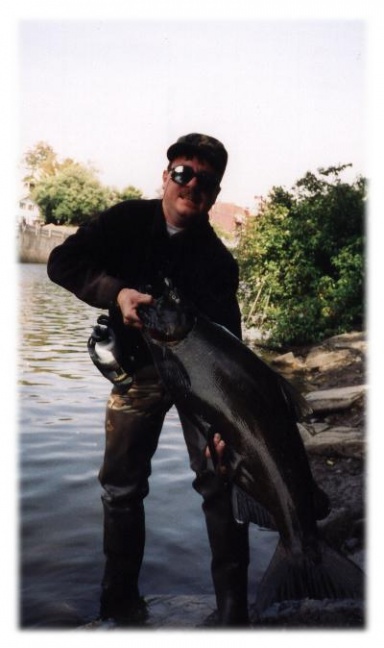
I just received some sad news from an old friend. This man here was Sam. To me SAM,… is a real and true tautog LEGEND. Sadly Sam passed away, though I’m not sure when.
Definitely one of my earliest inspirations to seek trophy tog. He was doing it in the 1990’s and early 2000’s before most tog superheroes today even knew what a tog or a white crab was. This is the man along with Larry NoBoat, who pointed me to Ocean City MD.
In fact Sam boated this 21 lber in Atlantic City NJ in the mid 2000’s before most NY guys even started going to DE and MD for tog aboard the MISS AC & Captain Collette.
I raise my glass high and pour out a sip to my legendary tautog homie, RIP Brother [IMG alt="?"]https://static.xx.fbcdn.net/images/emoji.php/v9/td9/1.5/16/1f64f.png[/IMG][IMG alt="?"]https://static.xx.fbcdn.net/images/emoji.php/v9/td9/1.5/16/1f64f.png[/IMG][IMG alt="?"]https://static.xx.fbcdn.net/images/emoji.php/v9/td9/1.5/16/1f64f.png[/IMG] Fair winds, calm seas, and nothing but shedder rock crab.
[=AZXUDeei5jlLXsIQV9UxznrvkQbQSdBo11rRwRw9W4-V-nKwcfFpCq_MiNw0sAZKG75kZ3xSCLImvAo7Sdh_6kHJcxHY61OV3tQlaoJOWmxeFwK6ht4nRM8X1Pejo9uDdEVBm6j_XgzHJ1iM8THjXhe-f32uEsB_tmSP3RPuPaFJwuZ35X9TAVKJUOPSYNFUcn4&__cft__[1]=AZXUDeei5jlLXsIQV9UxznrvkQbQSdBo11rRwRw9W4-V-nKwcfFpCq_MiNw0sAZKG75kZ3xSCLImvAo7Sdh_6kHJcxHY61OV3tQlaoJOWmxeFwK6ht4nRM8X1Pejo9uDdEVBm6j_XgzHJ1iM8THjXhe-f32uEsB_tmSP3RPuPaFJwuZ35X9TAVKJUOPSYNFUcn4&__tn__=EH-R]-R'][IMG alt="May be an image of 1 person"]

]('https://www.facebook.com/photo/?fbid=221056153927067&set=gm.5506697372764963&idorvanity=425907814177303&__cft__[0)

All reactions:
77

CommodoreOriginal Crew12,530 postsSince 2018
jpd
jpdMODnoreaster.com2023#1013

RIP - Spirit of America

[URL unfurl="true"]https://www.roadandtrack.com/news/a43539008/farewell-to-craig-breedlove-americas-king-of-speed/[/URL]

A lawyer with his briefcase can steal more than a hundred men with guns- Mario Puzo
CommodoreOriginal Crew9,876 postsSince 2018
JackPrintMD

GODS Speed now.

Live and Let Fish
Good things come to those who bait.
CommodoreOriginal Crew16,184 postsSince 2018
Matts
MattsFREE2023#1015

Allan Jaffee was an American cartoonist. He was notable for his work in the satirical magazine Mad, including his trademark feature, the Mad Fold-in. Jaffee was a regular contributor to the magazine for 65 years and is its longest-running contributor. In a 2010 interview, Jaffee said, "Serious people my age are dead." Wikipedia
Born: 1921, Savannah, GA
Died: April 10, 2023

Also loved his Snappy answers to stupid questions.

First MateOriginal Crew693 postsSince 2019
JackPrintMD

attachment 61569

attachment-61569

Live and Let Fish
Good things come to those who bait.
CommodoreOriginal Crew16,184 postsSince 2018
Avenger
Avengernoreaster.com2023#1017

Not that I was a fan, but wow. How young, and how wasteful.

[URL unfurl="true"]https://www.msn.com/en-us/music/celebrity/aaron-carter-singer-dead-at-34/ar-AA13MHV6?ocid=msedgntp&cvid=a318a9cd63a049c1b4769cdd2de0bd4b&ei=10[/URL]

[URL unfurl="true"]https://www.msn.com/en-us/music/celebrity/aaron-carter-s-cause-of-death-revealed-5-months-after-he-died-at-34/ar-AA1a1P0c?ocid=msedgntp&cvid=77deb7753a224dcbb9a9ece7a3ea4789&ei=8[/URL]

Chrome warns this may be a phishing site. Well, Duh,... Stupid jerks can't even spell fishing right.
CaptainOriginal Crew3,431 postsSince 2019
Roccus7
Roccus7MODnoreaster.com2023#1018

[HEADING=2][SIZE=7]Barry Humphries (Dame Edna to You, Possums) Is Dead at 89[/SIZE][/HEADING]
Bewigged, bejeweled and bejowled, Mr. Humphries’s creation was one of the longest-lived characters ever channeled by a single performer.

Oh, Possums, Dame Edna is no more.

To be unflinchingly precise, Barry Humphries, the Australian-born actor and comic who for almost seven decades brought that divine doyenne of divadom, Dame Edna Everage, to delirious, dotty, disdainful Dadaist life, died on Saturday in Sydney. He was 89.

His death was confirmed by the hospital where he had spent several days after undergoing hip surgery. In a [tribute message]('https://twitter.com/AlboMP/status/1649730110180950017') posted on Twitter, Prime Minister Anthony Albanese of Australia praised Mr. Humphries as “a great wit, satirist, writer and an absolute one-of-kind.”

A stiletto-heeled, stiletto-tongued persona who might well have been the spawn of a ménage à quatre involving Oscar Wilde, Salvador Dalí, Auntie Mame and Miss Piggy, Dame Edna was not so much a character as a cultural phenomenon, a force of nature trafficking in wicked, sequined commentary on the nature of fame.

For generations after the day she first sprang to life on the Melbourne stage, Dame Edna reigned, bewigged, bejeweled and bejowled, one of the longest-lived characters to be channeled by a single performer. She toured worldwide in a series of solo stage shows and was ubiquitous on television in the United States, Britain, Australia and elsewhere.

A master improviser (many of Dame Edna’s most stinging barbs were ad-libbed) with a face like taffy, Mr. Humphries was widely esteemed as one of the world’s foremost theatrical clowns.

“I’ve only seen one man have power over an audience like that,” the theater critic John Lahr told him, after watching Dame Edna night after night in London. “My father.” Mr. Lahr’s father was the great stage and cinematic clown Bert Lahr.

Mr. Humphries conceived Edna in 1955 as Mrs. Norm Everage, typical Australian housewife. “Everage,” after all, is Australian for “average.”

[HEADING=1]Housewife, Superstar, National Treasure[/HEADING]
But Edna soon became a case study in exorbitant amour propre, lampooning suburban pretensions, political correctness and the cult of celebrity, and acquiring a damehood along the way. A “housewife-superstar,” she called herself, upgrading the title in later years to “megastar” and, still later, to “gigastar.”

In Britain, where Mr. Humphries had long made his home, Dame Edna was considered a national treasure, a paragon of performance art long before the term was coined.

In the United States, she starred in a three-episode series, “Dame Edna’s Hollywood,” a mock celebrity talk show broadcast on NBC in the early 1990s, and was a frequent guest on [actual talk shows]('

').

She performed several times on Broadway, winning Mr. Humphries a special Tony Award, as well as Drama Desk and Theater World Awards, for “Dame Edna: The Royal Tour,” his 1999 one-person show.

In her stage and TV shows, written largely by Mr. Humphries, Dame Edna typically made her entrance tottering down a grand staircase (Mr. Humphries was more than six feet tall) in a tsunami of sequins, her hair a bouffant violet cloud (she was “a natural wisteria,” she liked to say), her evening gown slit to the thigh to reveal Mr. Humphries’s surprisingly good legs, her body awash in jewels, her eyes agape behind sprawling rhinestone glasses (“face furniture,” she called them).

Addressing the audience, she delivered her signature greeting, “Hellooooo, Possums!”

By turns tender and astringent, Dame Edna called audience members “possums” often. She also called them other things, as when, leaning across the footlights, she would address a woman in the front row in a confiding, carrying voice: “I know, dear. I used to make my own clothes, too.”

Performances concluded with Dame Edna [flinging hundreds of gladioli]('

') into the crowd, no mean feat aerodynamically. “Wave your gladdies, Possums!” she exhorted audience members who caught them, and the evening would end, to music, with a mass valedictory swaying.

Between the “Hellooooo” and the gladdies, Dame Edna’s audiences were treated to a confessional monologue deliciously akin to finding oneself stranded in a hall of vanity mirrors.

There was commentary on her husband and children (“I made a decision: I put my family last”); her beauty regimen (“Good self-esteem is very important. I look in the mirror and say, ‘Edna, you are gorgeous, gorgeous, gorgeous’”); and the constellation of luminaries who routinely sought her counsel, among them [Queen Elizabeth II]('') and her family. (“I’ve had to change my telephone number several times to stop them ringing me.”)

Dame Edna’s TV shows were often graced by actual celebrity guests, including [Zsa Zsa Gabor]('

'), [Charlton Heston]('
'), [Sean Connery]('
'), [Robin Williams]('
') and [Lauren Bacall]('
').

They came in for no less of a drubbing than the audience did, starting with the inaugural affront, the affixing of immense name tags to their lapels — for eclipsed by the light of gigastardom so close at hand, who among us would not be reduced to anonymity?

“Chuck,” Mr. Heston’s name tag read. Ms. Gabor received two: a “Zsa” for the right shoulder and a “Zsa” for the left.

A few pleasantries were exchanged before Dame Edna moved in for the kill.

“You’ve had nine hits this year,” she purred fawningly at the singer-songwriter Michael Bolton on one of her British TV shows. “On your website.”

Turning to the audience after delivering a particularly poisonous insult, she would ooze, “I mean that in the most caring way.”

Those guests who emerged relatively unscathed had the savvy to take Dame Edna at face value and interact with her as though she were real. The moment he donned those rhinestone glasses, Mr. Humphries often said, Dame Edna became real to him too, an entirely separate law unto herself.
[HEADING=1]‘I Wish I’d Thought of That’[/HEADING]
“I’m, as it were, in the wings, and she’s onstage,” he explained in [a 2015 interview with Australian television]('http://www.abc.net.au/news/2015-03-27/one-plus-one-barry-humphries/6361886'). “And every now and then she says something extremely funny, and I stand there and think, ‘I wish I’d thought of that.’”

But the truly funny thing, Possums, is that when Mr. Humphries first brought Dame Edna to life, he intended her to last only a week or so. What was more, she was meant to have been played by the distinguished actress Zoe Caldwell.

Mr. Humphries created a string of other characters over the years, notably the boorish, bibulous Australian cultural attaché Sir Les Patterson. But it was Dame Edna, the outlandish aunt who engenders adoration and mortification in equal measure, who captivated the public utterly — despite the fact that in later years, her mortification-inducing lines sometimes landed her, and her creator, in trouble.

So fully did Mr. Humphries animate Edna that he was at continued pains to point out that he was neither a female impersonator in the conventional sense nor a cross-dresser in any sense.

“Mr. Humphries, do you ever have to take your children aside and explain to them why you like to wear women’s clothes?” an American interviewer once asked him.

“If I were an actor playing Hamlet,” he replied, “would I have to take my children aside and say I wasn’t really Danish?’”

By all accounts far more erudite than Dame Edna — he was an accomplished painter, bibliophile and art collector — Mr. Humphries, in a sustained act of self-protection, always spoke of her in the third person.
She did likewise. “My manager,” she disdainfully called him. (She also called Mr. Humphries “a money-grubbing little slug” and accused him of embezzling her fortune. He did, it must be said, cash a great many of her checks.)

But as dismissive of her creator as Dame Edna was, she rallied to his aid when he very likely needed her most: after years of alcoholism culminated in stays in psychiatric hospitals and at least one brush with the law

[HEADING=1]‘I Hated Her’[/HEADING]
John Barry Humphries was born in Kew, a Melbourne suburb, on Feb. 17, 1934. His father, Eric, was a prosperous builder; his mother, Louisa, was a homemaker.

From his earliest childhood in Camberwell, a more exclusive suburb, he felt oppressed by the bourgeois conformism that enveloped his parents and their circle, and depressed by his mother’s cold suburban propriety.

Dame Edna was a response to those forces.

“I invented Edna because I hated her,” Mr. Humphries was quoted as saying in Mr. Lahr’s book “Dame Edna Everage and the Rise of Western Civilization: Backstage With Barry Humphries” (1992). “I poured out my hatred of the standards of the little people of their generation.”

Dame Edna emerged when the young Mr. Humphries, under the sway of Dadaism, was performing with a repertory company based at the University of Melbourne; he had dropped out of the university two years before.

On long bus tours, he entertained his colleagues with the character of Mrs. Norm Everage — born Edna May Beazley in Wagga Wagga, Australia, sometime in the 1930s — an ordinary housewife who had found sudden acclaim after winning a nationwide competition, the Lovely Mother Quest.

Unthinkable as it seems, [Edna was dowdy then](''), given to mousy brown hair and pillbox hats. But she was already in full command of the arsenal of bourgeois bigotries that would be a hallmark of her later self.
For a revue by the company in December 1955, Mr. Humphries wrote a part for Edna, earmarked for Ms. Caldwell, an Australian contemporary. But when she proved too busy to oblige, he donned a dress and played it himself. After Edna proved a hit with Melbourne audiences, he performed the character elsewhere in the country.

By the end of the 1950s, hoping to make a career as a serious actor, Mr. Humphries had moved to London, where Edna met with little enthusiasm and was largely shelved. (She blamed Mr. Humphries ever after for her lack of early success there.)

Mr. Humphries played Mr. Sowerberry, the undertaker, in the original West End production of the musical “Oliver!” in 1960, and reprised the role when the show came to Broadway in 1963.

But though he worked steadily during the ’60s, he was also in the fierce grip of alcoholism. Stays in psychiatric hospitals, he later said, were of no avail.

His nadir came in 1970, when he awoke in a Melbourne gutter to find himself under arrest.

With a doctor’s help, Mr. Humphries became sober soon afterward; he did not take a drink for the rest of his life. He dusted off Dame Edna and, little by little, de-dowdified her. By the late ’70s, with celebrity culture in full throttle, she had given him international renown and unremitting employment.

Edna did not seduce every critic. Reviewing her first New York stage show, the Off Broadway production “Housewife! Superstar!!,” in The New York Times in 1977, Richard Eder called it “abysmal.”

Nor did Edna’s resolute lack of political correctness always stand her, or Mr. Humphries, in good stead. In February 2003, writing an advice column as Dame Edna in Vanity Fair, he replied to a reader’s query about whether to learn Spanish.

“Who speaks it that you are really desperate to talk to?” Dame Edna’s characteristically caustic response read. “The help? Your leaf blower? Study French or German, where there are at least a few books worth reading, or, if you’re American, try English.”

[A public furor ensued]('https://www.nytimes.com/2003/02/10/business/mediatalk-gaffes-on-hispanics-from-2-well-known-mouths.html'), led by the Mexican-born actress Salma Hayek, who appeared on the magazine’s cover that month. Vanity Fair discontinued Dame Edna’s column not long afterward.
In an interview with The Times in 2004, Mr. Humphries was unrepentant.

“The people I offended were minorities with no sense of humor, I fear,” he said. “When you have to explain the nature of satire to somebody, you’re fighting a losing battle.”

Mr. Humphries drew further ire after a 2016 interview with the British newspaper The Telegraph in which he denounced political correctness as a “new puritanism.” In the same interview, he described people who transition from male to female as “mutilated” men, and Caitlyn Jenner in particular as “a publicity-seeking ratbag.”

[HEADING=1]Sailing Above the Fray[/HEADING]
Dame Edna, for her part, appeared to sail imperviously through. She [returned to Broadway]('https://www.nytimes.com/2004/11/22/theater/reviews/insult-alert-duck-if-you-can-possums.html') in 2004 for the well-received show “Dame Edna: Back With a Vengeance” and in 2010 with “All About Me,” a revue that also starred the singer and pianist Michael Feinstein.

As herself — it was she, and not Mr. Humphries, who was credited — Dame Edna played the recurring character Claire Otoms (the name is an anagram for “a sitcom role”), an outré lawyer, on the Fox TV series “Ally McBeal.”

Under his own name, Mr. Humphries appeared as the Great Goblin in “The Hobbit: An Unexpected Journey” (2012); as the voice of Bruce, the great white shark, in “Finding Nemo” (2003); and in other pictures.

Mr. Humphries’s books include the memoirs “More Please” (1992) and “My Life as Me” (2002) and the novel “Women in the Background” (1995). He was named a Commander of the British Empire in 2007.
Dame Edna also wrote several books, among them “Dame Edna’s Bedside Companion” (1983) and the memoir “My Gorgeous Life” (1989).

Dame Edna’s husband, Norm, a chronic invalid “whose prostate,” she often lamented, “has been hanging over me for years,” died long ago. Her survivors include an adored son, Kenny, who designed all her gowns; a less adored son, Bruce; and a despised daughter, the wayward Valmai. (“She steals things. Puts them in her pantyhose. Particularly frozen chickens when she’s in a supermarket.”)

Another daughter, Lois, was abducted as an infant by a “rogue koala,” a subject Dame Edna could bring herself to discuss with interviewers only rarely.

Though the child was never seen again, to the end of her life Dame Edna never gave up hope she would be found.

“I’m looking,” she told NPR in 2015. “Every time I pass a eucalyptus tree I look up.”

Shall I go to heaven or a-fishing? - H. D. Thoreau
Veni. Vidi. Cepi. - with apologies to Gaius Julius Caesar
AdmiralOriginal Crew21,717 postsSince 2018
Chevy1
Chevy1FREE2023#1019

[HEADING=2][SIZE=7]Barry Humphries (Dame Edna to You, Possums) Is Dead at 89[/SIZE][/HEADING]
Bewigged, bejeweled and bejowled, Mr. Humphries’s creation was one of the longest-lived characters ever channeled by a single performer.

Oh, Possums, Dame Edna is no more.

To be unflinchingly precise, Barry Humphries, the Australian-born actor and comic who for almost seven decades brought that divine doyenne of divadom, Dame Edna Everage, to delirious, dotty, disdainful Dadaist life, died on Saturday in Sydney. He was 89.

His death was confirmed by the hospital where he had spent several days after undergoing hip surgery. In a [tribute message]('https://twitter.com/AlboMP/status/1649730110180950017') posted on Twitter, Prime Minister Anthony Albanese of Australia praised Mr. Humphries as “a great wit, satirist, writer and an absolute one-of-kind.”

A stiletto-heeled, stiletto-tongued persona who might well have been the spawn of a ménage à quatre involving Oscar Wilde, Salvador Dalí, Auntie Mame and Miss Piggy, Dame Edna was not so much a character as a cultural phenomenon, a force of nature trafficking in wicked, sequined commentary on the nature of fame.

For generations after the day she first sprang to life on the Melbourne stage, Dame Edna reigned, bewigged, bejeweled and bejowled, one of the longest-lived characters to be channeled by a single performer. She toured worldwide in a series of solo stage shows and was ubiquitous on television in the United States, Britain, Australia and elsewhere.

A master improviser (many of Dame Edna’s most stinging barbs were ad-libbed) with a face like taffy, Mr. Humphries was widely esteemed as one of the world’s foremost theatrical clowns.

“I’ve only seen one man have power over an audience like that,” the theater critic John Lahr told him, after watching Dame Edna night after night in London. “My father.” Mr. Lahr’s father was the great stage and cinematic clown Bert Lahr.

Mr. Humphries conceived Edna in 1955 as Mrs. Norm Everage, typical Australian housewife. “Everage,” after all, is Australian for “average.”

[HEADING=1]Housewife, Superstar, National Treasure[/HEADING]
But Edna soon became a case study in exorbitant amour propre, lampooning suburban pretensions, political correctness and the cult of celebrity, and acquiring a damehood along the way. A “housewife-superstar,” she called herself, upgrading the title in later years to “megastar” and, still later, to “gigastar.”

In Britain, where Mr. Humphries had long made his home, Dame Edna was considered a national treasure, a paragon of performance art long before the term was coined.

In the United States, she starred in a three-episode series, “Dame Edna’s Hollywood,” a mock celebrity talk show broadcast on NBC in the early 1990s, and was a frequent guest on [actual talk shows]('

').

She performed several times on Broadway, winning Mr. Humphries a special Tony Award, as well as Drama Desk and Theater World Awards, for “Dame Edna: The Royal Tour,” his 1999 one-person show.

In her stage and TV shows, written largely by Mr. Humphries, Dame Edna typically made her entrance tottering down a grand staircase (Mr. Humphries was more than six feet tall) in a tsunami of sequins, her hair a bouffant violet cloud (she was “a natural wisteria,” she liked to say), her evening gown slit to the thigh to reveal Mr. Humphries’s surprisingly good legs, her body awash in jewels, her eyes agape behind sprawling rhinestone glasses (“face furniture,” she called them).

Addressing the audience, she delivered her signature greeting, “Hellooooo, Possums!”

By turns tender and astringent, Dame Edna called audience members “possums” often. She also called them other things, as when, leaning across the footlights, she would address a woman in the front row in a confiding, carrying voice: “I know, dear. I used to make my own clothes, too.”

Performances concluded with Dame Edna [flinging hundreds of gladioli]('

') into the crowd, no mean feat aerodynamically. “Wave your gladdies, Possums!” she exhorted audience members who caught them, and the evening would end, to music, with a mass valedictory swaying.

Between the “Hellooooo” and the gladdies, Dame Edna’s audiences were treated to a confessional monologue deliciously akin to finding oneself stranded in a hall of vanity mirrors.

There was commentary on her husband and children (“I made a decision: I put my family last”); her beauty regimen (“Good self-esteem is very important. I look in the mirror and say, ‘Edna, you are gorgeous, gorgeous, gorgeous’”); and the constellation of luminaries who routinely sought her counsel, among them [Queen Elizabeth II]('') and her family. (“I’ve had to change my telephone number several times to stop them ringing me.”)

Dame Edna’s TV shows were often graced by actual celebrity guests, including [Zsa Zsa Gabor]('

'), [Charlton Heston]('
'), [Sean Connery]('
'), [Robin Williams]('
') and [Lauren Bacall]('
').

They came in for no less of a drubbing than the audience did, starting with the inaugural affront, the affixing of immense name tags to their lapels — for eclipsed by the light of gigastardom so close at hand, who among us would not be reduced to anonymity?

“Chuck,” Mr. Heston’s name tag read. Ms. Gabor received two: a “Zsa” for the right shoulder and a “Zsa” for the left.

A few pleasantries were exchanged before Dame Edna moved in for the kill.

“You’ve had nine hits this year,” she purred fawningly at the singer-songwriter Michael Bolton on one of her British TV shows. “On your website.”

Turning to the audience after delivering a particularly poisonous insult, she would ooze, “I mean that in the most caring way.”

Those guests who emerged relatively unscathed had the savvy to take Dame Edna at face value and interact with her as though she were real. The moment he donned those rhinestone glasses, Mr. Humphries often said, Dame Edna became real to him too, an entirely separate law unto herself.
[HEADING=1]‘I Wish I’d Thought of That’[/HEADING]
“I’m, as it were, in the wings, and she’s onstage,” he explained in [a 2015 interview with Australian television]('http://www.abc.net.au/news/2015-03-27/one-plus-one-barry-humphries/6361886'). “And every now and then she says something extremely funny, and I stand there and think, ‘I wish I’d thought of that.’”

But the truly funny thing, Possums, is that when Mr. Humphries first brought Dame Edna to life, he intended her to last only a week or so. What was more, she was meant to have been played by the distinguished actress Zoe Caldwell.

Mr. Humphries created a string of other characters over the years, notably the boorish, bibulous Australian cultural attaché Sir Les Patterson. But it was Dame Edna, the outlandish aunt who engenders adoration and mortification in equal measure, who captivated the public utterly — despite the fact that in later years, her mortification-inducing lines sometimes landed her, and her creator, in trouble.

So fully did Mr. Humphries animate Edna that he was at continued pains to point out that he was neither a female impersonator in the conventional sense nor a cross-dresser in any sense.

“Mr. Humphries, do you ever have to take your children aside and explain to them why you like to wear women’s clothes?” an American interviewer once asked him.

“If I were an actor playing Hamlet,” he replied, “would I have to take my children aside and say I wasn’t really Danish?’”

By all accounts far more erudite than Dame Edna — he was an accomplished painter, bibliophile and art collector — Mr. Humphries, in a sustained act of self-protection, always spoke of her in the third person.
She did likewise. “My manager,” she disdainfully called him. (She also called Mr. Humphries “a money-grubbing little slug” and accused him of embezzling her fortune. He did, it must be said, cash a great many of her checks.)

But as dismissive of her creator as Dame Edna was, she rallied to his aid when he very likely needed her most: after years of alcoholism culminated in stays in psychiatric hospitals and at least one brush with the law

[HEADING=1]‘I Hated Her’[/HEADING]
John Barry Humphries was born in Kew, a Melbourne suburb, on Feb. 17, 1934. His father, Eric, was a prosperous builder; his mother, Louisa, was a homemaker.

From his earliest childhood in Camberwell, a more exclusive suburb, he felt oppressed by the bourgeois conformism that enveloped his parents and their circle, and depressed by his mother’s cold suburban propriety.

Dame Edna was a response to those forces.

“I invented Edna because I hated her,” Mr. Humphries was quoted as saying in Mr. Lahr’s book “Dame Edna Everage and the Rise of Western Civilization: Backstage With Barry Humphries” (1992). “I poured out my hatred of the standards of the little people of their generation.”

Dame Edna emerged when the young Mr. Humphries, under the sway of Dadaism, was performing with a repertory company based at the University of Melbourne; he had dropped out of the university two years before.

On long bus tours, he entertained his colleagues with the character of Mrs. Norm Everage — born Edna May Beazley in Wagga Wagga, Australia, sometime in the 1930s — an ordinary housewife who had found sudden acclaim after winning a nationwide competition, the Lovely Mother Quest.

Unthinkable as it seems, [Edna was dowdy then](''), given to mousy brown hair and pillbox hats. But she was already in full command of the arsenal of bourgeois bigotries that would be a hallmark of her later self.
For a revue by the company in December 1955, Mr. Humphries wrote a part for Edna, earmarked for Ms. Caldwell, an Australian contemporary. But when she proved too busy to oblige, he donned a dress and played it himself. After Edna proved a hit with Melbourne audiences, he performed the character elsewhere in the country.

By the end of the 1950s, hoping to make a career as a serious actor, Mr. Humphries had moved to London, where Edna met with little enthusiasm and was largely shelved. (She blamed Mr. Humphries ever after for her lack of early success there.)

Mr. Humphries played Mr. Sowerberry, the undertaker, in the original West End production of the musical “Oliver!” in 1960, and reprised the role when the show came to Broadway in 1963.

But though he worked steadily during the ’60s, he was also in the fierce grip of alcoholism. Stays in psychiatric hospitals, he later said, were of no avail.

His nadir came in 1970, when he awoke in a Melbourne gutter to find himself under arrest.

With a doctor’s help, Mr. Humphries became sober soon afterward; he did not take a drink for the rest of his life. He dusted off Dame Edna and, little by little, de-dowdified her. By the late ’70s, with celebrity culture in full throttle, she had given him international renown and unremitting employment.

Edna did not seduce every critic. Reviewing her first New York stage show, the Off Broadway production “Housewife! Superstar!!,” in The New York Times in 1977, Richard Eder called it “abysmal.”

Nor did Edna’s resolute lack of political correctness always stand her, or Mr. Humphries, in good stead. In February 2003, writing an advice column as Dame Edna in Vanity Fair, he replied to a reader’s query about whether to learn Spanish.

“Who speaks it that you are really desperate to talk to?” Dame Edna’s characteristically caustic response read. “The help? Your leaf blower? Study French or German, where there are at least a few books worth reading, or, if you’re American, try English.”

[A public furor ensued]('https://www.nytimes.com/2003/02/10/business/mediatalk-gaffes-on-hispanics-from-2-well-known-mouths.html'), led by the Mexican-born actress Salma Hayek, who appeared on the magazine’s cover that month. Vanity Fair discontinued Dame Edna’s column not long afterward.
In an interview with The Times in 2004, Mr. Humphries was unrepentant.

“The people I offended were minorities with no sense of humor, I fear,” he said. “When you have to explain the nature of satire to somebody, you’re fighting a losing battle.”

Mr. Humphries drew further ire after a 2016 interview with the British newspaper The Telegraph in which he denounced political correctness as a “new puritanism.” In the same interview, he described people who transition from male to female as “mutilated” men, and Caitlyn Jenner in particular as “a publicity-seeking ratbag.”

[HEADING=1]Sailing Above the Fray[/HEADING]
Dame Edna, for her part, appeared to sail imperviously through. She [returned to Broadway]('https://www.nytimes.com/2004/11/22/theater/reviews/insult-alert-duck-if-you-can-possums.html') in 2004 for the well-received show “Dame Edna: Back With a Vengeance” and in 2010 with “All About Me,” a revue that also starred the singer and pianist Michael Feinstein.

As herself — it was she, and not Mr. Humphries, who was credited — Dame Edna played the recurring character Claire Otoms (the name is an anagram for “a sitcom role”), an outré lawyer, on the Fox TV series “Ally McBeal.”

Under his own name, Mr. Humphries appeared as the Great Goblin in “The Hobbit: An Unexpected Journey” (2012); as the voice of Bruce, the great white shark, in “Finding Nemo” (2003); and in other pictures.

Mr. Humphries’s books include the memoirs “More Please” (1992) and “My Life as Me” (2002) and the novel “Women in the Background” (1995). He was named a Commander of the British Empire in 2007.
Dame Edna also wrote several books, among them “Dame Edna’s Bedside Companion” (1983) and the memoir “My Gorgeous Life” (1989).

Dame Edna’s husband, Norm, a chronic invalid “whose prostate,” she often lamented, “has been hanging over me for years,” died long ago. Her survivors include an adored son, Kenny, who designed all her gowns; a less adored son, Bruce; and a despised daughter, the wayward Valmai.

I don’t know who she was and not into reading all of that.
RIP

M.H.
AdmiralOriginal Crew25,799 postsSince 2018
Chevy1
Chevy1FREE2023#1020

I’m not reading all of that, but may she rest in peace

M.H.
AdmiralOriginal Crew25,799 postsSince 2018

Sign in to reply to this thread.

Thread
R.I.P.
Sign in