RANGELEY — A management plan is being enacted to reduce the resident Canada goose population in the town and Rangeley Lake area that calls for the use of carbon dioxide to euthanize the waterfowl. The geese have become very abundant and accustomed to human presence, and are an imminent threat to human health, according to authorities.
“This behavior has led to an alarming amount of droppings in recreational areas which can spread disease to people, and has resulted in damaged lawns, and costly cleanup and repair efforts,” Robin Dyer, the state director of (U.S. Department of Agriculture) Animal and Plant Health Inspections, Wildlife Services who is also a certified wildlife biologist, wrote in an email. “In this situation, Wildlife Services has worked with the cooperator for over a year, attending meetings and providing numerous non-lethal options including harassment techniques, and chemical application options which remove the attractiveness of the lawn to geese.”
Nonlethal methods failed to remedy the situation because of the over-abundance of geese. “After consultation with the USDA and a public comment period, the Goose Damage Management Plan was authorized by the (Rangeley) Board of Selectmen,” Rangeley Town Manager Joe Roach wrote in an email. “The approved plan was subsequently directed to me for operational implementation with the wildlife experts.”
There was a 15-day period from April 29 to May 13 that people could comment on the proposed damage management plan.
Roach estimated that there are roughly 75 to 100 geese. The geese frequent the beach area, town park and green spaces, and other places. There are also geese at the airport, which Roach estimated could be from the same group.
Resident Canada geese are those that breed and nest in the United States, Dyer wrote. The population of these residents increased 16-fold from 1970 to 2009 (from 230,000 to 3.89 million). Goose strikes to aviation and damage complaints regarding resident Canada geese increased at the same time. In urban areas, they have few predators and hunting cannot be used to control the population, she wrote.
U.S. Wildlife Services only responds when the public or partnering agencies request assistance. The service is permitted to conduct wildlife damage management and must adhere to all rules, laws and regulations set by wildlife management agencies.
Given the severity of the situation, the abundance of geese, and imminent threat to human health and safety, Wildlife Services was requested to conduct a capture effort which will result in the humane euthanasia of the geese, Dyer wrote.
Wildlife Services “strictly adheres to the American Veterinary Medical Association guidelines for humane euthanasia which in this case requires the use of carbon dioxide. Highly pathogenic avian influenza (HPAI) has become a serious concern in birds nationwide and can be carried in many species of waterfowl, including geese. This disease not only jeopardizes the health of wild birds but is even more impactful to domestic poultry populations,” Dyer wrote.
Due to the elevated concern for the avian influence, those species that can carry the disease must be treated with extreme caution; the disposition of carcasses cannot be donated or come in contact with other birds, according to Dyer.
“Because of this, the carcasses will be composted in a manner that complies with all disease precautionary measures. Lethal removal and disposition are outcomes permitted by the U.S. Fish and Wildlife Service (the governing agency for all migratory birds) and agreed upon by the Maine Department of Inland Fisheries Wildlife,” she wrote.
They should just invite a VFW hall to come up for a good ol fashioned turkey shoot
Maine’s season for black flies appears to be taking up more of the year due to factors including cleaner water and climate change. Scottie Bragdon from Dag’s Bait & Tackle in Auburn, shown in 2019, says he deals with ticks and mosquitoes with 100% DEET. But because he says it does not stop black flies, he wears a balaclava. Russ Dillingham/Sun Journal
Black flies are small insects, some of which feed on human blood and bedevil outdoor adventure seekers in the state.
Jim Dill, a pest management specialist at University of Maine Cooperative Extension, told the Bangor Daily News that a few decades ago the Maine season for black flies was from the end of May into the first weeks of June and then they would die off.
Experts said that doesn’t appear to be the case anymore, and the season now lasts for the entirety of the summer.
One reason is because the flies need fresh water to reproduce, and decades of environmental protection laws have provided them with that, the Bangor Daily News reported.
Dill said the season now lasts from the beginning of pleasant weather through the first frost of the year. Different species are active at different times of the summer, he said.
Shall I go to heaven or a-fishing? - H. D. Thoreau Veni. Vidi. Cepi. - with apologies to Gaius Julius Caesar
[HEADING=2]A rustic private island in Maine is on the market, but the owner will only sell to someone willing to stay overnight—despite perilous weather[/HEADING]
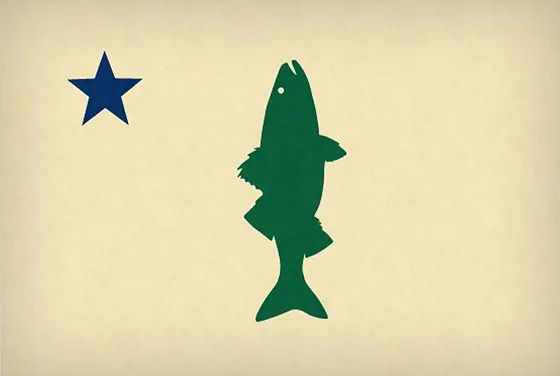
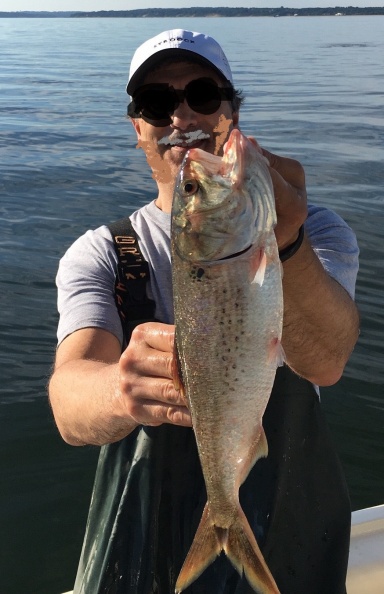
[SIZE=5]World's Best Maine Striper Fisherman's Hat...[/SIZE]
Here's my new fishing hat, a gift from my Son & DIL:
Of course some context may be necessary. Up until 1909, this was the Maine State flag, until it went to the boring "Seal on a Shingle" that many states including NY use...
Shall I go to heaven or a-fishing? - H. D. Thoreau Veni. Vidi. Cepi. - with apologies to Gaius Julius Caesar
Visit [[SIZE=6]Camp Laughing Grass[/SIZE]]('https://camplaughinggrass.com/') [HEADING=1][/HEADING] [HEADING=1]Cannabis Friendly 21 and Over Campground[/HEADING] Our Summer Season runs from May 20th – September 5th.
Camp Laughing Grass Campground offers a relaxing Cannabis Friendly retreat in the tranquil settings of Maine’s Lake Region. Tucked into a private 17-acre riverfront forest, bordered by beautiful scenic wetlands with trails throughout. Minutes from Naples & Bridgton, our 21 and over campground is the ideal summer vacation destination. With an array of thoughtful amenities, fun activities, spacious grounds, and tent sites right on the Crooked River, this is camping!
At Camp Laughing Grass you’ll create lifelong memories and truly enjoy “the Maine camping experience”.
Hiking and Biking trails are also on site. Kayaks and Canoe available. First come, first served. All of our sites have a two (2) night minimum.
Shall I go to heaven or a-fishing? - H. D. Thoreau Veni. Vidi. Cepi. - with apologies to Gaius Julius Caesar
LOL, knew it had to be someone from away to have a Ferrari. We pay a yearly excise tax on vehicles which is calculated on the STICKER price which ranges from $24 per 1,000 for a car that's brand new to $4 per 1,000 on cars 6 years and older. Bottom line, nobody buys new cars in Maine. BTW at 1 year old, registering that car in my town would have been $12,250!!
By Dennis Hoey July 28, 2022 York police are investigating the theft of a gray 2021 Ferrari CP 812 GT that was found crashed beside the road in Cape Neddick Saturday night. Photo courtesy of the York Police Department
York police are investigating the theft of a gray 2021 Ferrari CP 812 GT that was stolen from the Cliff House in Cape Neddick on Saturday night.
Police later found the Italian sports car crashed beside the road in York with extensive front-end damage, its airbags deployed and its windshield kicked out.
“The owner said the car is worth upwards of $700,000 although I cannot confirm its true value,” Detective Sgt. Thomas Cryan said in an email Wednesday night. “The owner is from Canada and is very cooperative. The case is under investigation and we are receiving assistance from the Cliff House to determine the suspect or facts of the case.”
The two-door, two-passenger sports car has a base price of over $400,000, according to a review in Motortrend that said a 789-horsepower V-12 engine propels “the insanely powerful” vehicle at up to 211 mph.
York Police responded to the Cliff House on Sunday for a report of a stolen vehicle, York police said Wednesday. Officers were told that the sports car had been stolen from the Cliff House’s front parking lot sometime late Saturday. A security guard was the last person to see the sleek roadster at around 11:30 p.m. Saturday.
Police said the owner, who has not been publicly identified, had given the Ferrari’s keys to a valet to store in the valet office until morning. Investigators believe that sometime during the night someone took the key out of the box where it was being kept and drove away with the Ferrari.
Officers discovered the vehicle off the road near the intersection of Route 1 and Mountain Road in York at 5:28 a.m. Sunday. The vehicle was later impounded as evidence. It will need repairs before it can be driven again. The owner has since returned to Canada.
Detectives are asking that anyone who lives on Shore Road, Route 1 or Mountain Road and has video cameras to check their surveillance footage from late Saturday evening or early Sunday morning. Anyone with information about the theft is asked to call Cryan at 207-363-4444. Anonymous tips can be left with the Seacoast Crime Stoppers by calling 603-431-1199 or on Crime Stoppers website at www.seacoastcrimestoppers.com.
“I don’t think we get many vehicles like that around here,” Cryan told Seacoastonline.com. “I would imagine somebody saw an opportunity to take it for a ride.”
Shall I go to heaven or a-fishing? - H. D. Thoreau Veni. Vidi. Cepi. - with apologies to Gaius Julius Caesar
[HEADING=2]Cold-Plunging With Maine’s ‘Ice Mermaids’[/HEADING] A photographer in Maine has been documenting groups of women who submerge themselves in near-freezing water. Here’s what she’s seen.
When I met Ida Lennestål for a plunge on a cold January day, she was pulling an ax from her car and switching into warmer boots. A few minutes later, she lit a fire in a nearby sauna — a small building cobbled together from a former fish house and an old stove — before we walked the short slope down to a frozen pond near her home in Georgetown, Maine.
She took to the ice with the ax, chipping away at a rectangular opening and shedding a layer of clothing as her body warmed from the work. When her hands or back were tired, she’d pause and stretch. Eventually her partner and children joined us, lacing up skates and swirling or toddling along the pond’s surface. Two friends from the area, Nicole Testa and Ariel Burns, joined, too, using a ladle to scoop chunks from the water, clearing a path for their bodies.
[IMG alt="Caitlin Hopkins, Kelcy Engstrom, Katie Stevenson, Judy Beedle and Judith Greene-Janse in their dry robes before their plunge. The group often will dip in costumes, crowns or with inflatable pool toys to make their swims and plunges feel like a party. "] Caitlin Hopkins, Kelcy Engstrom, Katie Stevenson, Judy Beedle and Judith Greene-Janse in their dry robes before their plunge. The group often will dip in costumes, crowns or with inflatable pool toys to make their swims and plunges feel like a party.
Ida grew up in Northern Sweden, close to the Finnish border, in the arctic climate of her parents and grandparents. The practice of combining saunas and cold plunges, an aspect of her cultural and familial traditions that stretches back for generations, is something she brought with her to Maine; she sees it as a way to share her culture with her community and to feel connected to her home and to herself. “This became especially important during the pandemic when the distance between me and my people back home felt even bigger than before,” she said.
When the ice was ready and the sauna was warm, we all stripped to our bathing suits and boots and took turns dipping our bodies into the cold water. The sun came out, but it seemed to offer no warmth.
“The sauna and dip for me is a way to get out of my head and into my body,” Ida said. “When I’m in a hot box” — what she often calls the sauna — “or in an ice-cold body of water, my body doesn’t worry about the future or the past, how it looks or whether it is loved. The body just is.” After the initial plunge, our bodies felt calm and slow. It was time for the sauna. Inside, the air, which smelled like cedar, was hot enough to pull sweat immediately. My body seemed to relish the experience of opposites, the way the cold and the heat affected my circulation and altered my breathing. The group repeated the plunge three times: plunge, sauna, plunge, sauna, plunge, sauna. Each transition felt like a little renewal.
“These sessions are a direct experience of the body, anchoring me into the present moment,” Ida said. “It has taught me to sit with the uncomfortable, both the hot and the cold, to breathe through it. To pay attention. It has taught me to listen to my body and hear what it needs. It’s a ritual. Sacred almost. And the bliss when it’s all over lasts for hours.”
[IMG alt="Ida Lennestål in one of three plunges during an ice-dip session. “After the initial hurdle of getting into the water, everything slows down — the breath, the heart, the buzz of the brain,” she said."] Ida Lennestål in one of three plunges during an ice-dip session. “After the initial hurdle of getting into the water, everything slows down — the breath, the heart, the buzz of the brain,” she said.
[IMG alt="Ida walks between the sauna and the icy pond."] Ida walks between the sauna and the icy pond.
Afterward, intrigued by the experience, I started asking around about other women who seek out cold water. I’d started winter surfing a few years ago and understood the ways the water could impact my body and mind, especially when it was cold. I usually surf with women, many of them beginners like me. But the process of cold plunging, I found, was its own distinct experience, with its own intention and power.
Later that winter, I parked my car by a farmhouse in Bremen, Maine, and walked across an icebound meadow to the shores of a lake. The snow had frozen into a slick crust. Undaunted, a small group carried provisions and snacks to share down to the lakeside. Taking turns with an ax, hammer, saw and drill, the group spent hours cutting an enormous heart into the lake to celebrate Valentine’s Day.
A year before, Caitlin Hopkins and Kelsy Hartley, who organized the dip, had posted signs around their community in all caps: “VALENTINE’S DAY MERMAID SIGHTING!” They went to their local beach and shimmied into mermaid tails, playing on the rocks and in the water. A few families brought their kids to witness the episode; some winter beach walkers were thrilled, the rest befuddled.
That day, Caitlin and Kelsy began calling themselves Two Maine Mermaids. They dip year-round and in different locations, often in costumes or crowns and to celebrate new moons and full moons, sometimes using the name the Ebb and Flow group. “We started with our small group celebrating birthdays, solstices, full moons and anything else we could think of right at the beginning of Covid,” Caitlin Hopkins explained. “Some days it’s serene, peaceful and just calming. Sometimes it’s a party. Either way, the water always gives us exactly what we need — never fails.”
Only half of the group decided to plunge into the cutout heart on that cold day in February. In swimsuits, booties and mitts (like the kind surfers wear), they lowered themselves into the water, mingling with little icebergs and slush. A few hugged the ice, or pulled their bodies onto the larger chunks, their spirits buoyant. They monitored the minutes both to test stamina and to protect their bodies from frostbite. Most stayed in for five minutes, a few for seven. When they emerged, they smiled through bluish lips.
“After I get out, I don’t try and rush into my towel or dryrobe,” said Kelcy Engstrom. “I like to stay in my swimsuit as long as possible. I just like the way my skin feels in the air after being in the water.”
“After swimming, I feel very strong and happy and calm,” she added. “I honestly don’t think I’ve ever been in a bad mood after a dip.”
Katie Stevenson, who also dips with Two Maine Mermaids, is taking a year off from medical school and has enrolled in a course about medical chaplaincy. “I don’t practice a formal faith tradition at this point in my life, but being in the water feels more sacred to me than any church service I’ve ever attended,” she said.
“When I’m stressed in the hospital, I try to find the nearest window with a view of any water,” she told me. “I envision myself in the water, feeling the lapping of the waves against my chest, the pressure of my lungs contracting and expanding in protest to the deep cold, focusing my energy on slow measured breaths, seeing whatever incredible sunrise, sunset or full moon I saw most recently. Sometimes when I have particularly troubling patient visits, I envision the suffering that I or the patient and their family are experiencing getting carried away by the waves.”
[IMG alt="Ida Lennestål, on the left, and Ariel Burns head into a small sauna in between cold plunges. “The decision to turn our neighbors’ old smelt-fishing shack into a sauna is probably my top three best decisions since moving to Maine,” Ida said. “Permanently parking it at the pond? Also top three.”"] Ida Lennestål, on the left, and Ariel Burns head into a small sauna in between cold plunges. “The decision to turn our neighbors’ old smelt-fishing shack into a sauna is probably my top three best decisions since moving to Maine,” Ida said. “Permanently parking it at the pond? Also top three.”
The annual tradition of the polar bear plunge has existed in the United States and beyond for more than 100 years. But informal cold plunging groups seem to be proliferating: the [Red Hot Chilly Dippers]('https://www.npr.org/2022/01/26/1075264787/during-the-winter-a-few-hardy-souls-take-a-dip-in-vermonts-lake-champlain') in Vermont; the [Puget Sound Plungers]('https://www.instagram.com/pugetsoundplungers/') in Washington State; the [Bluetits Chill Swimmers]('https://thebluetits.co/') and the [Wild and Scilly Mermaids]('https://www.instagram.com/wildandscillymermaids/') in Britain, to name only a few. Recently, what feels different is the sense of mindfulness around the process of the plunge. Many of the people I met by the water told me they were there because cold plunging gave them a way to live with a certain fullness. It gave them a process to have internal intimacy with grief, trauma and pain, while connecting more challenging emotions with joy and humor.
Amy Hopkins organizes a group of dippers in York, Maine. They meet at local beaches and bays, sometimes with water so cold and slushy it has the consistency of a margarita. I met her and a group of women at the edge of the beach around sunrise on a foggy morning, the sky milky and the sun slow to emerge. They waded into the water and submerged their heads, their dips quick like baptisms.
For them, the most rewarding part of the ritual is the act of submersion, a moment of total submission to the cold. “When your body is in that fight or flight, it’s shocking,” said Amy, who started her career as a labor and delivery nurse. “That cold temperature immediately makes everything constrict and protect. Blood rushes to your vital organs.”
Amy found her way to cold water while mourning the loss of her two parents and the collective loss of the pandemic. She is now facilitating dip trips for women and working with school counselors to provide cold plunges for high schoolers in a business she has named the [Saltwater Mountain Co.]('https://www.instagram.com/dipdowntoriseup/') But she started by organizing free, open community plunges — like the one at the cold, foggy cove — under the name Dip Down to Rise Up. In that post-dip feeling, participants often splash or hug one another, emerging from the water holding hands.
In a place like Maine, for six months out of the year, the relationship with nature is one of hardship, even pain. The cold air hurts your exposed skin; the wind can chap your lips and make your eyes water. Running errands usually requires scraping the windshield and shoveling snow. Winter is harsh and erratic, but it’s also just long, maddeningly so.
And so the prevailing culture retains a sense of pride regarding the harshness, an ability to find pleasure in the endurance of it all. Mainers understand that there is a symmetry in living in a place with extremes — that there is no warmth without stretches of cold.
“You can’t think about a Maine winter without talking about depression — the depression that comes from just being in a long winter,” Amy Hopkins said. “But with this practice, you’re meeting the season. Instead of complaining, you are meeting the season.” “I never loved winter until I started doing this,” she said.
Shall I go to heaven or a-fishing? - H. D. Thoreau Veni. Vidi. Cepi. - with apologies to Gaius Julius Caesar
By Haley Hersey August 2, 2022 Millie the moose had become something of a celebrity in Belgrade since she was first spotted in June. She died Saturday and some took to social media to complain that a motorboat had struck her, resulting in her death. The state Department of Inland Fisheries & Wildlife said a preliminary investigation based on witness reports revealed that a boat traveling the legal speed limit passed Millie, but an examination of her body didn’t reveal any signs of trauma or damage. People who had seen Millie had commented on social media that she appeared to be sick. Photo courtesy of Dan McCarron
BELGRADE — Millie the moose was the talk of the town when she first appeared in June, trudging along Great Pond and other waterways.
The chatter really ramped up when she died last weekend, with some claiming a wayward motorboat struck Millie in Mill Stream, causing her death.
The state Department of Inland Fisheries & Wildlife is investigating the matter and game wardens have interviewed several witnesses.
One of the first accounts of Millie appearing in town was by Dan McCarron, the owner of Lakepoint Real Estate who said she was seen wandering about his parking lot. He said after a few days and two visits from game wardens, she relocated to the stream.
She munched on pond weeds and McCarron said he called her Millie, a reference to milfoil plants. More and more people who came across Millie [posted photos of her to Facebook]('https://www.facebook.com/groups/469352623643053') and other social platforms. Several had commented how she didn’t look well, with sluggish behavior and patches of fur missing.
Some shared that they had seen the motorboat strike Millie on Saturday in Mill Stream.
“On Saturday it was reported that the moose had spent the entire day standing near a point without moving, then later moved into the Mill Stream,” Inland Fisheries & Wildlife spokesman Mark Latti said in an email. “It was reported to the Maine Warden Service that a boat that was traveling in the stream area struck a moose on Saturday afternoon.”
He later explained, “Witnesses reported seeing the boat and the moose in the same immediate area as the boat traveled through. At some point after the boat went by the moose, the moose died.”
Witnesses told wardens the boat was traveling the legal speed limit, Latti said. The stream is about 75 to 100 yards wide in that area but the boat channel is much narrower, he said.
Millie was born in spring 2021 and likely weighed between 500 and 600 pounds, he said.
Game wardens removed her body from the water on Sunday and an examination “showed no apparent injuries, as there was no sign of broken bones, no cuts or deep scars, and no other signs of trauma,” he said.
The 7 Lakes Alliance, a conservation group serving the Belgrade Lakes region, said in a statement that it’s “saddened to hear the moose that recently was a frequent visitor to the Mill Stream that connects Great Pond and Long Pond died this past weekend.”
Waterville resident Nate Timmins has a camp on Great Pond. He said he passed through the stream on Saturday around 2:30 p.m. and saw Millie standing and took some pictures of her.
When he returned around 6 p.m., Millie was about 10 to 15 yards from where she was before, but was mostly underwater, he said. At first he thought what he was seeing was a rock, but then noticed her ear.
“She was floating so low,” Timmins said. “A boater could have easily hit her when she was already dead.” Latti said the investigation is ongoing.
“The Maine Warden Service reminds everyone who loves wildlife to enjoy wildlife from a distance,” he said.
Poor Millie. However, this story does show us how untrustworthy even eye witness accounts can be. It is very hard to know anything 100.00%.
By STephen Betts August 30, 2022 The Victory Chimes during the July 2022 45th Annual Great Schooner Race. Photo by Ken Waltz
ROCKLAND — The 128-foot long wooden schooner Victory Chimes, which hails out of Rockland, will discontinue operations.
Owner and Capt. Sam Sikkema said Monday that the ship’s long sailing career in Maine will end in October, but they are trying to find a new home for the historic sailing vessel, which currently is docked off Captain Spear Drive.
Built in 1900, Victory Chimes has sailed the Maine coast since 1954 as a “windjammer” (sailing pleasure craft for paying guests).
The ship is celebrated on the 2003 commemorative state quarter for Maine. The ship was originally launched in Bethel, Del., as one of 4,000 such cargo ships. Then named Edwin & Maud, she hauled cargo in the Chesapeake Bay until 1946. She was then converted to the passenger trade. The ship is the last of the large, former cargo schooners still sailing, according to the statement released by the owner.
According to Captain Sikkema, “After long and careful consideration we have come to the difficult decision that 2022 will be Victory Chimes last sailing season. Upcoming Coast Guard compliance, cost and availability of materials for upcoming maintenance, the lack of ability to haul the ship in Maine and the losses of the 2020 season have all become a hill too big to climb.”
“We are working diligently to find a new home for the vessel. I am optimistic that there will be a way for the ship to exist and continue to tell its story in a meaningful way for generations to come. Thus far the 2022 season has brought us some truly beautiful sailing, lovely music and wonderful people. We invite you to come join us in celebrating the ship’s life and times in the windjammer fleet as we take one last turn around the bay,” the captain concluded in his statement.
According to SuperYachts.com, Victory Chimes is for sale for $650,000. Sikkema purchased Victory Chimes in 2018.
In 1987, Tom Monaghan, then owner of Domino’s Pizza and the Detroit Tigers Baseball Club, purchased the vessel and put it through an extensive restoration at Samples Ship Yard in Boothbay. In 1989, Domino’s put the infrequently used vessel — then named the Domino Effect — up for sale. The only interested party had plans to ship the schooner to Japan and use it for a sushi restaurant.
That’s when Capts. Kip Files and Paul DeGaeta stepped forward and purchased the Victory Chimes in 1990 and returned it to the Maine windjammer trade. This prompted the Maine Legislature to bestow the honor of “Official Windjammer of the state of Maine.”
The Victory Chimes has 21 cabins and can accommodate 43 passengers.
Shall I go to heaven or a-fishing? - H. D. Thoreau Veni. Vidi. Cepi. - with apologies to Gaius Julius Caesar
Interesting read for any apple lover and aborists like [USER=78]@Chevy1[/USER] ...
[HEADING=2][SIZE=6]DNA testing sheds light on the vast, mysterious world of heirloom apples[/SIZE][/HEADING]
By Tim Cebula September 25, 2022
When John Bunker first moved to Palermo 50 years ago, he was struck by the lack of street name signs in town.
“None of the roads had (name) signs, because after all, everybody knew what all the roads were,” said Bunker, Maine’s foremost apple historian, who also runs the orchard at Palermo’s Super Chilly Farm. “So I didn’t even know what road I lived on.”
Compounding the confusion, he recalled, was that segments of the same road sometimes had different names.
Palermo’s lack of formal street-naming conventions was interesting and a little confusing, but not alien to Bunker. Because before the 20th century, important information about each particular apple variety was often passed along by oral tradition. Unique varieties migrated from region to region along with the people who cherished those particular apples, sometimes getting renamed along the way without any documenting of the change.
“Those apples were like folks songs that traveled around and had different lyrics in different states,” Bunker said.
Some apple trees planted in Maine since the end of the Civil War – and throughout the country – are in fact well documented with names and descriptions of their phenotypes, or observable characteristics. But for most of what we now call heirloom apples, “descriptions are either nonexistent or rudimentary,” Bunker said, for the same reason nobody needed street name signs in Palermo – everybody at the time knew what they were.
Today, most people eat just a handful of commercial cultivars. Meanwhile, the huge holes of data in apple horticulture regarding the old varieties have confounded scientists, historians and apple explorers for decades. Now, genetic testing may be able to fill in the blanks. The best news? The data being gathered has the potential to make Maine’s apple landscape almost unimaginably more diverse and delicious. Since 2019, Bunker has been working with College of the Atlantic history professor Todd Little-Siebold, Laura Sieger, orchard manager for the Maine Organic Farmers and Gardeners Association and MOFGA intern Lydia Pendergast to collect samples from hundreds of Maine’s unidentified apple trees. They send the samples clear across the country to their partner in the project, Cameron Peace, a horticulture scientist at the University of Washington who runs tests to reveal the DNA.
“It’s almost like 23andMe, but for apples,” Sieger said, referring to the popular human genetic testing web service, 23andMe.com.
Peace logs test results into the massive apple DNA database he and his University of Washington colleagues are compiling, which now contains more than 3,000 unique, named apple varieties from around the world.
Peace’s hypothesis – so far supported by evidence since his DNA project began a few years ago – is that all apple varieties worldwide are related within a handful of generations. “My vision is to put everything into one big, happy family tree,” Peace said.
AN APPLE FOR EVERY TOWN Today’s average consumer may be familiar with five or 10 apple varieties, tops. Those popular cultivars, like Honeycrisp, Gala, McIntosh and Golden Delicious, are dominant nationwide. Commodity farming of the 20th century drastically culled America’s available apple varieties, focusing almost entirely on 20 or so apples chosen for hardiness, large size and high yields rather than the actual reasons people buy apples – for flavor or how they hold up when cooked or baked.
But in the decades before modern farming practices took hold in the United States, the market for apples was much different.
Bunker said between the end of the Civil War and the turn of the 20th century, “Almost every county from here to Georgia had its own special apples that were unique to that area. And certainly every town had its own unique mix of apples people would grow.
“I think more and more Americans are seeing that the one-size-fits-all approach is a worn-out model,” Bunker continued. “I like to think apples in Maine should be like cheeses in France, where you go 10 miles and you get a whole new cheese. In Maine there should be a different cider and apple in every town or county.”
The push for greater diversity in the market begins with identifying old apple trees and their heirloom fruit. Since Maine’s team of hardcore apple advocates started working with Peace three years ago, they’ve completed about 350 DNA tests on the state’s apple trees, Little-Siebold said. Test results sometimes showed duplication among the samples, but were highly illuminating nonetheless.
Little-Siebold said, for example, that they collected test samples from what seemed like three different apples, snipped from trees in Washington, Hancock and Kennebec counties.
“The first thing that came back is, they’re all the same,” Little-Siebold said. The DNA tests showed the apples in question were actually a single variety called Salome, which originated in central Illinois around 1860.
“We would never have been able to figure that out,” Little-Siebold said, emphasizing the advantage of the genotype approach over traditional phenotype identifications. “Salome, as far as John and I have ever seen, is mentioned once in historical records in Maine. And yet we found three of them. It is so rare, we would never have guessed it as we did the phenotypic comparisons. But the great thing about the DNA tests is that you don’t have to guess. You know they’re the same, period.”
Little-Siebold considers apples and old apple trees to be one of the last living connections to the thriving farm communities that formed the basis of the early Maine economy. “The apples tell a story about who we are and where we came from,” he said. “All of a sudden, we have a brand new tool that can give us answers.” Bunker said the Maine team also collaborates with apple historians around the country, leading them to discover that a certain apple in Sorrento – about 15 miles east of Ellsworth – was also discovered in Colorado and Washington state, for instance. “You can learn about human migration patterns by following the apples,” he said.
MORE DIVERSITY, MORE DELICIOUSNESS Apple trees planted in Maine toward the end of the 19th century are now pushing 150 years old, about their maximum lifespan, which gives the apple testing project a sense of urgency.
“There are friends and colleagues of mine all over the state now searching for the last of these old trees,” Bunker said. “We’re on this almost desperate search to find them before they die. We’re losing many of them every year now.”
Identifying and preserving old apple varieties can also help apple growers guard against against future calamity, since a limited gene pool makes a crop vulnerable to disease and decimation. “We’re looking at how we can have a safe and sustainable apple industry in the future by increasing the genetic diversity,” Bunker said.
And as more more heirloom apples become available, consumers win big, too.
“There are some excellent fresh-eating apples that are almost entirely unknown now. We need to reintroduce those to the public,” said Bunker. He cited one of his favorites, Garden Royal, which originated in Sudbury Massachusetts, and was grown all over central and southern Maine years ago. “The Garden Royal is small, it grows poorly in the nursery, it doesn’t bear every year. And when you eat them they are like ambrosia,” Bunker said.
He also noted his two Trailman apple trees on Super Chilly Farm. “They’re like candy. People eat them and tell me, ‘My goodness, this is the best apple I’ve ever eaten.’ But they’re small, and they don’t fit that designer mode that we think the apple industry and the customer demand,” Bunker said.
Many heirloom apples that have seemingly disappeared were never meant to be eaten fresh, Bunker explained, but the fruit absolutely shined when baked in pies, cooked into sauce or juiced for cider.
“These days, people are doing more cooking for themselves,” Bunker said. “They want a good pie apple. Honeycrisp is a delicious apple, but they’re terrible for pies. McIntosh is no good in a pie, it turns into soup. But there are great pie apples out there. Most of them are these old heirlooms, because they were selected for that purpose. We need to get those back into the commercial orchards of Maine.”
CROWD-SOURCING DATA Orchards like Super Chilly Farm or Cayford Orchards in Skowhegan sell scores of heirloom varieties, but the state’s apple market has a long way to go to meet Bunker’s hyper-localized vision of diversity and abundance. And the apple researchers have plenty more work ahead, too: Little-Siebold said Maine has historically hosted about 1,000 named apple tree varieties, and Bunker estimated that the apple DNA project in the state is about 20 percent complete.
A website launched earlier this year by Peace’s horticulture department at Washington State University – [Myfruittree.org]('https://myfruittree.org/') – might lighten their load, by taking a crowd-sourcing approach to apple gene mapping. For $120, the site’s researchers will send any apple tree owner who contacts them sampling gear and instructions for mailing the clippings back. Six months later, your apple tree mystery is solved, and the findings bolster the entire database.
Peace said between sample tests generated through the website and others from the dedicated teams of apple explorers around the country, “We run about 100 tests every couple of months now, and we keep finding more and more missing ancestors or pedigree filler to put everything together.” The data may eventually lead to major findings, like discovering the still-unknown “father” tree of the Golden Delicious apple, or the grandparents of the iconic Red Delicious.
“It’s a wonderful revolution in identification and preservation of the historic apples of North America, and to a large degree, around the world,” Bunker said. “It’s a win-win for everybody in the state of Maine that this is all happening now.”
“One of the things John will say is, ‘Sometimes we have an apple and we’re looking for a name, and sometimes we have a name and we’re looking for an apple,'” Little-Siebold said. “We’re tracking down old varieties that nobody has seen in a hundred years. I would say that’s going to be decades of work. But we’ve made real progress so far.”
That’s absolutely awesome! Future generations will get to enjoy some good eats. I didn’t know Maine was a big apple producer. I always search out heirloom plants for either food or beauty. It’s only 8:17 in the Morning and I already learned something new. ???
After a welcome absence for 2 years due to COVID, the "Damariscotta Pumpkin Fest" returned this past weekend. It used to be fun before it showed up on the CBS Sunday Morning Show about 8 years ago and after that it was the Mongolian Hordes, as the tourists and leaf peepers invaded our town. Since then, we avoid it like the plague until after the weekend passes, but today we went to check out the decorated pumpkins.
My favorite this year was this porcupine, reflexively went for the .410 to shoot the varmint...
Shall I go to heaven or a-fishing? - H. D. Thoreau Veni. Vidi. Cepi. - with apologies to Gaius Julius Caesar
FAIRFIELD — An auction house listed what appears to be a Native American scalp for sale earlier this year before a tip led the FBI to search the business and confiscate the human remains, according to an FBI affidavit unsealed this week in federal court.
Agents have opened an investigation into the possible illegal trafficking of human remains after the scalp was seized in May from Poulin’s Antiques & Auctions on the Skowhegan Road in Fairfield.
Authorities received a tip from someone outside Maine that Poulin’s listed an item online as an “Apache scalp,” according to the affidavit on file in U.S. District Court in Bangor. The listing included a beaded pipe bag and what authorities believe to be a scalp with a tag that read, “Mescallaro [sic] Apache, Scalp. Killed at Johnson’s Run Texas Sent to Frank Owens by Lance Brewington Former Maysville Man Above Told Me By Lance B. At Joplin Mo. 1899 W.W. Gibson.”
The Mescalero Apache Tribe is a federally recognized Native American tribe based in New Mexico. Prior to the reservation period, they were nomadic hunters and known for being skilled horsemen. They were given the name “Mescalero,” because they ate the mescal or agave plant.
Testing is being done to confirm whether the item is in fact a human scalp. Investigators are also working to determine if the case may be a violation of the federal Native American Graves and Repatriation Act. Joel Casey, a federal prosecutor in Maine, said in an email that the auction house cooperated in the search.
“There is a process underway to determine whether the item is human, whether it is Native American, and whether, if Native American, the remains are that of a person who was a member of a particular tribe,” Casey said. “If investigators determine that the remains are those of a Native American who was a member of a particular tribe, efforts will be taken to repatriate the remains back to the tribe for interment. All of these efforts will be taken in consultation with the Bureau of Indian Affairs and relevant tribal authorities and conducted in a culturally sensitive manner.”
No charges have been filed. A call placed to Poulin’s for comment was not returned Thursday.
Poulin’s is a family-run company that was founded in the 1950s. The company website lists its extensive auction catalog and highlights from past auctions. It also states that based on annual sales the company is one of the top specialty firearms auctions in North America.
European and American colonial governments offered bounties for Native American scalps for decades after colonizing North America. Officials would offer bounties for men, women and children in at least 23 states, according to[ Benjamin Madley in “Reexamining the American Genocide Debate: Meaning, Historiography, and New Methods,]('https://academic.oup.com/ahr/article/120/1/98/47185?login=false')” in The American Historical Review.
Many Native American deaths can be tracked through the bounties. For example, between 1703 and 1704, Massachusetts paid for 208 scalps, according to Madley.
“By demonstrating that body-part bounties — which motivated some or all of this head, hand, and scalp collecting — could be an effective Indian-killing policy, colonists established a lethal, enduring tradition,” Madley wrote.
“It saddens me to think that any human beings would want to celebrate, commemorate, and even profit from the violent and tragic legacy of genocide against Indigenous people in our homelands,” Dana told the TV station. “It goes against standards of decency that should exist universally across people of all backgrounds and life experiences.”
Shall I go to heaven or a-fishing? - H. D. Thoreau Veni. Vidi. Cepi. - with apologies to Gaius Julius Caesar


 pressherald.com/2022/06/23/resident-canada-geese-to-be-euthanized-in-rangeley/]('https://www.pressherald.com/2022/06/23/resident-canada-geese-to-be-euthanized-in-rangeley/')