noreaster.com
Forum/General Discussion/Do they think we're idiots!

Do they think we're idiots!

58,996 views·738 replies·by george·First Post·Latest
longcast
longcastFREE2024#601
www.foxnews.com

Major wind project was dependent on Biden admin waiving taxpayer safeguard: internal docs

EXCLUSIVE: The Biden administration waived a key fee designed to safeguard taxpayers for a major offshore wind project after officials said the project depended on the action.
www.foxnews.com www.foxnews.com

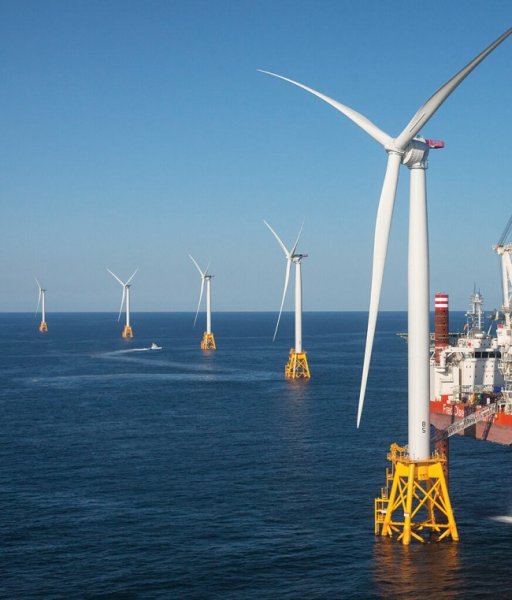
A Massachusetts wind project, which recently became the first utility-scale offshore wind project to deliver electricity to the grid, wouldn't have been financially viable if the Biden administration hadn't intervened, according to internal documents reviewed by Fox News Digital.

"The more we dig into the details of the Vineyard Wind project the more concerning it becomes. The Biden administration brags that this is the first utility-scale offshore wind project. But clearly, without BOEM contorting the approval process and waiving requirements meant to protect taxpayers, Vineyard is unlikely to ever have gotten off the ground," Michael Chamberlain, the director of watchdog group Protect the Public's Trust (PPT), which obtained the documents, told Fox News Digital.
AdmiralOriginal Crew20,417 postsSince 2019
george
georgeADMINnoreaster.com2024#602
IMG_0351.jpeg​

@longcast It's noticeable that the negative media attention they're receiving aligns with topics we've previously discussed.

The recent calm in the area is due to the cessation of sonar pounding and pile driving. Currently, the South Fork Wind Farm, located 35 miles east of Montauk, Long Island, has become operational. As of January 15, 2024, it's the only active offshore wind farm.

The initial turbine at the South Fork Wind Farm began contributing electricity to the U.S. grid in December 2023, and a second turbine is expected to be online shortly. When fully operational with all 12 turbines, the wind farm is projected to supply enough electricity for 70,000 homes.

They have lulled many to sleep, while they erected
George R. Scocca
george@nyangler.com
www.nyangler.com - Your Secret Spot Online !
CommodoreOriginal Crew5,174 postsSince 2018
longcast
longcastFREE2024#603
www.foxbusiness.com

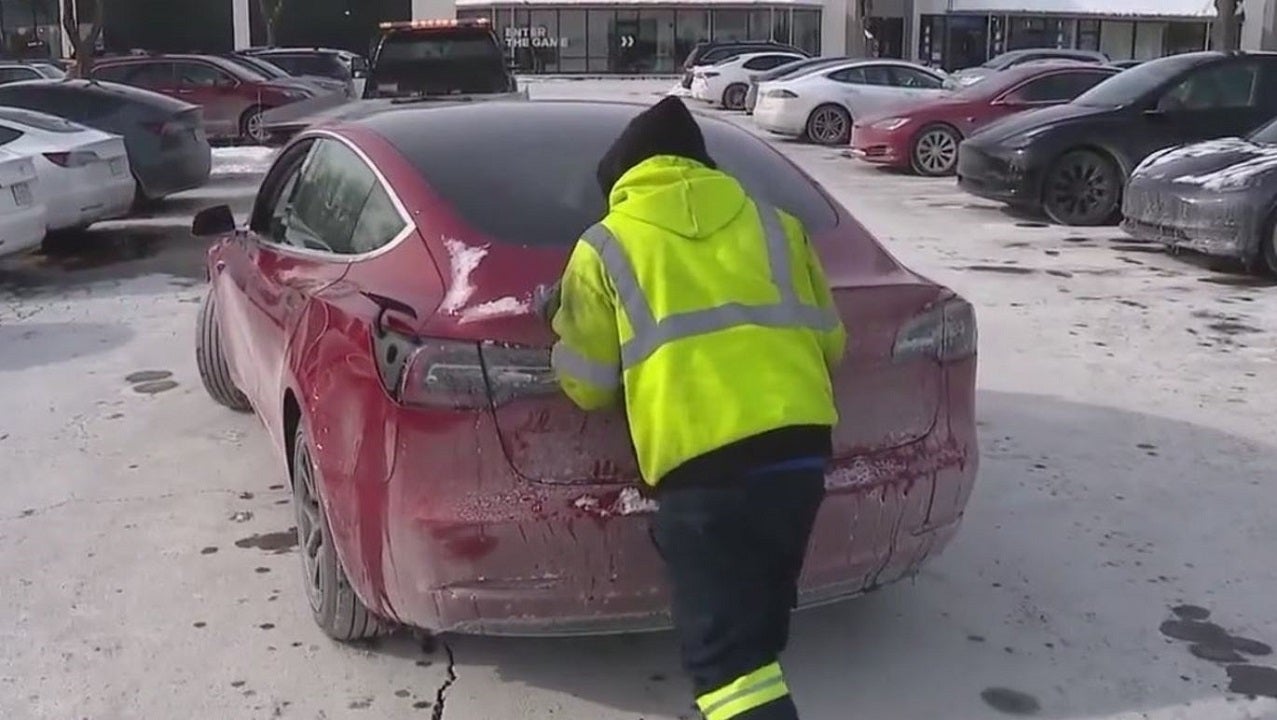
Chicago-area Tesla charging stations lined with dead cars in freezing cold: 'A bunch of dead robots out here'

Many Chicago-area Tesla owners were visibly frustrated on Monday after their electric vehicles failed to charge amid freezing temperatures.
www.foxbusiness.com www.foxbusiness.com
AdmiralOriginal Crew20,417 postsSince 2019
pequa1
pequa1MODnoreaster.com2024#604
1705444260842.png
Every day is Saturday.
CommodoreOriginal Crew7,034 postsSince 2018
Roccus7
Roccus7MODnoreaster.com2024#605
Talk about the shell game at a Jedi Master Level!!!

U.S. sets plans to protect endangered whales near offshore wind farms​

Although opponents of offshore wind projects blame them for a spate of whale deaths over the past 13 months on the East Coast, 2 federal environmental agencies said climate change is the biggest threat to the right whales.


ATLANTIC CITY, N.J. — Two federal environmental agencies issued plans Thursday to better protect endangered whales amid offshore wind farm development.

That move came as two offshore wind developers announced they were swapping projects.

The U.S. Bureau of Ocean Energy Management and the National Oceanic and Atmospheric Administration released final plans to protect endangered North American right whales, of which there are only about 360 left in the world.

The agencies said they are trying to find ways to better protect the whales amid a surge of offshore wind farm projects, particularly on the U.S. East Coast. They plan to look for ways to mitigate any potential adverse impacts of offshore wind projects on the whales and their habitat.

The strategy will use artificial intelligence and passive acoustic monitoring to determine where the whales are at a given time and to monitor the impacts of wind development on the animals.

It also calls for avoiding the granting of offshore wind leases in areas where major impacts to right whales may occur; establishing noise limits during construction; supporting research to develop new harm minimization technologies; and making it a priority to develop quieter technology and operating methods for offshore wind development.

They also want to conduct “robust sound field verification” of offshore wind operations to ensure that noise levels are not louder than expected.

The news came about an hour before the companies Equinor and energy giant BP announced they were swapping leases for offshore wind projects in New York and Massachusetts.

The deal calls for Equinor to take full ownership of the Empire Wind lease and projects, and for BP to take full ownership of the Beacon Wind lease and projects.

The companies said the swap would be a “cash-neutral transaction,” although Equinor said it would take a loss of about $200 million.

“We now take full ownership of a mature, large-scale offshore wind project in a key energy market, where we have built a strong local organization,” said Pal Eitrheim, an executive vice president at Equinor.

Equinor won the Empire Wind lease in 2017 and the Beacon Wind lease in 2019. In 2020, BP bought a 50% share of both projects.

Although opponents of offshore wind projects blame them for a spate of whale deaths over the past 13 months on the East Coast, the agencies said climate change is the biggest threat to the right whales. They and other scientific agencies say there is no evidence that offshore wind preparation work is harming or killing whales. Many of them have been struck by ships or become entangled in fishing gear.

Of the 360 right whales left in the ocean, only 70 are reproductively active females.

“Climate change is affecting every aspect of right whales’ survival, changing their ocean habitat, their migratory patterns, the location and availability of their prey, and even their risk of becoming entangled in fishing gear or being struck by vessels,” the agencies said in a statement.

In a separate report issued Monday, NOAA said there were 67 confirmed entanglements of large whales nationwide in 2022, the most recent years for which statistics are available. That is down slightly from the previous year and below the annual average of 71, the agency said.

In addition to vessel strikes and entanglement in fishing gear, which are the primary causes of death or injury to right whales, low female survival, a male-dominated sex ratio, and low calving rates are contributing to the population’s current decline. The species also has low genetic diversity due to its small size, the agencies said.

As of September 2023, there were 30 offshore wind lease areas along the East Coast, the two agencies said. Construction and operations plans for 18 of them have been submitted to BOEM in the Atlantic Outer Continental Shelf, including projects under construction in Massachusetts and New York.

All these projects are anticipated to use fixed foundation turbines, although future leasing plans farther offshore contemplate the use of floating technology, the agencies said.
Shall I go to heaven or a-fishing? - H. D. Thoreau
Veni. Vidi. Cepi. - with apologies to Gaius Julius Caesar
AdmiralOriginal Crew21,717 postsSince 2018
longcast
longcastFREE2024#606
www.foxnews.com

Energy developer delivers major blow to blue state's climate agenda by canceling offshore wind contracts

A major energy developer is pulling out of contracts it entered into with the State of Maryland to build two large offshore wind farms in a blow to Democrats' green energy goals.
www.foxnews.com www.foxnews.com

Multinational energy developer Orsted unexpectedly withdrew from agreements with the State of Maryland to develop two offshore wind projects, citing worsening economic conditions.

Orsted announced that it had pulled out of orders which the Maryland Public Service Commission (PSC) issued years ago greenlighting the so-called Skipjack Wind 1 and Skipjack Wind 2 projects, and selecting the projects for a 20-year Offshore Renewable Energy Credit (OREC). Maryland Democrats repeatedly pointed to the Skipjack Wind development as a key part of the state's aggressive decarbonization agenda.

"Today’s announcement affirms our commitment to developing value creating projects and represents an opportunity to reposition Skipjack Wind, located in a strategically valuable federal lease area and with a state that is highly supportive of offshore wind, for future offtake opportunities," David Hardy, Orsted's group executive vice president and CEO of its Americas division, said Thursday in a statement.

"As we explore the best path forward for Skipjack Wind, we anticipate several opportunities and will evaluate each as it becomes available," he continued.

Hardy added that the decision was made in light of "challenging economic circumstances." According to Orsted, the ORECs set forth under the company's agreement with the state are no longer commercially viable as a result of market conditions, including inflation, high interest rates and supply chain constraints.

The developer, though, hasn't canceled the project altogether and will continue to advance its development and permitting, additionally submitting an up-to-date Construction and Operations Plan to the U.S. Department of the Interior. Orsted said the move allows it to reposition Skipjack Wind for future offtake opportunities.
"Governor Moore is disappointed by the news of Ørsted’s repositioning of the Skipjack Wind project, an effort that has the capacity to impact the lives of so many Marylanders," Carter Elliott, a spokesperson for Democratic Maryland Gov. Wes Moore, told Fox News Digital in an email.

"However, he will continue to work with legislators, Maryland’s federal partners, offshore wind developers, and advocates that see Maryland’s potential in order to build a system to help Maryland reach the state’s goal of 100% clean energy by 2035," Elliott added. "If this is going to be Maryland's decade, we must continue to push forward to reach the state's ambitious climate goals, and the governor is as committed as ever to doing just that."

Overall, the joint project was set to be constructed roughly 20 miles off the coast of the Delmarva Peninsula near the Maryland-Delaware border and be commissioned by 2026. The two projects were projected to have a total capacity of 966 megawatts, enough to power hundreds of thousands of homes.

The announcement, though, leaves Maryland with just two proposed offshore wind projects: the 300-megawatt MarWin project and the 800-megawatt Momentum Wind project, which are both set to be built off the coast of Ocean City, Maryland, and are being developed by the Baltimore firm US Wind.

"Yesterday’s news from Orsted is disappointing — the Skipjack project was an important component in advancing Maryland’s clean energy goals," Maryland PSC Chairman Frederick Hoover said in a statement.

"However, the Commission remains optimistic about the future of the offshore wind industry in Maryland, and would note that the US Wind project continues to move through the federal approval process," Hoover added.

Republican Maryland Rep. Andy Harris, though, cheered Orsted's decision, which came days after he and other lawmakers held a public hearing calling for the end of offshore wind industrialization in Maryland.

"This is welcome news for the many watermen and residents in Maryland who have made it clear they don’t want foreign-owned offshore wind companies industrializing their coasts," he said in a statement.

Meanwhile, the Skipjack Wind projects are among several that have faced headwinds amid economic uncertainty. In November, Orsted announced that it had canceled its Ocean Wind 1 and Ocean Wind 2 twin projects off the coast of New Jersey, and, earlier this month, energy firms Equinor and BP pulled out of a contract with the State of New York for their Empire Wind 2 project.

The actions threaten to crush green energy goals set by Democratic-led states and the Biden administration. President Biden has set goals of deploying 30 gigawatts of offshore wind energy by 2030, the most ambitious goal of its kind worldwide, and completely decarbonizing the power grid by 2035.

"These projects are unaffordable, they are ridiculous," Dave Stevenson, the director of the Center for Energy Competitiveness at Delaware-based free market think tank Caesar Rodney Institute, told Fox News Digital in an interview. "The question really does become, in light of these disruptions and price increases, why shouldn't we expect more?"

"It just gets worse and worse and worse," said Stevenson, who is also the president of the American Coalition for Ocean Protection. "When you have bad news like this repetitively, it's a clear message that this is not ready for primetime. These projects should just stop. Let's take another path as to how we're going to generate electricity down the road."

AdmiralOriginal Crew20,417 postsSince 2019
captmike28
Talk about the shell game at a Jedi Master Level!!!

U.S. sets plans to protect endangered whales near offshore wind farms​

Although opponents of offshore wind projects blame them for a spate of whale deaths over the past 13 months on the East Coast, 2 federal environmental agencies said climate change is the biggest threat to the right whales.


ATLANTIC CITY, N.J. — Two federal environmental agencies issued plans Thursday to better protect endangered whales amid offshore wind farm development.

That move came as two offshore wind developers announced they were swapping projects.

The U.S. Bureau of Ocean Energy Management and the National Oceanic and Atmospheric Administration released final plans to protect endangered North American right whales, of which there are only about 360 left in the world.

The agencies said they are trying to find ways to better protect the whales amid a surge of offshore wind farm projects, particularly on the U.S. East Coast. They plan to look for ways to mitigate any potential adverse impacts of offshore wind projects on the whales and their habitat.

The strategy will use artificial intelligence and passive acoustic monitoring to determine where the whales are at a given time and to monitor the impacts of wind development on the animals.

It also calls for avoiding the granting of offshore wind leases in areas where major impacts to right whales may occur; establishing noise limits during construction; supporting research to develop new harm minimization technologies; and making it a priority to develop quieter technology and operating methods for offshore wind development.

They also want to conduct “robust sound field verification” of offshore wind operations to ensure that noise levels are not louder than expected.

The news came about an hour before the companies Equinor and energy giant BP announced they were swapping leases for offshore wind projects in New York and Massachusetts.

The deal calls for Equinor to take full ownership of the Empire Wind lease and projects, and for BP to take full ownership of the Beacon Wind lease and projects.

The companies said the swap would be a “cash-neutral transaction,” although Equinor said it would take a loss of about $200 million.

“We now take full ownership of a mature, large-scale offshore wind project in a key energy market, where we have built a strong local organization,” said Pal Eitrheim, an executive vice president at Equinor.

Equinor won the Empire Wind lease in 2017 and the Beacon Wind lease in 2019. In 2020, BP bought a 50% share of both projects.

Although opponents of offshore wind projects blame them for a spate of whale deaths over the past 13 months on the East Coast, the agencies said climate change is the biggest threat to the right whales. They and other scientific agencies say there is no evidence that offshore wind preparation work is harming or killing whales. Many of them have been struck by ships or become entangled in fishing gear.

Of the 360 right whales left in the ocean, only 70 are reproductively active females.

“Climate change is affecting every aspect of right whales’ survival, changing their ocean habitat, their migratory patterns, the location and availability of their prey, and even their risk of becoming entangled in fishing gear or being struck by vessels,” the agencies said in a statement.

In a separate report issued Monday, NOAA said there were 67 confirmed entanglements of large whales nationwide in 2022, the most recent years for which statistics are available. That is down slightly from the previous year and below the annual average of 71, the agency said.

In addition to vessel strikes and entanglement in fishing gear, which are the primary causes of death or injury to right whales, low female survival, a male-dominated sex ratio, and low calving rates are contributing to the population’s current decline. The species also has low genetic diversity due to its small size, the agencies said.

As of September 2023, there were 30 offshore wind lease areas along the East Coast, the two agencies said. Construction and operations plans for 18 of them have been submitted to BOEM in the Atlantic Outer Continental Shelf, including projects under construction in Massachusetts and New York.

All these projects are anticipated to use fixed foundation turbines, although future leasing plans farther offshore contemplate the use of floating technology, the agencies said.
When will the US take steps to protect rational thinking people from the "over the top science denying environmental lunatics"?
CaptainOriginal Crew1,853 postsSince 2018
OVERBORED
When will the US take steps to protect rational thinking people from the "over the top science denying environmental lunatics"?
There it is...........the universal answer to any question when it's contrary to administration goals.....blame global warming.
"Chance only favors the prepared mind" - Pasteur
Captain4,161 postsSince 2021
longcast
longcastFREE2024#609
www.foxbusiness.com

Electric buses are sitting unused in cities across the US; here's why

Many U.S. cities are grappling with broken-down electric transit vehicles that cannot be fixed, months after the largest E-bus manufacturer filed for bankruptcy.
www.foxbusiness.com www.foxbusiness.com
AdmiralOriginal Crew20,417 postsSince 2019
OVERBORED
Good
www.foxbusiness.com

Electric buses are sitting unused in cities across the US; here's why

Many U.S. cities are grappling with broken-down electric transit vehicles that cannot be fixed, months after the largest E-bus manufacturer filed for bankruptcy.
www.foxbusiness.com www.foxbusiness.com
Good business decision there 🥴
"Chance only favors the prepared mind" - Pasteur
Captain4,161 postsSince 2021
Roccus7
Roccus7MODnoreaster.com2024#611
www.foxbusiness.com

Electric buses are sitting unused in cities across the US; here's why

Many U.S. cities are grappling with broken-down electric transit vehicles that cannot be fixed, months after the largest E-bus manufacturer filed for bankruptcy.
www.foxbusiness.com www.foxbusiness.com
1706549535335.png
Shall I go to heaven or a-fishing? - H. D. Thoreau
Veni. Vidi. Cepi. - with apologies to Gaius Julius Caesar
AdmiralOriginal Crew21,717 postsSince 2018
Roccus7
Roccus7MODnoreaster.com2024#612
In today's an Idle Mind is a Devil's Workshop Moment I had an Epiphany. Wind turbines NEED electricity to operate!! Good luck finding exactly how much, but here's something I found...

Energy consumption in wind facilities

Large wind turbines require a large amount of energy to operate. Other electricity plants generally use their own electricity, and the difference between the amount they generate and the amount delivered to the grid is readily determined. Wind plants, however, use electricity from the grid, which does not appear to be accounted for in their output figures. At the facility in Searsburg, Vermont, for example, it is apparently not even metered and is completely unknown [click here].* The manufacturers of large turbines — for example, Vestas, GE, and NEG Micon — do not include electricity consumption in the specifications they provide.

Among the wind turbine functions that use electricity are the following:†
  • yaw mechanism (to keep the blade assembly perpendicular to the wind; also to untwist the electrical cables in the tower when necessary) — the nacelle (turbine housing) and blades together weigh 92 tons on a GE 1.5-MW turbine

  • blade-pitch control (to keep the rotors spinning at a regular rate)

  • lights, controllers, communication, sensors, metering, data collection, etc.

  • heating the blades — this may require 10%-20% of the turbine's nominal (rated) power

  • heating and dehumidifying the nacelle — according to Danish manufacturer Vestas, "power consumption for heating and dehumidification of the nacelle must be expected during periods with increased humidity, low temperatures and low wind speeds"

  • oil heater, pump, cooler, and filtering system in gearbox

  • hydraulic brake (to lock the blades in very high wind)

  • thyristors (to graduate the connection and disconnection between generator and grid) — 1%-2% of the energy passing through is lost

  • magnetizing the stator — the induction generators used in most large grid-connected turbines require a "large" amount of continuous electricity from the grid to actively power the magnetic coils around the asynchronous "cage rotor" that encloses the generator shaft; at the rated wind speeds, it helps keep the rotor speed constant, and as the wind starts blowing it helps start the rotor turning (see next item); in the rated wind speeds, the stator may use power equal to 10% of the turbine's rated capacity, in slower winds possibly much more

  • using the generator as a motor (to help the blades start to turn when the wind speed is low or, as many suspect, to maintain the illusion that the facility is producing electricity when it is not,‡ particularly during important site tours or noise testing (keeping the blades feathered, ie, quiet)) — it seems possible that the grid-magnetized stator must work to help keep the 40-ton blade assembly spinning, along with the gears that increase the blade rpm some 50 times for the generator, not just at cut-in (or for show in even less wind) but at least some of the way up towards the full rated wind speed; it may also be spinning the blades and rotor shaft to prevent warping when there is no wind
From: https://www.aweo.org/windconsumption.html
Shall I go to heaven or a-fishing? - H. D. Thoreau
Veni. Vidi. Cepi. - with apologies to Gaius Julius Caesar
AdmiralOriginal Crew21,717 postsSince 2018
captmike28
In today's an Idle Mind is a Devil's Workshop Moment I had an Epiphany. Wind turbines NEED electricity to operate!! Good luck finding exactly how much, but here's something I found...

Energy consumption in wind facilities

Large wind turbines require a large amount of energy to operate. Other electricity plants generally use their own electricity, and the difference between the amount they generate and the amount delivered to the grid is readily determined. Wind plants, however, use electricity from the grid, which does not appear to be accounted for in their output figures. At the facility in Searsburg, Vermont, for example, it is apparently not even metered and is completely unknown [click here].* The manufacturers of large turbines — for example, Vestas, GE, and NEG Micon — do not include electricity consumption in the specifications they provide.

Among the wind turbine functions that use electricity are the following:†
  • yaw mechanism (to keep the blade assembly perpendicular to the wind; also to untwist the electrical cables in the tower when necessary) — the nacelle (turbine housing) and blades together weigh 92 tons on a GE 1.5-MW turbine

  • blade-pitch control (to keep the rotors spinning at a regular rate)

  • lights, controllers, communication, sensors, metering, data collection, etc.

  • heating the blades — this may require 10%-20% of the turbine's nominal (rated) power

  • heating and dehumidifying the nacelle — according to Danish manufacturer Vestas, "power consumption for heating and dehumidification of the nacelle must be expected during periods with increased humidity, low temperatures and low wind speeds"

  • oil heater, pump, cooler, and filtering system in gearbox

  • hydraulic brake (to lock the blades in very high wind)

  • thyristors (to graduate the connection and disconnection between generator and grid) — 1%-2% of the energy passing through is lost

  • magnetizing the stator — the induction generators used in most large grid-connected turbines require a "large" amount of continuous electricity from the grid to actively power the magnetic coils around the asynchronous "cage rotor" that encloses the generator shaft; at the rated wind speeds, it helps keep the rotor speed constant, and as the wind starts blowing it helps start the rotor turning (see next item); in the rated wind speeds, the stator may use power equal to 10% of the turbine's rated capacity, in slower winds possibly much more

  • using the generator as a motor (to help the blades start to turn when the wind speed is low or, as many suspect, to maintain the illusion that the facility is producing electricity when it is not,‡ particularly during important site tours or noise testing (keeping the blades feathered, ie, quiet)) — it seems possible that the grid-magnetized stator must work to help keep the 40-ton blade assembly spinning, along with the gears that increase the blade rpm some 50 times for the generator, not just at cut-in (or for show in even less wind) but at least some of the way up towards the full rated wind speed; it may also be spinning the blades and rotor shaft to prevent warping when there is no wind
From: https://www.aweo.org/windconsumption.html
Amidst the never-ending deception and double speak regarding this issue, I particularly like bullet point #5:
needing electricity to "dehumidify the nacelle during periods of increased humidity..."

In the ocean is that not 100% of the time? DUH!!!!
CaptainOriginal Crew1,853 postsSince 2018
WhatKnot
WhatKnotFREE2024#614
I’m shocked and appalled; info being buried. Someone needs to redo the Math.🙄
Be Safe
CommodoreOriginal Crew12,915 postsSince 2019
JackPrintMD

attachment 80512attachment 80512

attachment-80512

Live and Let Fish
Good things come to those who bait.
CommodoreOriginal Crew16,184 postsSince 2018
JackPrintMD

attachment 80520

attachment-80520

Live and Let Fish
Good things come to those who bait.
CommodoreOriginal Crew16,184 postsSince 2018
Roccus7
Roccus7MODnoreaster.com2024#617
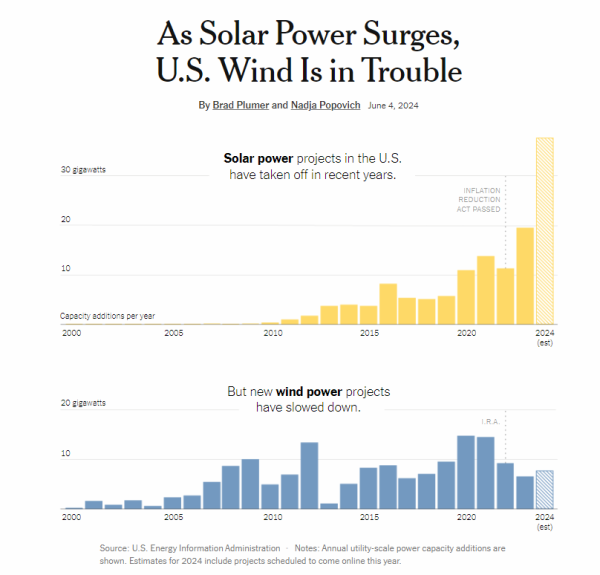
Interesting NY Times piece, here's part of it, if you want to read the whole thing, which is behind a pay wall, the article is here: As Solar Power Surges, U.S. Wind Is in Trouble

1717667322606.png
When President Biden signed the 2022 Inflation Reduction Act, it was expected to set off a boom in renewable energy, with hefty tax breaks that would make solar and wind power cheaper than fossil fuels.

So far, however, that dream has only come partly true. Solar panel installations are indeed soaring to record highs in the United States, as are batteries that can store energy for later. But wind power has struggled, both on land and in the ocean.

The country is now adding less wind capacity each year than before the law was passed.

Some factors behind the wind industry’s recent slowdown may be temporary, such as snarled supply chains. But wind power is also more vulnerable than solar power to many of the biggest logistical hurdles that hinder energy projects today: a lack of transmission lines, a lengthy permitting process and a growing backlash against new projects in many communities.

If wind power continues to stagnate, that could make the fight against global warming much harder, experts say. Many plans for quickly shifting the country away from fossil fuels envision a large expansion of both solar and wind, because the two sources generate electricity at different hours and can complement each other. A boom in solar power alone, which runs only in daytime, isn’t enough.

Some of the early predictions that the Inflation Reduction Act would help slash U.S. greenhouse gas emissions roughly 40 percent below 2005 levels by 2030 depended on a rapid acceleration of both solar and wind power this decade. But it is now far less certain that will happen.
Shall I go to heaven or a-fishing? - H. D. Thoreau
Veni. Vidi. Cepi. - with apologies to Gaius Julius Caesar
AdmiralOriginal Crew21,717 postsSince 2018
Avenger
Avengernoreaster.com2024#618
Fantasy,... meet reality.
Chrome warns this may be a phishing site. Well, Duh,... Stupid jerks can't even spell fishing right.
CaptainOriginal Crew3,431 postsSince 2019
longcast
longcastFREE2024#619
Interesting NY Times piece, here's part of it, if you want to read the whole thing, which is behind a pay wall, the article is here: As Solar Power Surges, U.S. Wind Is in Trouble

View attachment 80820
When President Biden signed the 2022 Inflation Reduction Act, it was expected to set off a boom in renewable energy, with hefty tax breaks that would make solar and wind power cheaper than fossil fuels.

So far, however, that dream has only come partly true. Solar panel installations are indeed soaring to record highs in the United States, as are batteries that can store energy for later. But wind power has struggled, both on land and in the ocean.

The country is now adding less wind capacity each year than before the law was passed.

Some factors behind the wind industry’s recent slowdown may be temporary, such as snarled supply chains. But wind power is also more vulnerable than solar power to many of the biggest logistical hurdles that hinder energy projects today: a lack of transmission lines, a lengthy permitting process and a growing backlash against new projects in many communities.

If wind power continues to stagnate, that could make the fight against global warming much harder, experts say. Many plans for quickly shifting the country away from fossil fuels envision a large expansion of both solar and wind, because the two sources generate electricity at different hours and can complement each other. A boom in solar power alone, which runs only in daytime, isn’t enough.

Some of the early predictions that the Inflation Reduction Act would help slash U.S. greenhouse gas emissions roughly 40 percent below 2005 levels by 2030 depended on a rapid acceleration of both solar and wind power this decade. But it is now far less certain that will happen.
All smoke and mirrors. Inflation Creation Act.
AdmiralOriginal Crew20,417 postsSince 2019
pequa1
pequa1MODnoreaster.com2024#620
quote from above:
" because the two sources generate electricity at different hours and can complement each other"

let's see: winds here (southern coast of Lawnguyland) typically die down after dinner, and resume around mid morning. No ? this is not the land of the midnight sun.
Every day is Saturday.
CommodoreOriginal Crew7,034 postsSince 2018

Sign in to reply to this thread.

Thread
Do they think we're idiots!
Sign in