[URL unfurl="true"]https://www.yahoo.com/news/greetings-asbury-park-bruce-springsteens-110918625.html[/URL]
This date in history



January 11, 1963
[URL unfurl="true"]https://www.yahoo.com/entertainment/please-please-remembering-beatles-second-055735995.html[/URL]
60 years ago.......................
Their performance of “Please Please Me” was a significant reason behind the single peaking at No.3 on the week of March 21, 1964. Two weeks later “Please Please Me” was at No.5 on the charts, but in the four places above it were, “I Want To Hold Your Hand” at No.4, “She Loves You” at No.3, “Twist and Shout” at No.2 and “Can’t Buy Me Love” at No.1.
"Well, it's alright.
.............even if you're old and gray."
"Well, it's alright.
............you still got something to say."
.............even if you're old and gray."
"Well, it's alright.
............you still got something to say."
AdmiralOriginal Crew20,900 postsSince 2018


This date in History
[URL unfurl="true"]https://www.hawaiinewsnow.com/2023/01/13/its-been-5-years-since-hawaiis-false-missile-alert-that-caused-panic-statewide/[/URL]
A lawyer with his briefcase can steal more than a hundred men with guns- Mario Puzo
CommodoreOriginal Crew9,876 postsSince 2018
This date in History
[URL unfurl="true"]https://www.hawaiinewsnow.com/2023/01/13/its-been-5-years-since-hawaiis-false-missile-alert-that-caused-panic-statewide/[/URL]
I remember this.....
Hell of a way to start your day.
"Well, it's alright.
.............even if you're old and gray."
"Well, it's alright.
............you still got something to say."
.............even if you're old and gray."
"Well, it's alright.
............you still got something to say."
AdmiralOriginal Crew20,900 postsSince 2018
[1820]('https://www.onthisday.com/events/date/1820') [Russian Antarctic Expedition]('https://www.onthisday.com/photos/russian-antartic-expedition') led by [Fabian Gottlieb von Bellingshausen]('https://www.onthisday.com/people/fabian-gottlieb-von-bellingshausen') and Mikhail Lazarev discover the continent of Antarctica
[LIST]
[*][1825]('https://www.onthisday.com/events/date/1825') US Congress approves Indian Territory (present-day Oklahoma), clearing the way for the forced relocation of the Eastern Indian tribes via the "[Trail of Tears]('https://www.onthisday.com/photos/trail-of-tears')"
[/LIST]
[LIST]
[*][1888]('https://www.onthisday.com/events/date/1888') The National Geographic Society is founded in Washington, D.C. for "the increase and diffusion of geographic knowledge"
[*][1924]('https://www.onthisday.com/events/date/1924') [Lenin]('https://www.onthisday.com/people/vladimir-lenin') placed in Mausoleum in Red Square, Moscow
[*][1944]('https://www.onthisday.com/events/date/1944') [Siege of Leningrad]('https://www.onthisday.com/photos/siege-of-leningrad') lifted by the Soviets after 880 days and more than 2 million Russians killed
[*][1945]('https://www.onthisday.com/events/date/1945') Soviet troops liberate [Auschwitz]('https://www.onthisday.com/people/eduard-wirths') and Birkenau Concentration Camps in Poland
[*][1973]('https://www.onthisday.com/events/date/1973') US & North Vietnam's William Rogers & Nguyen Duy Trinh sign cease-fire, ending longest US war and military draft
[/LIST]
"Well, it's alright.
.............even if you're old and gray."
"Well, it's alright.
............you still got something to say."
.............even if you're old and gray."
"Well, it's alright.
............you still got something to say."
AdmiralOriginal Crew20,900 postsSince 2018


The famous BS bust in New Orleans that helped influence "Truckin"
[URL unfurl="true"]https://liveforlivemusic.com/features/the-grateful-dead-busted-in-new-orleans-on-this-day-in-1970/[/URL]
At least I'm enjoyin' the ride.....
CommodoreOriginal Crew7,065 postsSince 2018
[[IMG alt="CBS News"]https://s.yimg.com/ny/api/res/1.2/Qhb4jcajPR19qavIQ2xI0g--/YXBwaWQ9aGlnaGxhbmRlcjt3PTE4MDtoPTQ4O2NmPXdlYnA-/https://s.yimg.com/os/creatr-uploaded-images/2020-11/31ae7500-2b10-11eb-bfff-af54d62fa6aa[/IMG]]('https://www.cbsnews.com/')
[HEADING=2]20 years after Columbia disaster, NASA remembers crew and lessons learned[/HEADING]
Twenty years ago this Wednesday — on Feb. 1, 2003, at 8:48:39 a.m. EST — a sensor in the space shuttle Columbia's left wing first recorded unusual stress as the orbiter and its seven crew members headed back to Earth to close out a successful 16-day science mission.
Over the next 12 minutes, an on-board data recorder would track a cascade of alarming sensor readings and failures on the left side of the spacecraft that indicated a rapidly escalating catastrophe as the blazing heat of re-entry engulfed the ship.
But it initially played out behind the scenes in the ship's flight computers, which waged an increasingly desperate struggle to keep Columbia on track for a planned landing at the Kennedy Space Center in Florida where friends and family were waiting.
And so, at 8:53:26 a.m., Columbia crossed the coast of California, right on schedule, at an altitude of 44 miles while traveling 23 times the speed of sound.

Space enthusiasts across the western United States would capture dramatic video of Columbia's dawn descent, including unusual changes in the shuttle's white-hot plasma trail along with flare-like points of light separating and falling away. No one knew at the time what, if anything, the light show might mean.
But 16 days earlier, 81.7 seconds after liftoff, a briefcase-size chunk of lightweight foam insulation had broken away from Columbia's external tank as the spacecraft accelerated through 1,500 mph.
Tracking cameras showed the foam disappearing under the shuttle's left wing and emerging an instant later as a cloud of fine particles. Later analysis would show the foam impacted the underside of the left wing at a relative velocity of more than 500 mph, instantly disintegrating.
Engineers could not determine exactly where the foam had hit, and Columbia was not equipped with a robot arm to enable an inspection in space.
But an engineering analysis based on software modeling for much smaller impacts indicated the foam strike did not pose a "safety of flight" issue. Senior managers ruled out asking for spy satellite imagery that might, or might not, have allowed a more thorough analysis.
In any case, commander Rick Husband, pilot Willie McCool, mission specialists Kalpana Chawla, Laurel Clark, Michael Anderson, David Brown and Israeli guest astronaut Ilan Ramon were unaware of any problems as they returned to Earth, marveling at the pink glow out the cockpit windows as atmospheric friction built up in the moments before that first unusual sensor reading.
Then, around 8:54:24 a.m. — 5 minutes and 45 seconds after that initial reading was stored in the data recorder — the first indication of trouble showed up in telemetry reaching flight controllers at the Johnson Space Center in Houston: a loss of temperature readings from hydraulic lines in Columbia's left wing.
Four minutes later, Columbia's backup flight computer displayed a message in the cockpit indicating a loss of left main landing gear tire pressure readings. Husband called down to mission control, presumably to ask about the tire pressure, but his transmission was cut off.
"And Columbia, Houston, we see your tire pressure messages and we did not copy your last," astronaut Charles Hobaugh called up from Houston.
"Roger, uh," Husband began. But again, the transmission was interrupted. It was 8:59:32 a.m.
As engineers would later learn, Columbia veered out of control in the seconds that followed and broke apart 38 miles above central Texas while traveling at 18 times the speed of sound. All seven astronauts, unconscious moments after the crew cabin lost pressure, were killed by blunt force trauma when the cabin came apart in the hypersonic airflow.
It would take another two-and-a-half minutes or so for the harsh reality of Columbia's demise to reach the Kennedy Space Center where family members, NASA managers, the ground support team, reporters and photographers were standing by for the shuttle's homecoming.
Over the days, weeks and months that followed, the Columbia Accident Investigation Board uncovered a now-familiar history of external tank foam insulation problems, management miscues and poor internal communications that contributed to the mishap.
In a dramatic test, engineers used an air cannon to fire a piece of external tank foam at a wing leading edge mockup at the same angle and velocity as the one that damaged Columbia. The impact blasted a hole in the mockup's leading edge, conclusively proving the lightweight insulation could cause catastrophic damage in a worst-case scenario.
And that's exactly what happened to Columbia.
During re-entry, super-heated air rushed through a breach in the left wing leading edge, cutting through sensor wiring, melting internal spars and burning into the left landing gear wheel well. The wing eventually either folded over or broke away from the fuselage, throwing the ship out of control.
The Columbia disaster, like Challenger before it, triggered agency-wide soul-searching as the accident investigation proceeded.
NASA's mission management team was criticized for dismissing the foam strike based on what turned out to be a flawed engineering analysis. The shuttle was not equipped with a robot arm, tools or materials to repair major heat shield damage, and the MMT never considered a high-risk emergency spacewalk to inspect the damage site.
While a NASA study later showed a shuttle rescue mission was possible in theory, no one believed the agency would have launched another crew without first knowing what had happened to Columbia.
In short, Columbia's fate was sealed 81.7 seconds after liftoff. The real problem, the accident board concluded, was NASA's earlier failure to properly deal with an ongoing problem: heat shield debris hits from foam insulation coming off the external tank during ascent.
As was well known, every shuttle flight included foam hits to the orbiter's heat shield even though the agency had a clear-cut rule in place forbidding debris strikes. The rule was never strictly enforced and NASA eventually came to look at foam shedding as an "acceptable risk."

[MEDIA=youtube]vwyw5QrNPGI[/MEDIA]
more [HERE]('https://www.yahoo.com/news/20-years-columbia-disaster-nasa-050117759.html')
"Well, it's alright.
.............even if you're old and gray."
"Well, it's alright.
............you still got something to say."
.............even if you're old and gray."
"Well, it's alright.
............you still got something to say."
AdmiralOriginal Crew20,900 postsSince 2018
[URL unfurl="true"]https://www.yahoo.com/news/today-day-music-died-100128652.html[/URL]
"Well, it's alright.
.............even if you're old and gray."
"Well, it's alright.
............you still got something to say."
.............even if you're old and gray."
"Well, it's alright.
............you still got something to say."
AdmiralOriginal Crew20,900 postsSince 2018
20 years ago today - thr Station night club fire
[URL unfurl="true"]https://www.wcvb.com/article/station-nightclub-fire-20th-anniversary-february-20-2023/42987641[/URL]
A lawyer with his briefcase can steal more than a hundred men with guns- Mario Puzo
CommodoreOriginal Crew9,876 postsSince 2018
[URL unfurl="true"]https://www.yahoo.com/news/russia-celebrates-ukraine-anniversary-threat-124309957.html[/URL]
“On February 24, millions of us made a choice,” Zelensky tweeted. “Not a white flag, but the blue and yellow one. Not fleeing, but facing. Resisting and fighting.” His words were accompanied by a video showing [Ukrainians]('https://www.thedailybeast.com/russia-claims-ukraine-plans-false-flag-fake-attack-on-moldova') weeping with their loved ones, sheltering from explosions, and fighting on the battlefield. “It was a year of pain, sorrow, faith, and unity,” he added. “And this year we remained invincible. We know that 2023 will be the year of our victory!”
"Well, it's alright.
.............even if you're old and gray."
"Well, it's alright.
............you still got something to say."
.............even if you're old and gray."
"Well, it's alright.
............you still got something to say."
AdmiralOriginal Crew20,900 postsSince 2018

50 years ago today, the Music LIVED!!!
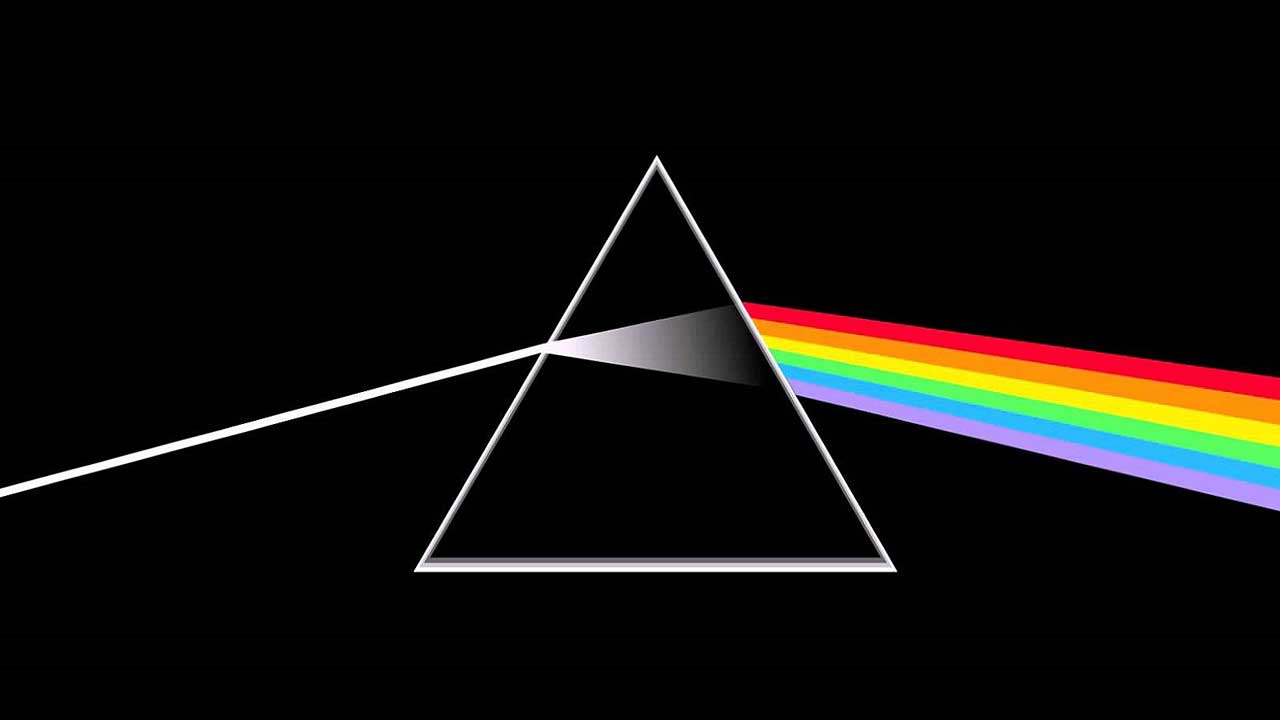
[HEADING=2][SIZE=7]Side of the Moon’ Still Reverberates[/SIZE][/HEADING]
Pink Floyd’s enduring blockbuster merged grandeur and malaise. Very much a product of its era, it became one of the best-selling albums of all time.
Glum, ponderous songs about madness, mortality and greed, punctuated with tense instrumentals. Was that a blueprint for a blockbuster? It hardly sounds like the makings of one of the best-selling albums of all time.
But there’s no denying the popularity and tenacity of [“The Dark Side of the Moon,”]('https://music.youtube.com/playlist?list=OLAK5uy_mXoi-FuQb9Gw7Mguhdx5F4jltT0L1qOCw') the indelible album that Pink Floyd released 50 years ago, on March 1, 1973. Looming like an inscrutable monolith, “Dark Side” spent nearly all of the next 14 years — through punk, disco, early hip-hop and the pop heyday of MTV — [lodged in Billboard’s Top 200]('https://twitter.com/billboardcharts/status/1493242601453019137') album chart. It arrived during the analog, material days of record stores and vinyl LPs, when an album purchase was a commitment. And no matter how familiar “Dark Side” went on to become as an FM radio staple, people still wanted their own copy, or perhaps a new copy to replace a scratched-up one. In the digital era, “The Dark Side of the Moon” album returned to the charts on CD, selling and then streaming more millions.
The success of “Dark Side” stoked the ambitions of Pink Floyd and its leader, Roger Waters, who has toured arenas and stadiums ever since; Waters, 79, is playing his [“first ever farewell” dates]('https://rogerwaters.com/') this year. He conceived the “The Wall,” a narrative rock opera released in 1979, that would foreground his anti-authority reflexes, from schoolmasters to heads of state; he has performed it against the backdrop of the Berlin Wall. Decades later, Waters would go on to spout [cranky, conspiracy-theory-minded, pro-Russia political statements]('https://www.rollingstone.com/music/music-features/roger-waters-ukrainian-kill-list-1234604081/') that many former fans abhorred. When “Dark Side” appeared, all that was far in the future.
There will, of course, be another deluxe edition for the latest “Dark Side” anniversary. Arriving March 24, the new boxed set has high-resolution and surround-sound remixes and other extras, though it’s largely redundant after the exhaustive “Immersion Edition” reissue in 2011. Both “Immersion” and the new set include a worthy 1974 concert performance of “Dark Side,” with brawny live sound and extended onstage jams.
Waters has also announced his [own full-length remake]('https://www.rollingstone.com/music/music-news/roger-waters-re-recording-pink-floyd-the-dark-side-of-the-moon-1234676350/') of “Dark Side,” that will have his own lead vocals — not the husky, doleful voice of Pink Floyd’s guitarist, David Gilmour — with Waters’s spoken words over the album’s instrumentals, along with [“no rock ’n’ roll guitar solos.”]('https://www.pressenza.com/2023/02/roger-waters-questioned-in-depth-about-ukraine-russia-israel-u-s/')
Uh-oh.
In 1973, “Dark Side” was an album that worked equally well to show off a new stereo — or, for a few early adopters, a quadraphonic system — or to be contemplated in private communion with headphones and a joint. The ticking clocks, alarms and chimes that open “Time” are startlingly realistic even when they’re no longer a surprise, and the perpetual-motion synthesizers and desperate footfalls of [“On the Run”]('
') are eternally dizzying.Stately tempos, cavernous tones and solemn framing announce the high seriousness of “Dark Side,” which begins and ends with the sound of a heartbeat. The album juxtaposes overarching sonics and grand pronouncements with human-scale experience. Its tracks are punctuated with voices from Pink Floyd’s road crew and friends, dispensing loop-ready tidbits like “I’ve always been mad” in working-class accents.
Like other overwhelming best sellers of the 1970s and 1980s — Michael Jackson’s “Thriller,” the Eagles’ “Hotel California,” Fleetwood Mac’s “Rumours” — “Dark Side” deals with disillusionment, fear and resentment despite the polish of its production. It’s troubled and obsessive at heart, not tidy. Countless bands and producers would learn from Pink Floyd how to fuse grandeur and malaise, how a few well-placed sounds can say far more than a showy display of virtuosity.
“Dark Side” was very much a product of its era. The early 1970s were prog-rock’s heyday, particularly in Britain, where bands like Genesis, King Crimson and Yes were constructing suite-length songs and unveiling elaborate conceits. But the early 1970s were also a time when the utopian promises of the hippie era were fading, pushed back by entrenched interests and corporate co-optation. “Dark Side” captures naïve hopes falling away.
It was Pink Floyd’s eighth album, the continuation of a cult career that had been synonymous with psychedelia and progressive rock: with extended structures and open-ended jams, with verbal conundrums and with an oh-wow appreciation of reverberant textures and spatial effects.
Pink Floyd’s founding songwriter, [Syd Barrett]('https://www.nytimes.com/2006/07/12/arts/music/12barrett.html'), left the band in 1968 with mental health problems, taking its sense of whimsy with him. Waters emerged as its new, more saturnine leader. But it took a string of uneven albums, full of amorphous studio jams, before the relative concision and clarity of “Dark Side” came into focus. While the album unfolds as a 42-minute prog-rock suite — despite the necessity, in 1973, of flipping over an LP — it also features clearly delineated verse-chorus-verse songs that radio stations could play. Waters deliberately made his lyrics blunter and more down-to-earth than he had before: “Money, it’s a gas/Grab that cash with both hands and make a stash.”
Waters tackled big topics: “Time,” “Money,” war, the inevitability of death, the triviality of daily life, the importance of seizing the moment. His perspective is dour. In “Breathe (in the Air),” he describes life as a “race towards an early grave”; in “Time, he observes that every sunrise brings you “One day closer to death.” But the reason “Dark Side” became a blockbuster is that Pink Floyd’s music — the full band, with [Richard Wright]('https://www.nytimes.com/2008/09/16/arts/music/16wright.html')’s self-effacing but fundamental keyboards, Waters on bass, Nick Mason’s steadfast drumming and Gilmour’s probing, slashing, keening guitar — defies all that miserabilism.
The album builds dramatically and inexorably toward the songs that close each side of the LP. [“The Great Gig in the Sky,”]('
') which ends Side 1, is a progression of tolling, processional keyboard chords from Wright, topped by spoken words denying fear of death — “You’ve got to go sometime” — followed by Clare Torry’s leaping, soaring, riveting vocal improvisation. She’s a pure life force, with pain and freedom and determination in her voice, refusing to accept oblivion. (Torry only received composer credit for her top line in 2005, along with an undisclosed settlement, after [suing the band]('https://www.vulture.com/2020/01/clare-torry-pink-floyd-dark-side-of-the-moon.html').)The album’s conclusion — “Brain Damage” seguing into “Eclipse,” both written by Waters — reads as bleak but feels like transcendence. In [“Brain Damage,”]('
') the singer feels himself succumbing to mental illness. “The lunatic is in my head,” he warns, answered by a snippet of maniacal laughter; in the chorus, he sings, “If your head explodes with dark forebodings too/I’ll see you on the dark side of the moon.”Then, in [“Eclipse,”]('') he makes his way toward a revelatory oneness — “All that is now and all that is gone/And all that’s to come and everything under the sun is in tune” — only to see it swallowed by darkness as “the sun is eclipsed by the moon.” But in both songs, the music swells behind him, with churchy organ and robust major chords, pealing guitar and gospelly choir harmonies. As the album ends, tidings of catastrophe sound like triumph; it’s a fist-pumping arena-rock finale.
In recent interviews, Waters has described the message of the album more positively. “What is really important is the connection between us as human beings, the whole human community,” he told [Berliner Zeitung]('https://www.berliner-zeitung.de/kultur-vergnuegen/debatte/roger-waters-vom-rockstar-zur-unerwuenschten-person-li.312575') in February. That’s revisionist; “Dark Side” luxuriates in alienation, futility and desperation. Its persistence reveals just how many listeners feel the same.
Shall I go to heaven or a-fishing? - H. D. Thoreau
Veni. Vidi. Cepi. - with apologies to Gaius Julius Caesar
Veni. Vidi. Cepi. - with apologies to Gaius Julius Caesar
AdmiralOriginal Crew21,717 postsSince 2018
50 years ago today, the Music LIVED!!!
[HEADING=2][SIZE=7]Side of the Moon’ Still Reverberates[/SIZE][/HEADING]
Pink Floyd’s enduring blockbuster merged grandeur and malaise. Very much a product of its era, it became one of the best-selling albums of all time.
Glum, ponderous songs about madness, mortality and greed, punctuated with tense instrumentals. Was that a blueprint for a blockbuster? It hardly sounds like the makings of one of the best-selling albums of all time.
But there’s no denying the popularity and tenacity of [“The Dark Side of the Moon,”]('https://music.youtube.com/playlist?list=OLAK5uy_mXoi-FuQb9Gw7Mguhdx5F4jltT0L1qOCw') the indelible album that Pink Floyd released 50 years ago, on March 1, 1973. Looming like an inscrutable monolith, “Dark Side” spent nearly all of the next 14 years — through punk, disco, early hip-hop and the pop heyday of MTV — [lodged in Billboard’s Top 200]('https://twitter.com/billboardcharts/status/1493242601453019137') album chart. It arrived during the analog, material days of record stores and vinyl LPs, when an album purchase was a commitment. And no matter how familiar “Dark Side” went on to become as an FM radio staple, people still wanted their own copy, or perhaps a new copy to replace a scratched-up one. In the digital era, “The Dark Side of the Moon” album returned to the charts on CD, selling and then streaming more millions.
The success of “Dark Side” stoked the ambitions of Pink Floyd and its leader, Roger Waters, who has toured arenas and stadiums ever since; Waters, 79, is playing his [“first ever farewell” dates]('https://rogerwaters.com/') this year. He conceived the “The Wall,” a narrative rock opera released in 1979, that would foreground his anti-authority reflexes, from schoolmasters to heads of state; he has performed it against the backdrop of the Berlin Wall. Decades later, Waters would go on to spout [cranky, conspiracy-theory-minded, pro-Russia political statements]('https://www.rollingstone.com/music/music-features/roger-waters-ukrainian-kill-list-1234604081/') that many former fans abhorred. When “Dark Side” appeared, all that was far in the future.
There will, of course, be another deluxe edition for the latest “Dark Side” anniversary. Arriving March 24, the new boxed set has high-resolution and surround-sound remixes and other extras, though it’s largely redundant after the exhaustive “Immersion Edition” reissue in 2011. Both “Immersion” and the new set include a worthy 1974 concert performance of “Dark Side,” with brawny live sound and extended onstage jams.
Waters has also announced his [own full-length remake]('https://www.rollingstone.com/music/music-news/roger-waters-re-recording-pink-floyd-the-dark-side-of-the-moon-1234676350/') of “Dark Side,” that will have his own lead vocals — not the husky, doleful voice of Pink Floyd’s guitarist, David Gilmour — with Waters’s spoken words over the album’s instrumentals, along with [“no rock ’n’ roll guitar solos.”]('https://www.pressenza.com/2023/02/roger-waters-questioned-in-depth-about-ukraine-russia-israel-u-s/')
Uh-oh.
In 1973, “Dark Side” was an album that worked equally well to show off a new stereo — or, for a few early adopters, a quadraphonic system — or to be contemplated in private communion with headphones and a joint. The ticking clocks, alarms and chimes that open “Time” are startlingly realistic even when they’re no longer a surprise, and the perpetual-motion synthesizers and desperate footfalls of [“On the Run”]('
Stately tempos, cavernous tones and solemn framing announce the high seriousness of “Dark Side,” which begins and ends with the sound of a heartbeat. The album juxtaposes overarching sonics and grand pronouncements with human-scale experience. Its tracks are punctuated with voices from Pink Floyd’s road crew and friends, dispensing loop-ready tidbits like “I’ve always been mad” in working-class accents.
Like other overwhelming best sellers of the 1970s and 1980s — Michael Jackson’s “Thriller,” the Eagles’ “Hotel California,” Fleetwood Mac’s “Rumours” — “Dark Side” deals with disillusionment, fear and resentment despite the polish of its production. It’s troubled and obsessive at heart, not tidy. Countless bands and producers would learn from Pink Floyd how to fuse grandeur and malaise, how a few well-placed sounds can say far more than a showy display of virtuosity.
“Dark Side” was very much a product of its era. The early 1970s were prog-rock’s heyday, particularly in Britain, where bands like Genesis, King Crimson and Yes were constructing suite-length songs and unveiling elaborate conceits. But the early 1970s were also a time when the utopian promises of the hippie era were fading, pushed back by entrenched interests and corporate co-optation. “Dark Side” captures naïve hopes falling away.
It was Pink Floyd’s eighth album, the continuation of a cult career that had been synonymous with psychedelia and progressive rock: with extended structures and open-ended jams, with verbal conundrums and with an oh-wow appreciation of reverberant textures and spatial effects.
Pink Floyd’s founding songwriter, [Syd Barrett]('https://www.nytimes.com/2006/07/12/arts/music/12barrett.html'), left the band in 1968 with mental health problems, taking its sense of whimsy with him. Waters emerged as its new, more saturnine leader. But it took a string of uneven albums, full of amorphous studio jams, before the relative concision and clarity of “Dark Side” came into focus. While the album unfolds as a 42-minute prog-rock suite — despite the necessity, in 1973, of flipping over an LP — it also features clearly delineated verse-chorus-verse songs that radio stations could play. Waters deliberately made his lyrics blunter and more down-to-earth than he had before: “Money, it’s a gas/Grab that cash with both hands and make a stash.”
Waters tackled big topics: “Time,” “Money,” war, the inevitability of death, the triviality of daily life, the importance of seizing the moment. His perspective is dour. In “Breathe (in the Air),” he describes life as a “race towards an early grave”; in “Time, he observes that every sunrise brings you “One day closer to death.” But the reason “Dark Side” became a blockbuster is that Pink Floyd’s music — the full band, with [Richard Wright]('https://www.nytimes.com/2008/09/16/arts/music/16wright.html')’s self-effacing but fundamental keyboards, Waters on bass, Nick Mason’s steadfast drumming and Gilmour’s probing, slashing, keening guitar — defies all that miserabilism.
The album builds dramatically and inexorably toward the songs that close each side of the LP. [“The Great Gig in the Sky,”]('
') which ends Side 1, is a progression of tolling, processional keyboard chords from Wright, topped by spoken words denying fear of death — “You’ve got to go sometime” — followed by Clare Torry’s leaping, soaring, riveting vocal improvisation. She’s a pure life force, with pain and freedom and determination in her voice, refusing to accept oblivion. (Torry only received composer credit for her top line in 2005, along with an undisclosed settlement, after [suing the band]('https://www.vulture.com/2020/01/clare-torry-pink-floyd-dark-side-of-the-moon.html').)The album’s conclusion — “Brain Damage” seguing into “Eclipse,” both written by Waters — reads as bleak but feels like transcendence. In [“Brain Damage,”]('
') the singer feels himself succumbing to mental illness. “The lunatic is in my head,” he warns, answered by a snippet of maniacal laughter; in the chorus, he sings, “If your head explodes with dark forebodings too/I’ll see you on the dark side of the moon.”Then, in [“Eclipse,”]('') he makes his way toward a revelatory oneness — “All that is now and all that is gone/And all that’s to come and everything under the sun is in tune” — only to see it swallowed by darkness as “the sun is eclipsed by the moon.” But in both songs, the music swells behind him, with churchy organ and robust major chords, pealing guitar and gospelly choir harmonies. As the album ends, tidings of catastrophe sound like triumph; it’s a fist-pumping arena-rock finale.
In recent interviews, Waters has described the message of the album more positively. “What is really important is the connection between us as human beings, the whole human community,” he told [Berliner Zeitung]('https://www.berliner-zeitung.de/kultur-vergnuegen/debatte/roger-waters-vom-rockstar-zur-unerwuenschten-person-li.312575') in February. That’s revisionist; “Dark Side” luxuriates in alienation, futility and desperation. Its persistence reveals just how many listeners feel the same.
Line up for this years Great South Bay Music festival in Patchogue was announced this week. The last nights headline is Government Mule with Warren Haynes and its being billed as “Dark Side Of The Mule” and they gonna play the whole album thru?
At least I'm enjoyin' the ride.....
CommodoreOriginal Crew7,065 postsSince 2018
Line up for this years Great South Bay Music festival in Patchogue was announced this week. The last nights headline is Government Mule with Warren Haynes and its being billed as “Dark Side Of The Mule” and they gonna play the whole album thru?
when is this takong place? If I'm up there - I'd really like to attend.
"Well, it's alright.
.............even if you're old and gray."
"Well, it's alright.
............you still got something to say."
.............even if you're old and gray."
"Well, it's alright.
............you still got something to say."
AdmiralOriginal Crew20,900 postsSince 2018

50 years ago today, the Music LIVED!!!
[HEADING=2][SIZE=7]Side of the Moon’ Still Reverberates[/SIZE][/HEADING]
Pink Floyd’s enduring blockbuster merged grandeur and malaise. Very much a product of its era, it became one of the best-selling albums of all time.
Glum, ponderous songs about madness, mortality and greed, punctuated with tense instrumentals. Was that a blueprint for a blockbuster? It hardly sounds like the makings of one of the best-selling albums of all time.
But there’s no denying the popularity and tenacity of [“The Dark Side of the Moon,”]('https://music.youtube.com/playlist?list=OLAK5uy_mXoi-FuQb9Gw7Mguhdx5F4jltT0L1qOCw') the indelible album that Pink Floyd released 50 years ago, on March 1, 1973. Looming like an inscrutable monolith, “Dark Side” spent nearly all of the next 14 years — through punk, disco, early hip-hop and the pop heyday of MTV — [lodged in Billboard’s Top 200]('https://twitter.com/billboardcharts/status/1493242601453019137') album chart. It arrived during the analog, material days of record stores and vinyl LPs, when an album purchase was a commitment. And no matter how familiar “Dark Side” went on to become as an FM radio staple, people still wanted their own copy, or perhaps a new copy to replace a scratched-up one. In the digital era, “The Dark Side of the Moon” album returned to the charts on CD, selling and then streaming more millions.
The success of “Dark Side” stoked the ambitions of Pink Floyd and its leader, Roger Waters, who has toured arenas and stadiums ever since; Waters, 79, is playing his [“first ever farewell” dates]('https://rogerwaters.com/') this year. He conceived the “The Wall,” a narrative rock opera released in 1979, that would foreground his anti-authority reflexes, from schoolmasters to heads of state; he has performed it against the backdrop of the Berlin Wall. Decades later, Waters would go on to spout [cranky, conspiracy-theory-minded, pro-Russia political statements]('https://www.rollingstone.com/music/music-features/roger-waters-ukrainian-kill-list-1234604081/') that many former fans abhorred. When “Dark Side” appeared, all that was far in the future.
There will, of course, be another deluxe edition for the latest “Dark Side” anniversary. Arriving March 24, the new boxed set has high-resolution and surround-sound remixes and other extras, though it’s largely redundant after the exhaustive “Immersion Edition” reissue in 2011. Both “Immersion” and the new set include a worthy 1974 concert performance of “Dark Side,” with brawny live sound and extended onstage jams.
Waters has also announced his [own full-length remake]('https://www.rollingstone.com/music/music-news/roger-waters-re-recording-pink-floyd-the-dark-side-of-the-moon-1234676350/') of “Dark Side,” that will have his own lead vocals — not the husky, doleful voice of Pink Floyd’s guitarist, David Gilmour — with Waters’s spoken words over the album’s instrumentals, along with [“no rock ’n’ roll guitar solos.”]('https://www.pressenza.com/2023/02/roger-waters-questioned-in-depth-about-ukraine-russia-israel-u-s/')
Uh-oh.
In 1973, “Dark Side” was an album that worked equally well to show off a new stereo — or, for a few early adopters, a quadraphonic system — or to be contemplated in private communion with headphones and a joint. The ticking clocks, alarms and chimes that open “Time” are startlingly realistic even when they’re no longer a surprise, and the perpetual-motion synthesizers and desperate footfalls of [“On the Run”]('
') are eternally dizzying.Stately tempos, cavernous tones and solemn framing announce the high seriousness of “Dark Side,” which begins and ends with the sound of a heartbeat. The album juxtaposes overarching sonics and grand pronouncements with human-scale experience. Its tracks are punctuated with voices from Pink Floyd’s road crew and friends, dispensing loop-ready tidbits like “I’ve always been mad” in working-class accents.
Like other overwhelming best sellers of the 1970s and 1980s — Michael Jackson’s “Thriller,” the Eagles’ “Hotel California,” Fleetwood Mac’s “Rumours” — “Dark Side” deals with disillusionment, fear and resentment despite the polish of its production. It’s troubled and obsessive at heart, not tidy. Countless bands and producers would learn from Pink Floyd how to fuse grandeur and malaise, how a few well-placed sounds can say far more than a showy display of virtuosity.
“Dark Side” was very much a product of its era. The early 1970s were prog-rock’s heyday, particularly in Britain, where bands like Genesis, King Crimson and Yes were constructing suite-length songs and unveiling elaborate conceits. But the early 1970s were also a time when the utopian promises of the hippie era were fading, pushed back by entrenched interests and corporate co-optation. “Dark Side” captures naïve hopes falling away.
It was Pink Floyd’s eighth album, the continuation of a cult career that had been synonymous with psychedelia and progressive rock: with extended structures and open-ended jams, with verbal conundrums and with an oh-wow appreciation of reverberant textures and spatial effects.
Pink Floyd’s founding songwriter, [Syd Barrett]('https://www.nytimes.com/2006/07/12/arts/music/12barrett.html'), left the band in 1968 with mental health problems, taking its sense of whimsy with him. Waters emerged as its new, more saturnine leader. But it took a string of uneven albums, full of amorphous studio jams, before the relative concision and clarity of “Dark Side” came into focus. While the album unfolds as a 42-minute prog-rock suite — despite the necessity, in 1973, of flipping over an LP — it also features clearly delineated verse-chorus-verse songs that radio stations could play. Waters deliberately made his lyrics blunter and more down-to-earth than he had before: “Money, it’s a gas/Grab that cash with both hands and make a stash.”
Waters tackled big topics: “Time,” “Money,” war, the inevitability of death, the triviality of daily life, the importance of seizing the moment. His perspective is dour. In “Breathe (in the Air),” he describes life as a “race towards an early grave”; in “Time, he observes that every sunrise brings you “One day closer to death.” But the reason “Dark Side” became a blockbuster is that Pink Floyd’s music — the full band, with [Richard Wright]('https://www.nytimes.com/2008/09/16/arts/music/16wright.html')’s self-effacing but fundamental keyboards, Waters on bass, Nick Mason’s steadfast drumming and Gilmour’s probing, slashing, keening guitar — defies all that miserabilism.
The album builds dramatically and inexorably toward the songs that close each side of the LP. [“The Great Gig in the Sky,”]('
') which ends Side 1, is a progression of tolling, processional keyboard chords from Wright, topped by spoken words denying fear of death — “You’ve got to go sometime” — followed by Clare Torry’s leaping, soaring, riveting vocal improvisation. She’s a pure life force, with pain and freedom and determination in her voice, refusing to accept oblivion. (Torry only received composer credit for her top line in 2005, along with an undisclosed settlement, after [suing the band]('https://www.vulture.com/2020/01/clare-torry-pink-floyd-dark-side-of-the-moon.html').)The album’s conclusion — “Brain Damage” seguing into “Eclipse,” both written by Waters — reads as bleak but feels like transcendence. In [“Brain Damage,”]('
') the singer feels himself succumbing to mental illness. “The lunatic is in my head,” he warns, answered by a snippet of maniacal laughter; in the chorus, he sings, “If your head explodes with dark forebodings too/I’ll see you on the dark side of the moon.”Then, in [“Eclipse,”]('') he makes his way toward a revelatory oneness — “All that is now and all that is gone/And all that’s to come and everything under the sun is in tune” — only to see it swallowed by darkness as “the sun is eclipsed by the moon.” But in both songs, the music swells behind him, with churchy organ and robust major chords, pealing guitar and gospelly choir harmonies. As the album ends, tidings of catastrophe sound like triumph; it’s a fist-pumping arena-rock finale.
In recent interviews, Waters has described the message of the album more positively. “What is really important is the connection between us as human beings, the whole human community,” he told [Berliner Zeitung]('https://www.berliner-zeitung.de/kultur-vergnuegen/debatte/roger-waters-vom-rockstar-zur-unerwuenschten-person-li.312575') in February. That’s revisionist; “Dark Side” luxuriates in alienation, futility and desperation. Its persistence reveals just how many listeners feel the same.
Thanks for posting this!
CommodoreOriginal Crew5,100 postsSince 2019
Sign in to reply to this thread.
Thread
This date in history